
 ENG
ENG
 English
 русский
 Español
 Tiếng Việt
 ไทย
ไทย
Article Directory
Why the Specification Sheet Does Not Tell the Whole Story
Two wastewater screw presses with the same nominal capacity and the same claimed cake dryness can behave very differently after a year of operation. One holds its performance with stable motor current and a moderate polymer dose. The other shows gradually rising cake moisture, occasional clogging, and a gearbox that runs hot.
That difference rarely comes from the design concept. Both machines use the same physical principle: a rotating screw pushes sludge against a filter surface, squeezing water out while solids move toward the discharge end. The difference comes from the manufacturing process — how the shaft is machined, how the filter is assembled, how carefully parts are aligned, and how honestly the machine is tested before it leaves the factory.
The practical conclusion is direct: dewatering performance, operating cost, and service life are largely decided at the manufacturing stage. Understanding how a wastewater screw press is manufactured is therefore not a technical luxury. It is a purchasing tool that can save a treatment plant years of avoidable polymer spending and downtime.
The Main Stages in Wastewater Screw Press Manufacturing
Manufacturing a screw press follows six main steps. Each one leaves a trace in the final machine:
- Engineering and process design
- Material selection and traceability
- Machining of the screw shaft and filter elements
- Welding and frame construction
- Assembly and alignment
- Factory testing
Engineering and Process Design
Manufacturing starts with the calculation of the screw geometry. The engineer determines the root diameter, pitch, and compression ratio from the target sludge type, the feed concentration, and the required throughput. These numbers define the pressure profile along the dewatering zone, which determines how much water can be removed before the sludge is discharged.
The design stage also fixes the filter structure. A wedge-wire screen is suited to fibrous sludge from papermaking or food processing. A multi-disc filter stack is better for oily and low-concentration sludge, because it offers a larger open area for water to escape. If you need to refresh how these designs behave in the field, our earlier article explains how the dewatering process works inside a screw press.
Material Selection and Traceability
The first physical decision is the stainless steel grade. SUS304 is the default for municipal sludge and many industrial streams. SUS316 adds molybdenum for chloride resistance and is specified where corrosive chemicals are present, such as chemical wastewater or coastal installations.
Material selection is easy to claim but hard to verify. A serious factory holds mill certificates that confirm the real alloy composition and supplies them with the machine. The plate thickness of the frame and sludge hopper matters as well; a thin frame flexes over time, slowly changing the alignment of the rotating parts. For a deeper comparison of grades, our technical note on stainless steel selection for screw sludge dewatering machines lists what a certificate should contain and where each grade is appropriate.
Machining of the Screw Shaft and Filter Elements
The screw shaft is machined on a CNC lathe so that the outer diameter stays consistent over its full length. Run-out — the deviation of the shaft from its true axis of rotation — is typically controlled to 0.1 mm or less per meter of shaft length. A shaft that exceeds this value pushes sludge against one side of the filter, causing uneven screen wear and a permanent reduction in cake dryness.
On multi-disc presses, each filter disc must be flat and uniform in thickness. When the discs are stacked and compressed, small deviations in individual discs add up to an uneven slot width. Slot width consistency is one of the clearest measurable differences between careful manufacturing and shortcut production, because it directly controls how many fine solids are retained.
Welding and Frame Construction
The frame, sludge inlet box, and discharge cone are welded in jigs that limit distortion. Weld seams that contact sludge are ground flush, because a rough weld edge catches fibrous material and becomes the starting point of a blockage.
Stainless steel welding quality is not only about the shape of the bead. The weld zone must be shielded from oxygen during the process, and the finished weld should be pickled and passivated to restore corrosion resistance. If that step is skipped, the weld line becomes the first place where pitting corrosion starts in a chloride-rich sludge.
Assembly and Alignment
The most sensitive step is setting the clearance between the screw flight and the filter surface. On most screw presses this gap is between 0.5 and 1.5 mm, and it must be consistent around the full circumference. Assembly technicians check this with dial indicators, rotating the shaft and measuring at several angular positions.
The motor, gearbox, and screw shaft are then coupled and aligned to the manufacturer's specification. A coupling that is forced into alignment during assembly will appear a few months later as gearbox noise and vibration. This is also the stage where the design shows its service friendliness: accessible bearings and flushing points are the result of decisions taken earlier, but they become visible only now.
Factory Testing
Before a screw press is packed, a complete factory test should include a water run-in, measurement of motor current and vibration, a check of rotation direction, and a visual inspection for leaks. Where possible, the machine is tested with real or synthetic sludge to confirm cake discharge behavior.
The factory records these baseline values. The same numbers are used later at the customer's site to confirm that installation and startup were completed correctly. Asking for the test report of your specific machine, not just for the model family, is normal and professional practice.
Tolerances That Follow You Into Daily Operation
Some manufacturing tolerances are cosmetic. On a screw press, several are not. The table below shows the parameters with the largest impact on daily operation.
| Manufacturing parameter | Typical target | Operational effect if poor |
|---|---|---|
| Screw-to-filter clearance | 0.5 to 1.5 mm depending on model | Lower cake dryness, higher polymer consumption |
| Shaft run-out | Max. 0.1 mm per meter of shaft length | Uneven wear, vibration, bearing damage |
| Filter disc flatness | Within 0.2 mm across the filter area | Slot width variation, solids leakage, clogging |
| Weld finish in sludge path | Ground flush | Fiber accumulation, blockages, extra cleaning stops |
| Gearbox and motor alignment | Within manufacturer specification | Noise, vibration, gearbox overheating |
| Stainless steel grade | SUS304 or SUS316 with mill certificate | Corrosion, cracked welds, premature replacement |
How Manufacturing Quality Affects Operating Costs
Polymer Consumption
Uneven clearance between the screw and the filter forces the operator to raise the polymer dose in order to keep the flocs intact. Polymer is normally the largest chemical cost in sludge dewatering. A well-manufactured press gives the floc a consistent shear profile, so operators routinely achieve the same cake dryness with a lower dose.
Energy Consumption
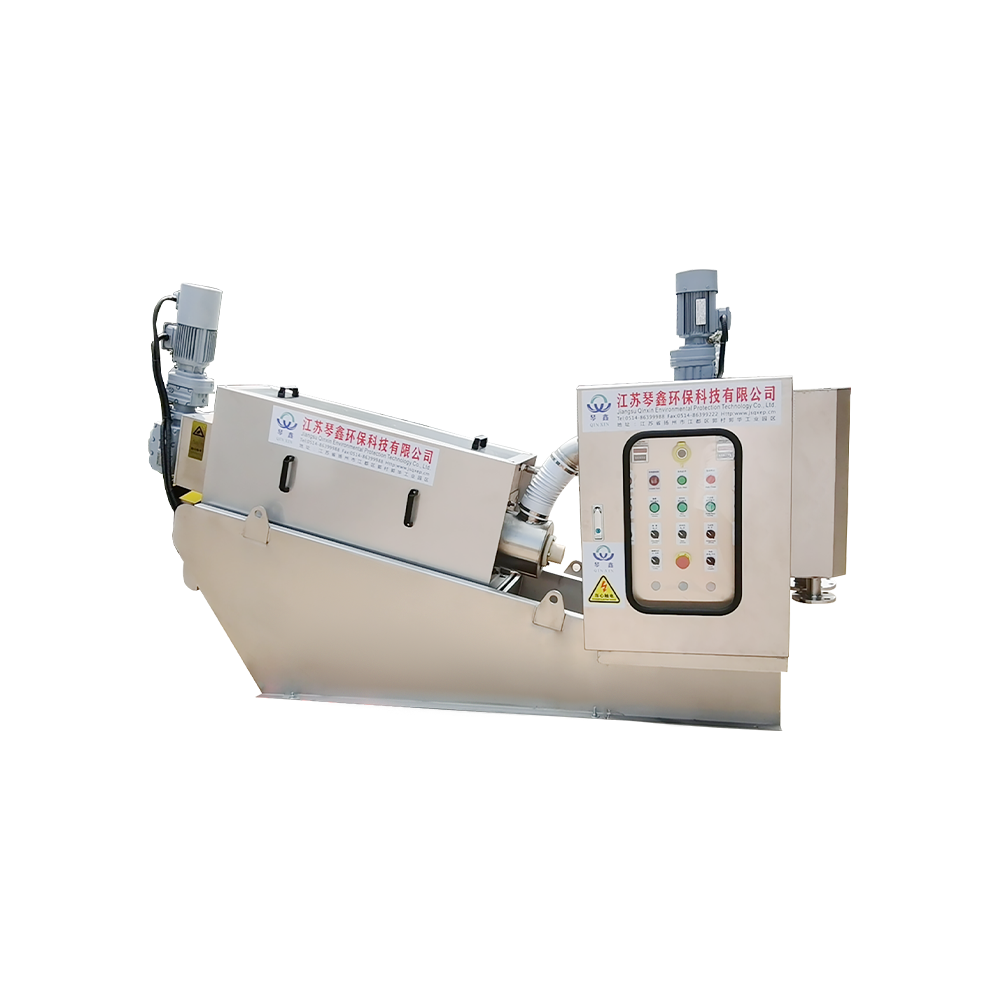
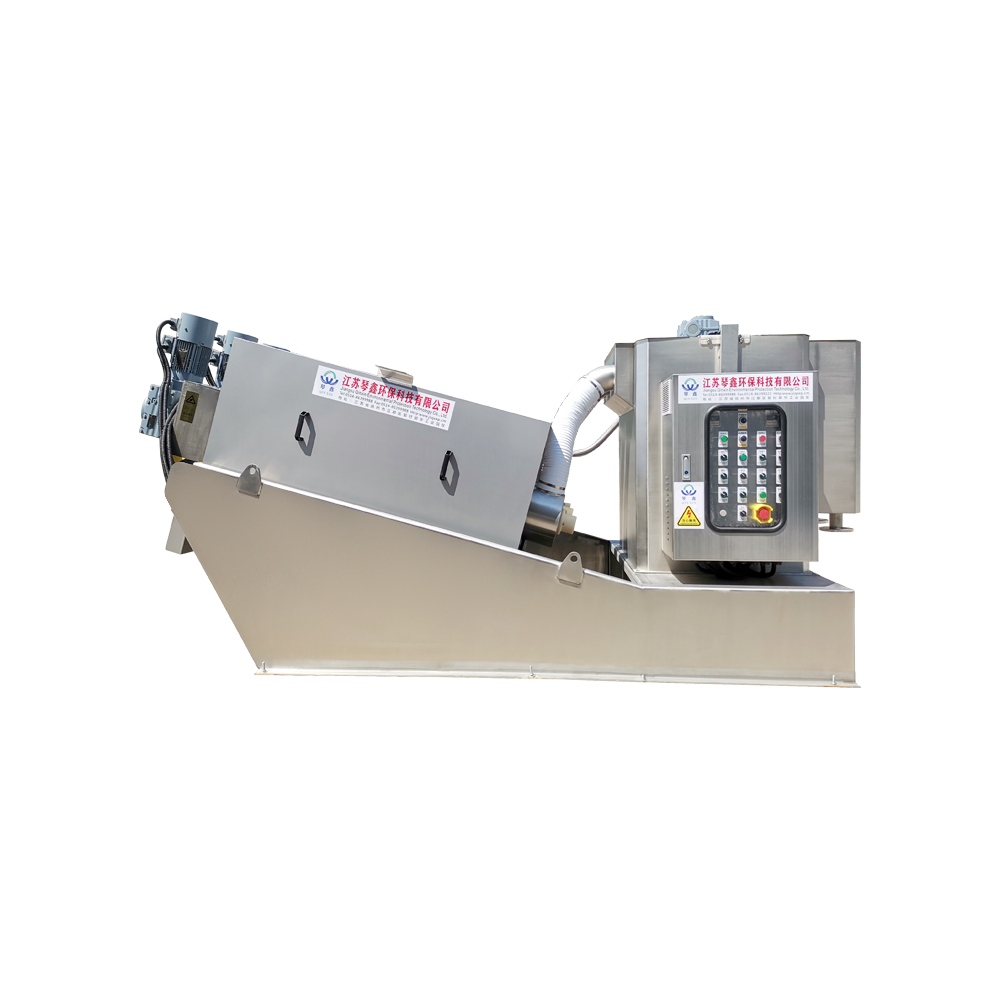
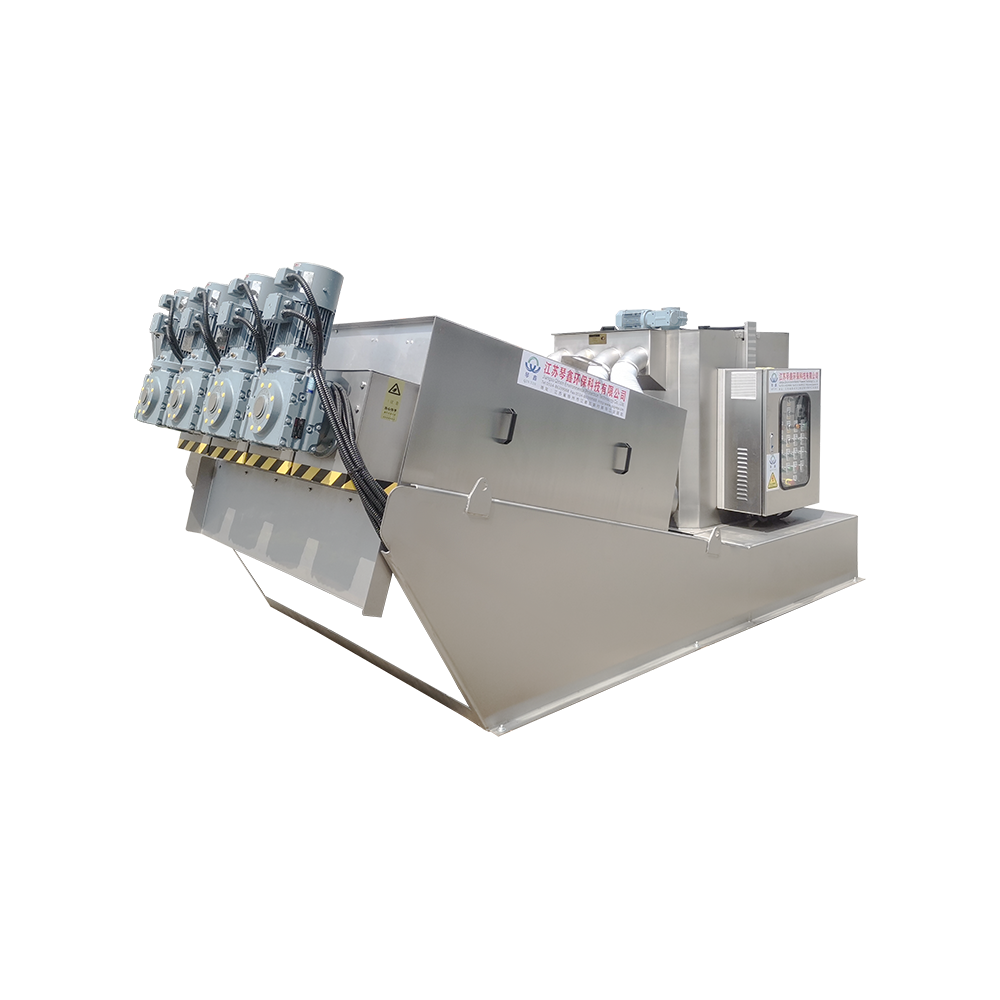
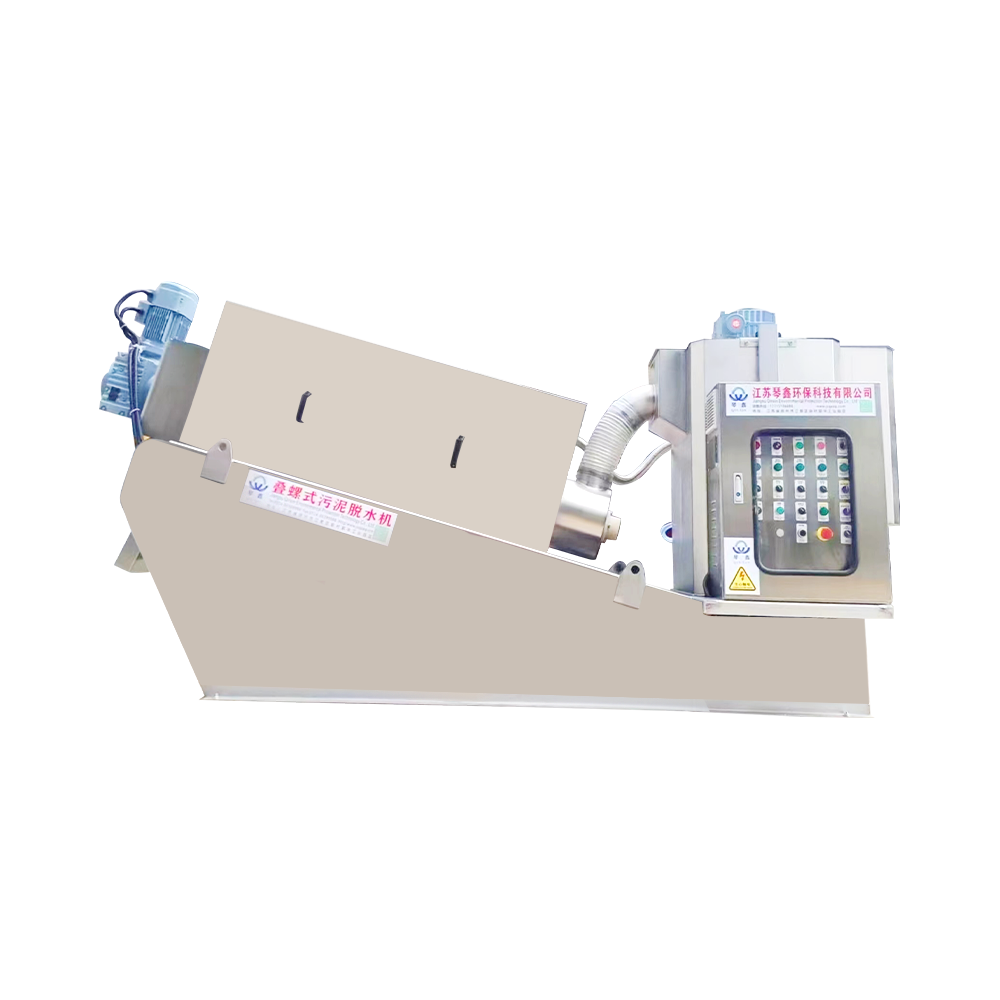
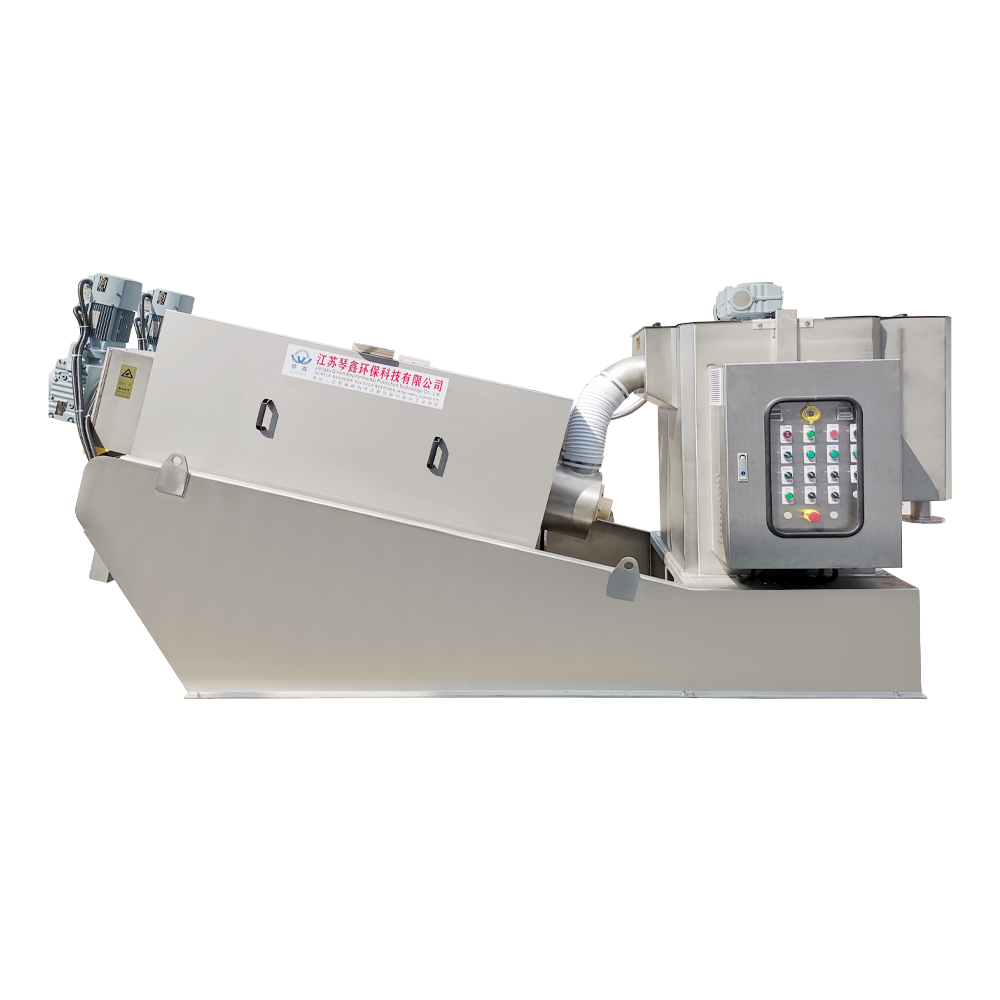
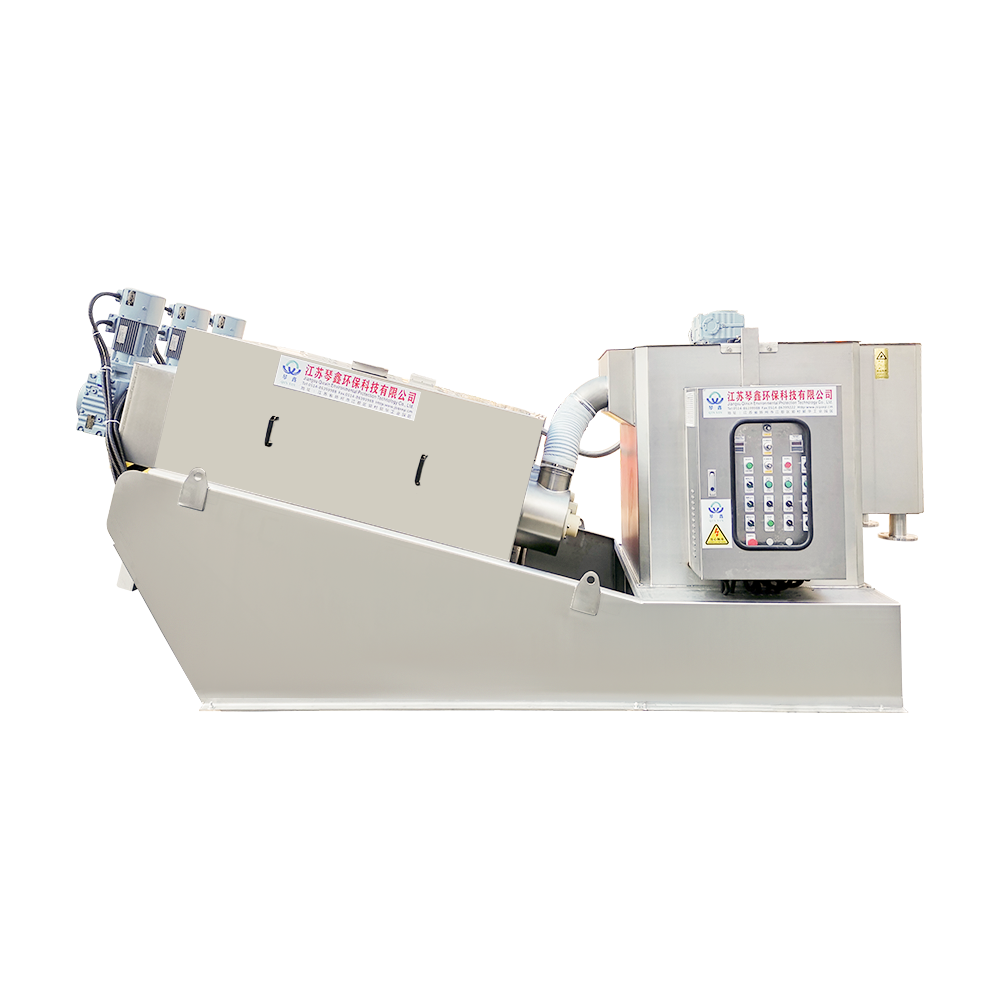
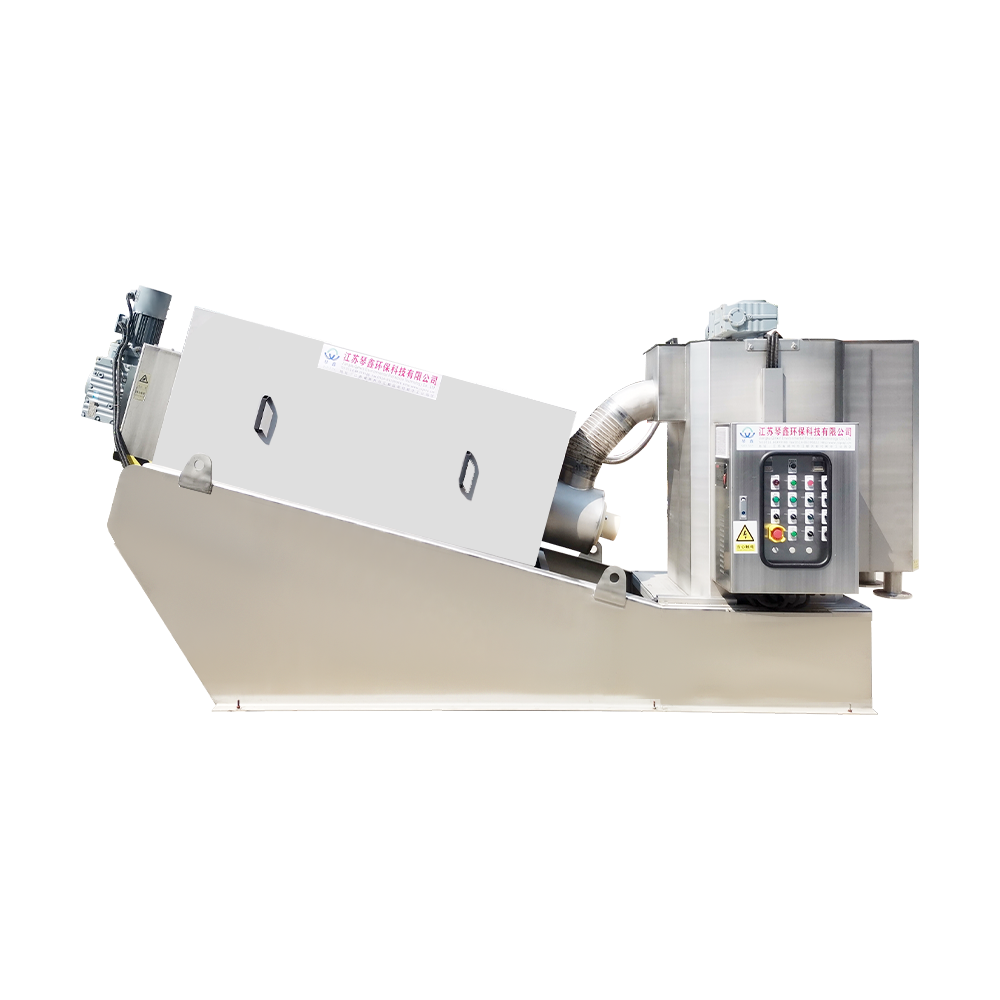
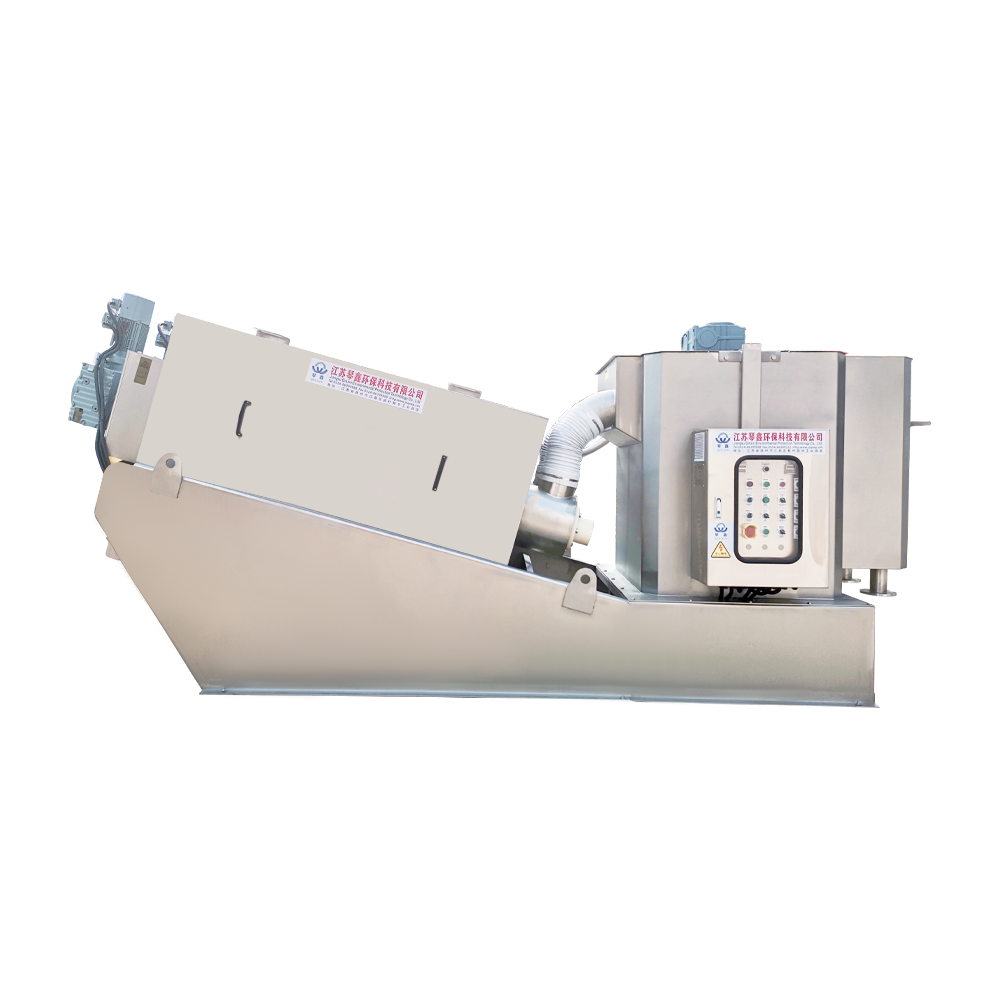
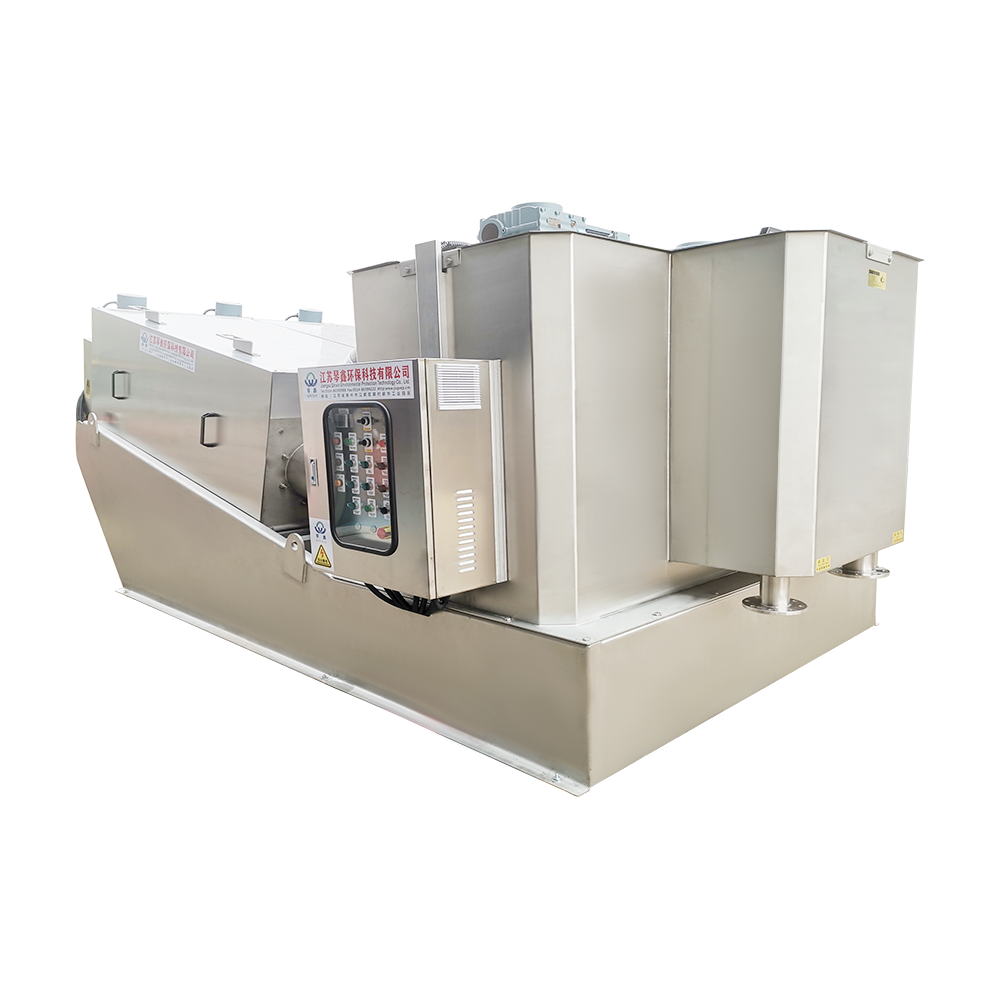
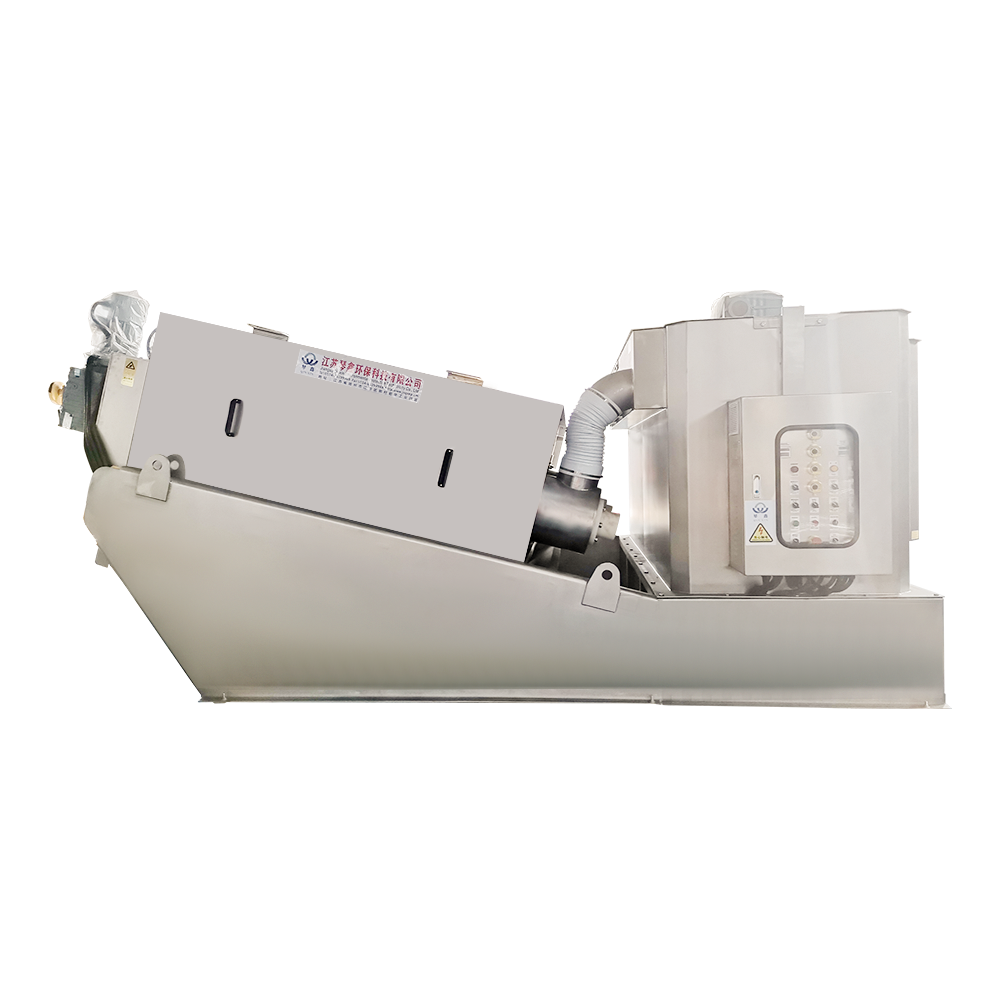
Screw presses already consume far less energy than centrifuges or belt presses, because the drive runs at low speed and the mechanical work is used for conveying rather than centrifugal acceleration. That advantage shrinks when manufacturing quality is poor. A misaligned shaft and badly fitted bearings convert electrical energy into friction and heat, raising the motor current and shortening component life. For industrial streams with mixed composition, the QXDL132 industrial screw press model is an example of a low-speed design with corrosion-resistant contact parts built for abrasive sludge.
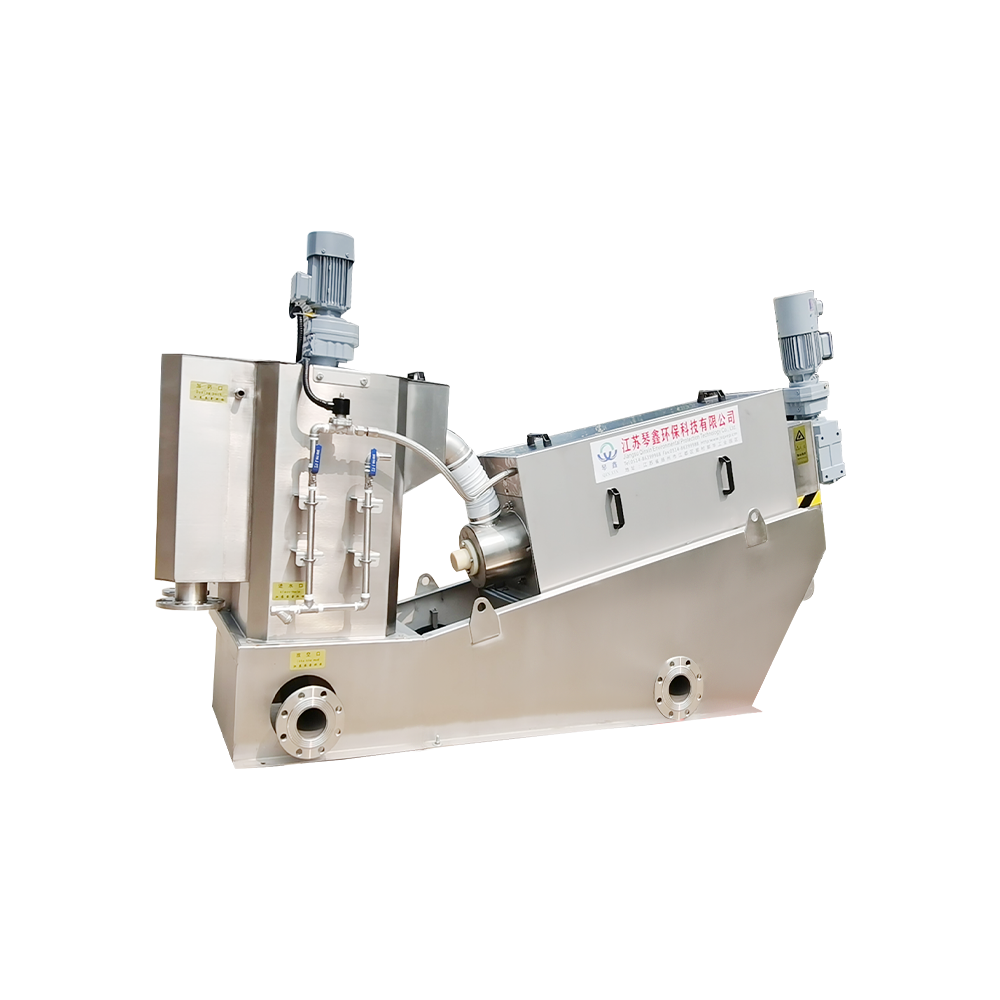 Custom Food Grade Energy-Saving Press Dewatering Machine Spiral Screw Sludge DewYangzhou Qinxin Environmental Protection Technology Co., Ltd. Is China Custom Food Grade Energy-Saving Press Dewatering Machine Spiral Sc...View Product →
Maintenance and Clogging
The two most common maintenance complaints on screw presses are screen clogging and bearing failure. Clogging frequently traces back to an inconsistent slot width or a rough weld inside the sludge path. Bearing failure often traces back to shaft alignment at the assembly stage. Both are manufacturing problems long before they become operating problems. If you already operate a press, our maintenance and lifespan guidance for stainless steel screw presses lists the inspection points and replacement intervals that help you catch these issues early.
Verifying Manufacturing Quality Before You Order
When you audit a screw press supplier, treat the factory as part of the specification. These five checks cover the highest-risk areas:
- Mill certificates for the stainless steel grade used on wetted parts.
- A factory test report or test video for the specific machine you are buying.
- Welding practice — certified welders and pickling/passivation as a standard step.
- Spare parts availability for at least five years: shafts, discs, screens, bearings, and seals.
- Reference installations in your industry or with a comparable sludge type.
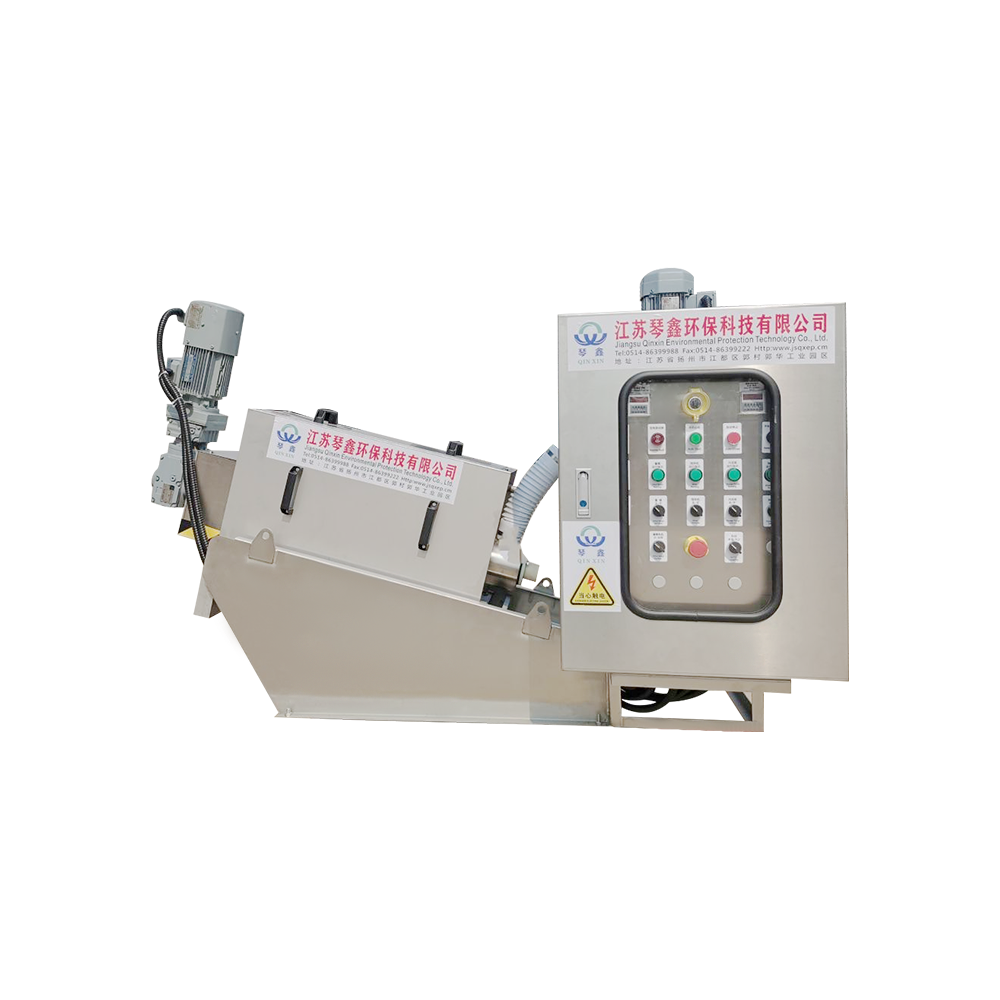
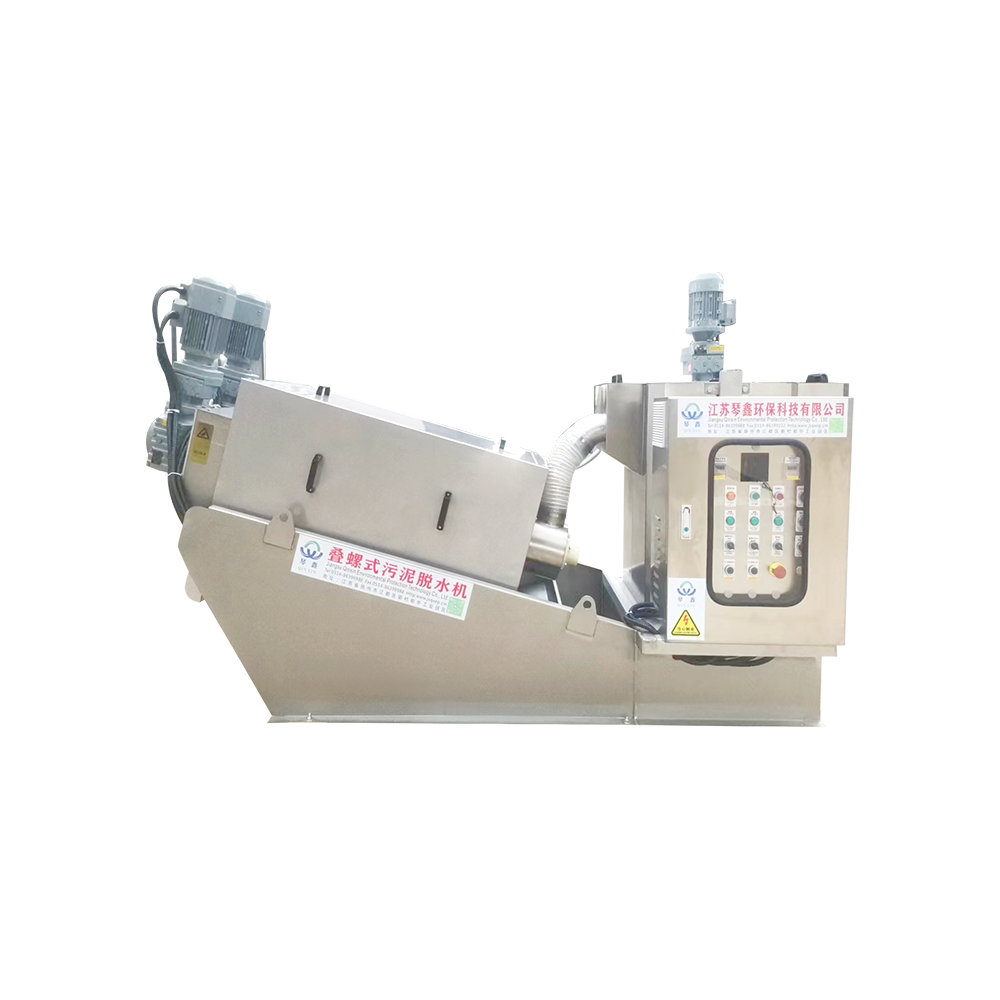
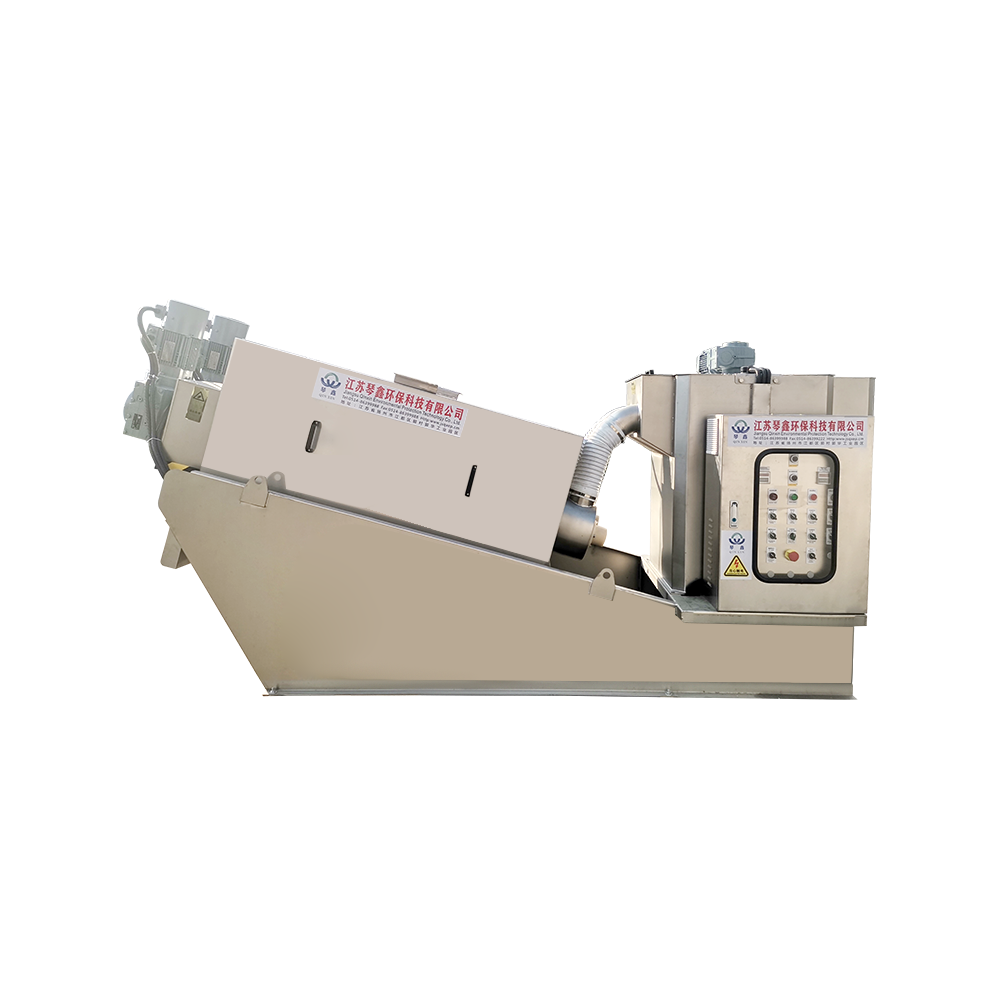
A manufacturer with an in-house production line and history across municipal and industrial wastewater projects is more likely to answer these questions with documentation rather than promises. The QXDL303 eco-friendly automatic dewatering machine, for example, comes from a product family refined across multiple industries; its multi-disc design reflects manufacturing experience with oily and fine-particle sludge. Similarly, the QXDL354 chemical wastewater screw press model shows how corrosive media change the filter material specification and sealing details.
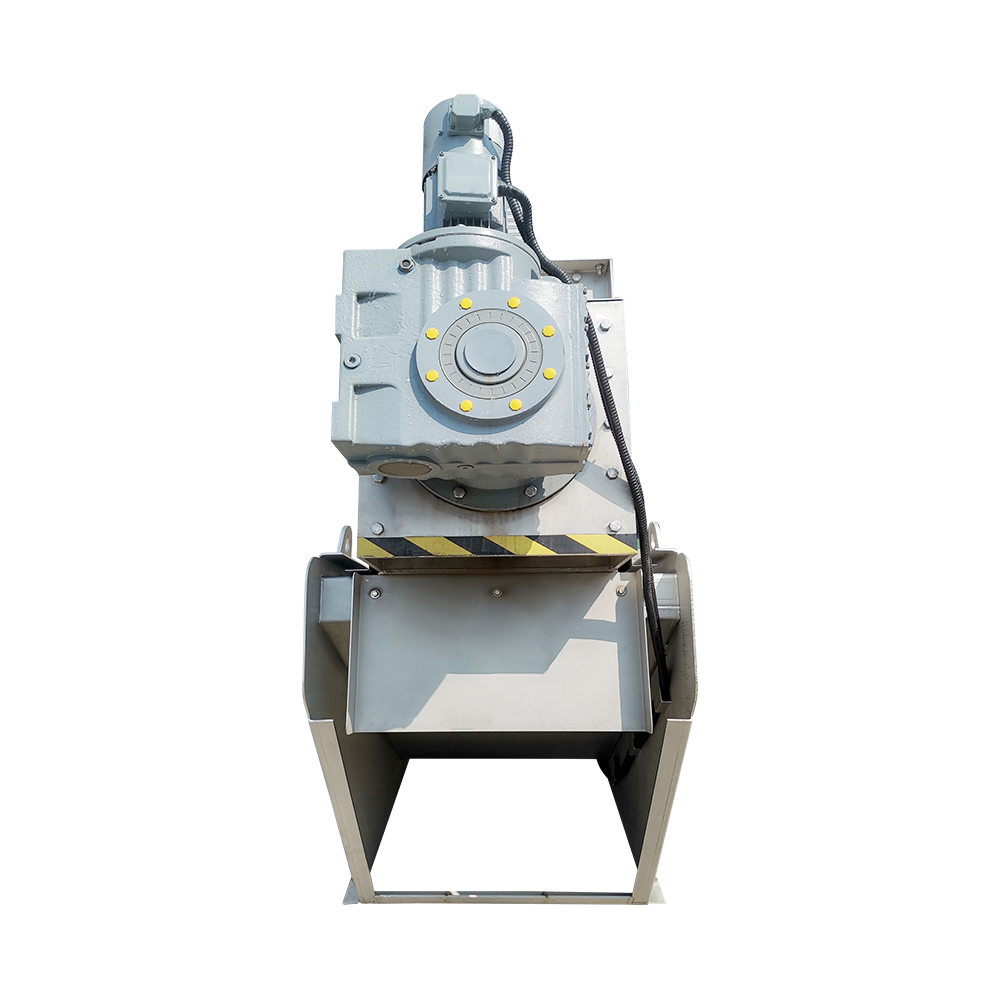 Automatic Screw Press Sludge Dewatering Machine for Livestock WastewaterHigh-efficiency screw press for livestock wastewater treatment. Automate solids-liquid separation, reduce sludge volume, and lower dispos...View Product →
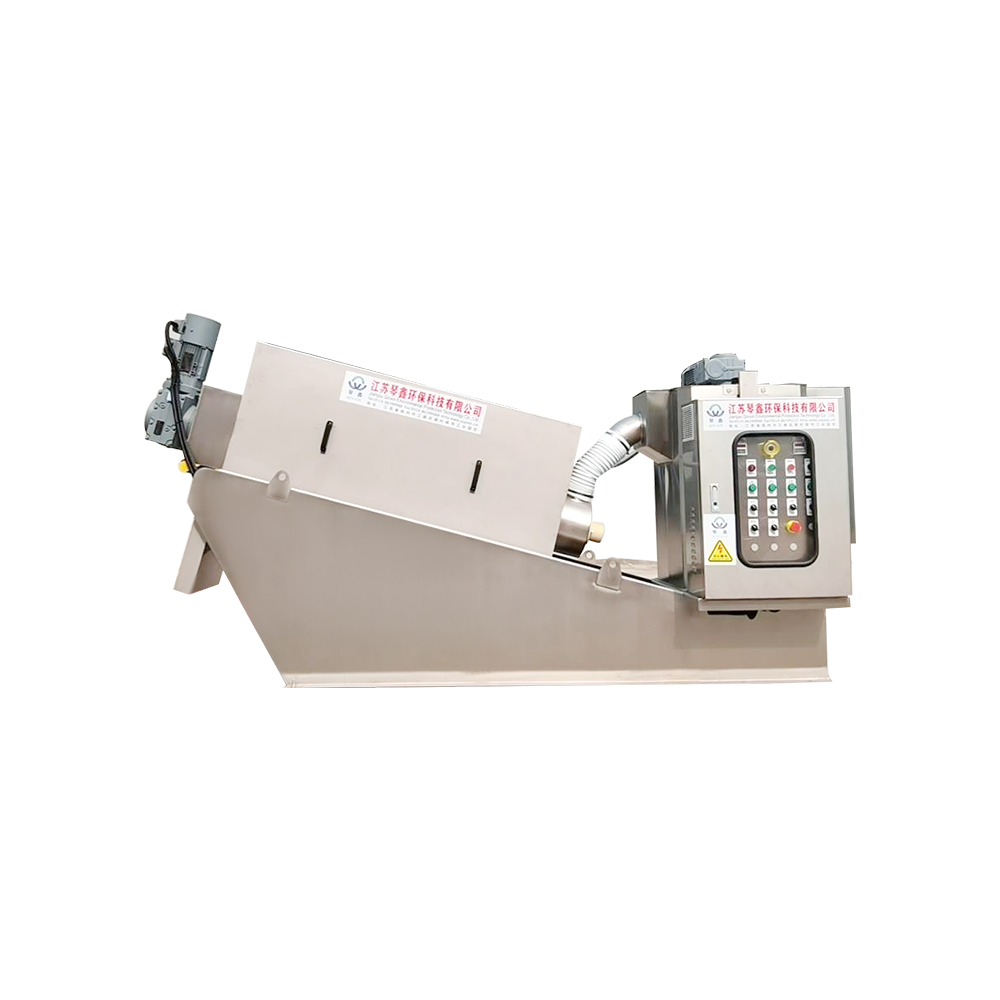
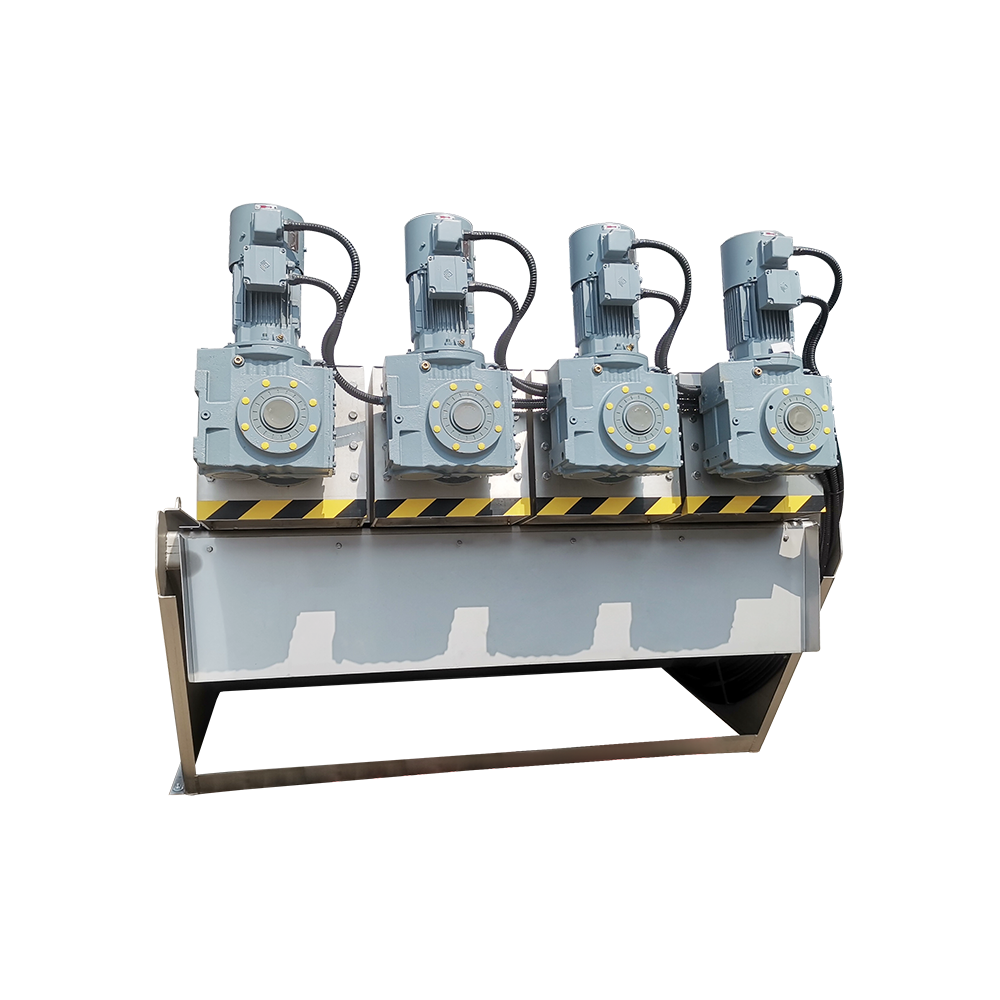 Custom Waste Water Treatment Eco-friendly Spiral Screw Sludge Dewatering MachineYangzhou Qinxin Environmental Protection Technology Co., Ltd. Is China Custom Waste Water Treatment Eco-friendly Spiral Screw Sludge Dewa...View Product →
One final practical point: match the machine to the sludge. A food-grade horizontal screw press follows different hygiene standards than an industrial wastewater model, and the mechanical details differ accordingly. The correct match reduces both capital and operating cost. The wrong match turns a small initial saving into years of elevated polymer use and repeated service visits.
Conclusion
The wastewater screw press manufacturing process determines the three numbers that matter most to a treatment plant: cake dryness, polymer consumption, and unscheduled downtime. Material certification, machining tolerances, assembly alignment, and factory testing are not abstract quality jargon. They are the practical difference between a press that runs for years and one that requires constant attention.
When evaluating suppliers, ask to see how the shaft is machined, how the filter is assembled, and what the test report actually contains. The answers will tell you more about the machine than any table of nominal capacities.

 TOP
TOP