
 ENG
ENG
 English
 русский
 Español
 Tiếng Việt
 ไทย
ไทย
Article Directory
A screw press dewaters sludge by trapping solids between a slowly rotating screw and a stationary cylindrical screen, but the machine is only as reliable as its individual components. When a unit performs poorly or blocks repeatedly, the cause is usually a mismatch between one specific part and the sludge it is meant to handle. Before you compare prices and capacities, it pays to understand what each main component does, how the parts interact, and which design details decide between a 75% cake and an 82% cake.
How a Screw Press Dewaters Sludge
The process begins in a conditioning tank, where sludge is mixed with polymer, usually PAM flocculant, to bind fine particles into larger, stronger flocs. The flocculated sludge then enters the feed hopper and is carried forward by the screw. In the first stage, the gravity drainage zone, free water passes through the screen before any real pressure builds. As the screw pushes the material toward the discharge end, the back-pressure cone resists the flow, so the sludge compresses progressively and bound water is squeezed out of the flocs.
The screw turns slowly, typically at 2 to 5 rpm, which keeps energy consumption low and reduces mechanical wear. That is why screw presses are often described as an energy-saving alternative to belt presses and centrifuges. A step-by-step explanation of the process is available in our article on how a screw press sludge dewatering machine works.
The Main Components of a Screw Press
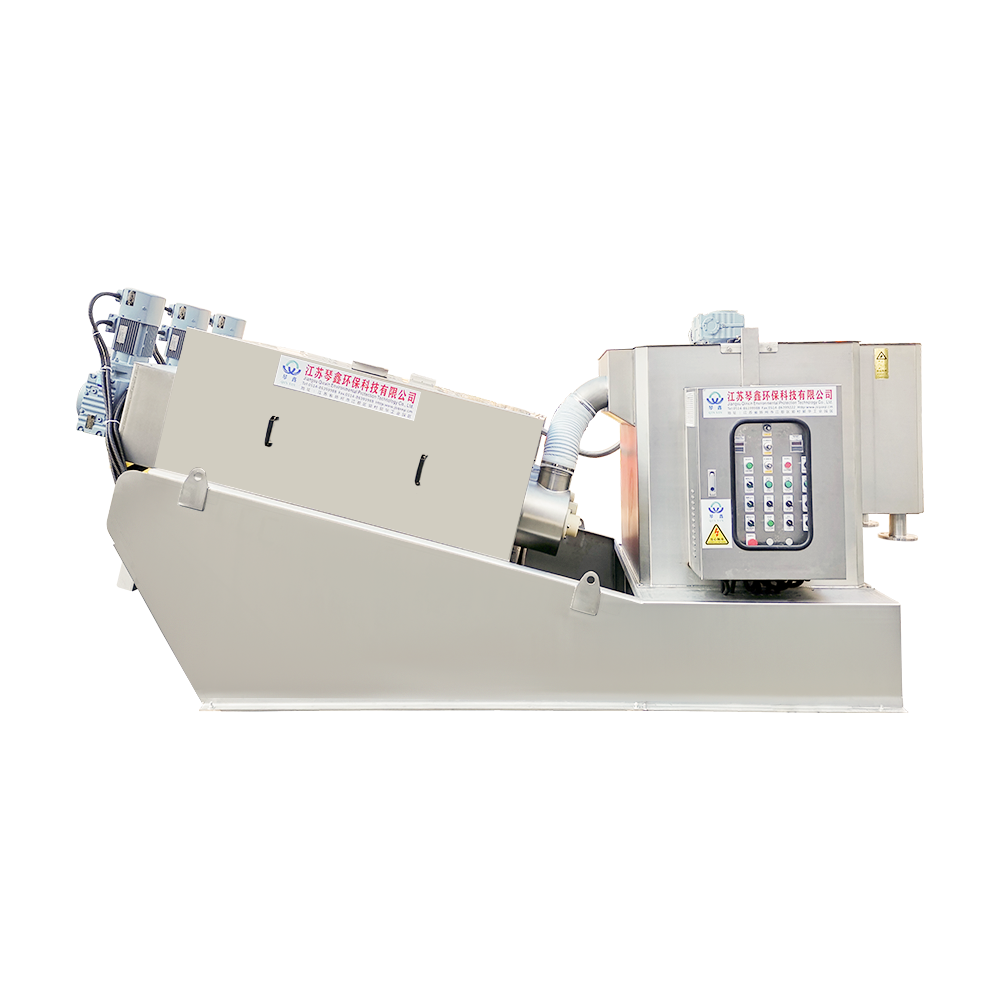
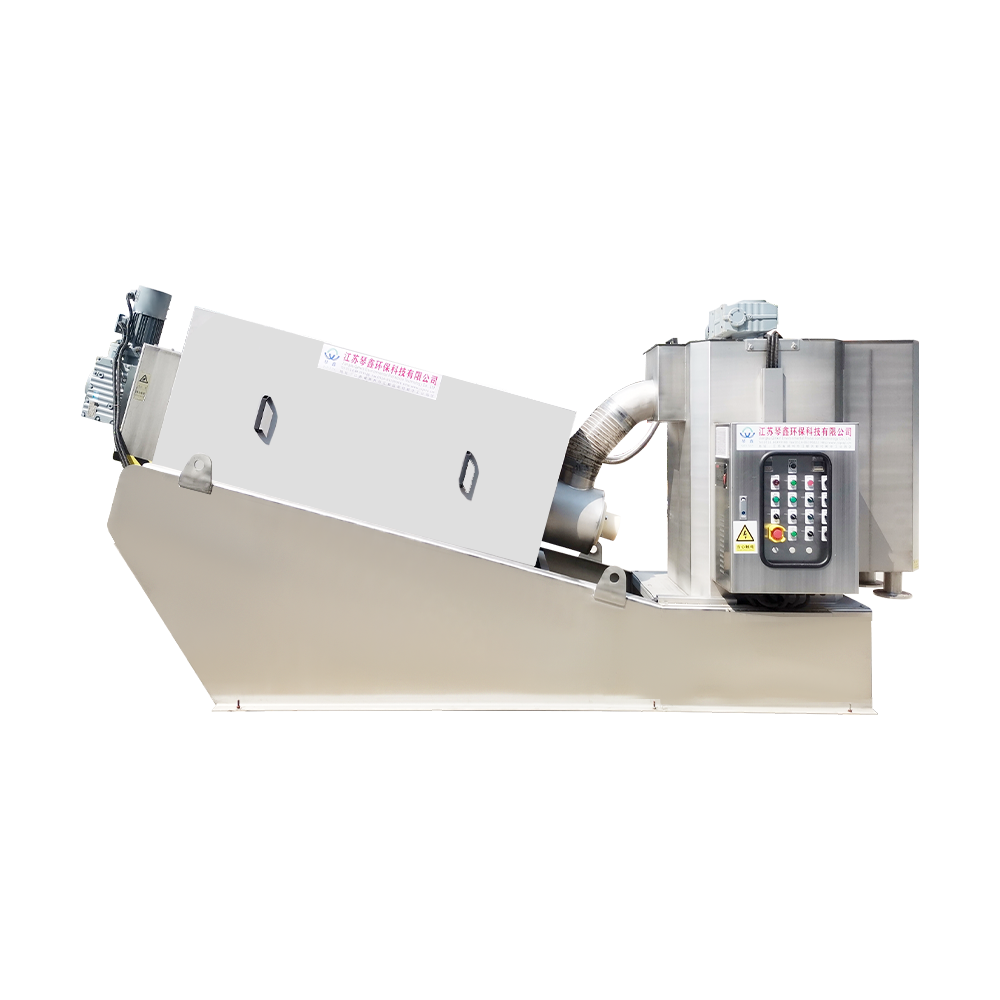
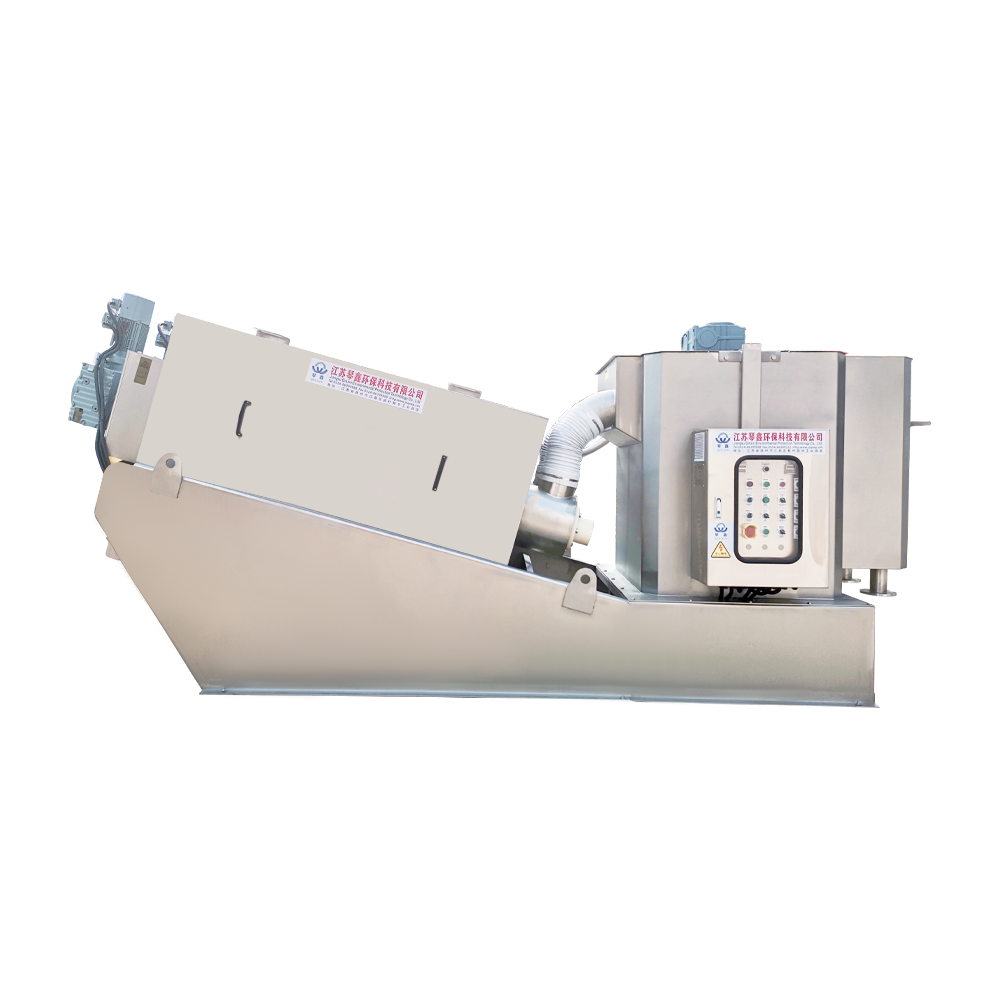
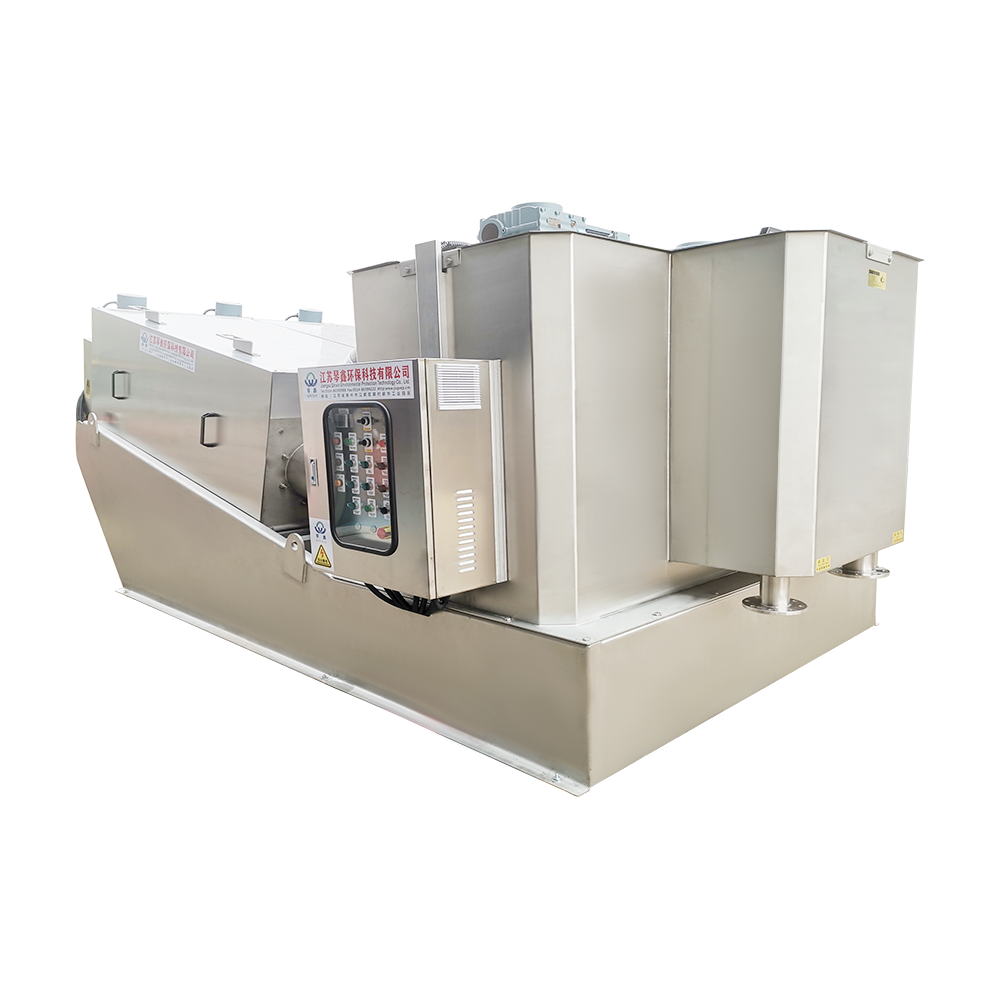
A screw press is a simple machine, but its performance depends on several precisely matched parts. The following components are the ones any buyer should be able to identify on a drawing and name when talking to a supplier.
Feed Hopper and Inlet
The hopper receives the conditioned sludge and feeds it evenly onto the screw. Its geometry matters more than it appears to: a steep-walled hopper helps fibrous sludge slide down instead of bridging, while an overflow weir prevents overloading and keeps the screw fully charged. Plants that handle food waste, manure or paper-mill screenings usually need a wider inlet and an anti-bridging design.
Screw Shaft and Flights
The screw shaft is the heart of the machine. A spiral flight wrapped around the shaft rotates inside the screen and pushes solids from the feed zone to the discharge zone. The shaft is tapered or fitted with a progressively changing pitch so that the internal volume shrinks as sludge moves forward; that geometry is what creates the compression. Multidisk designs, in which alternating fixed and moving rings form the screw body, add a self-cleaning effect because the rings shift slightly with each rotation, making them well suited to oily and sticky sludge. The material and surface finish of the screw determine how long it resists abrasion and corrosion.
Screen Basket
The screen, also called the drum filter or cylindrical screen, surrounds the screw and separates the filtrate from the solids. It is usually made of wedge wire or perforated stainless steel panels, and its slot gap is one of the most important parameters in the whole machine. A gap between 0.2 and 0.5 mm is common for sludge dewatering. If the slots are too wide, solids escape into the filtrate; if they are too narrow, the screen blinds quickly, especially with sludge that has a high grease or fat content. The screen must also be easy to open for inspection and washing.
Back-Pressure Cone
The cone sits at the discharge end of the screw and creates a restriction that the dewatered cake must pass. By adjusting the cone position, the operator controls the internal pressure and therefore the final cake dryness. Pushing the cone closer to the screw increases pressure, producing a drier cake, but it also increases the load on the drive and the risk of clogging with sticky sludge. A fixed cone simplifies operation, while an adjustable cone adds flexibility when feed quality varies.
Drive Unit and Reduction Gearbox
Because a screw press runs at low speed, the motor is paired with a reduction gearbox that brings the shaft down to a few rotations per minute. The drive must generate enough torque to push through dense or abrasive material without stalling. Many machines include a torque or pressure sensor that stops or reverses the screw when the load is too high, protecting the gearbox, shaft and screen from damage.
Polymer Dosing and Flocculation System
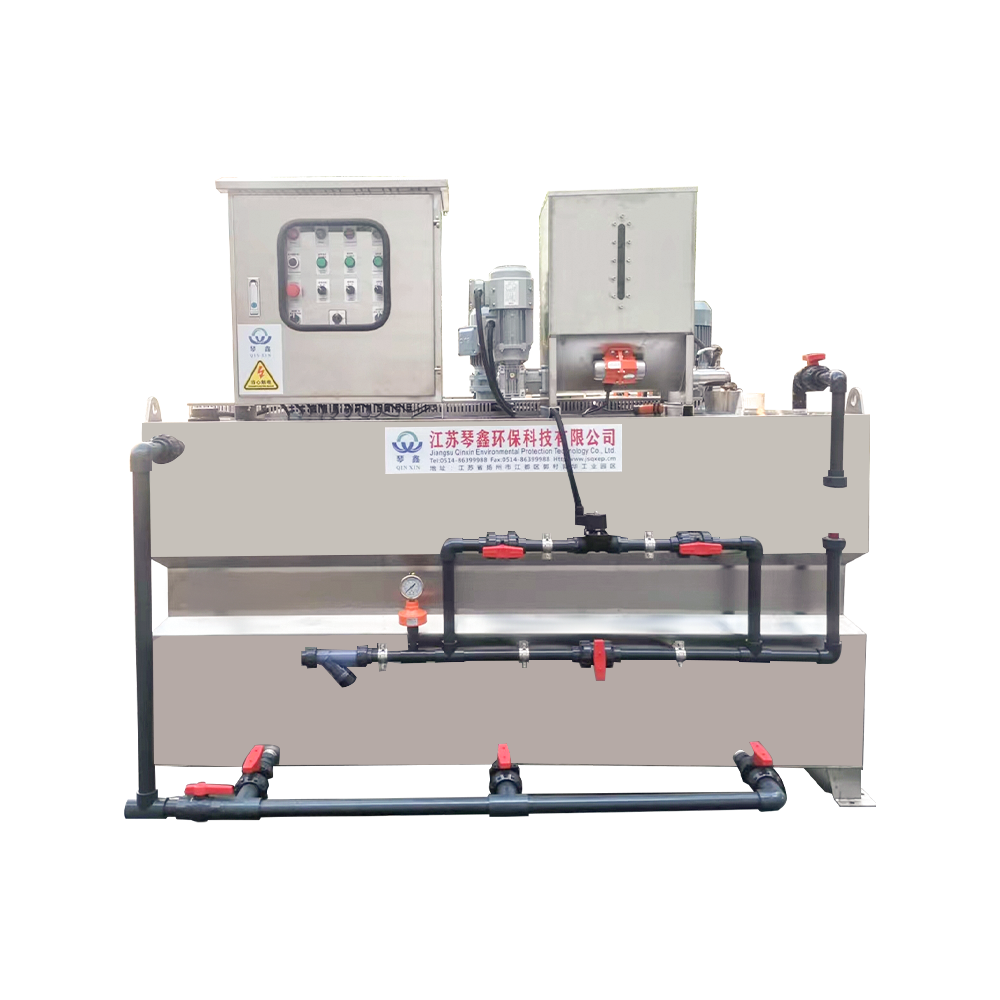
The polymer dosing unit is not physically part of the press, but it is normally supplied with it, because floc quality determines how well the screen captures solids and how easily water drains. A well-designed dosing system with reliable pumps and mixers achieves a higher capture rate at lower polymer consumption. This is why dosing and mixing deserve as much attention as the press body itself.
Frame, Control Panel and Discharge Parts
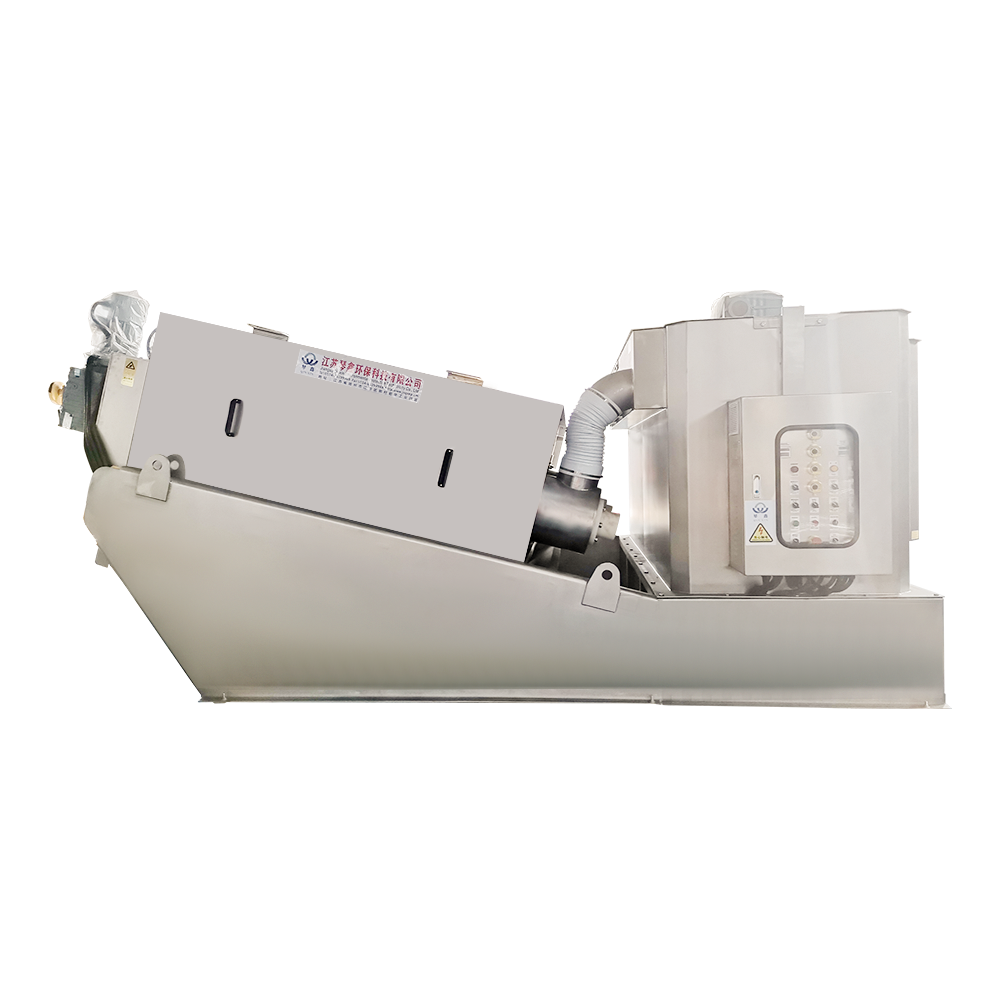
The steel frame keeps the screw, gearbox and screen aligned and absorbs vibration during operation. The control cabinet contains the PLC, frequency drive and alarms, allowing the operator to adjust speed and torque from one position. At the discharge side, the cake falls into a chute or conveyor, while the filtrate is collected in a pan below the screen and returned to the treatment line.
| Component | Primary function | Practical effect on operation |
|---|---|---|
| Feed hopper | Receives sludge and distributes it onto the screw | Prevents bridging and guarantees a fully loaded screw |
| Screw shaft | Conveys and compresses sludge toward the discharge | Determines cake movement, pressure build-up and wear life |
| Screen basket | Filters filtrate while retaining solids | Sets capture rate and the risk of blinding |
| Back-pressure cone | Regulates the discharge restriction | Controls cake dryness and drive load |
| Drive gearbox | Rotates the screw slowly at high torque | Defines energy use and stall resistance |
| Dosing system | Conditions sludge with polymer | Improves floc strength and filtrate quality |
| Control panel | Monitors speed, torque and alarms | Supports stable, largely unattended operation |
How Component Choices Affect Dewatering Performance
Material Selection and Corrosion Resistance
The most cost-sensitive decision is usually the material of the screw, screen and frame. Sludge from chemical plants, tanneries or mixed industrial waste can contain chlorides and acids that quickly attack standard stainless steel. When the sludge is corrosive, SUS316 or an equivalent high-grade alloy is preferred over 304 to avoid pitting and premature failure. The choice is explained in more detail in our article on SUS316 corrosion resistance in screw press dewatering machines. Paying more for the right steel at the outset is cheaper than replacing a corroded screen or screw after two years.
Screen Gap, Capture Rate and Clogging
The slot gap is a trade-off. A wider gap, say 0.5 mm, allows higher throughput and less blinding, but fine solids may pass into the filtrate. A narrower gap, around 0.25 mm, produces cleaner filtrate but requires well-flocculated sludge and a reliable washing system. In practice, the gap should be confirmed by testing the actual sludge before the machine is built. Clogging is rarely caused by the gap alone; it is usually a combination of debris, excess grease, over-dosed polymer, or a cone pressed too far. The most common failure patterns and prevention measures are covered in our guide to screw press clogging causes and prevention.
Matching Components to the Sludge You Actually Treat
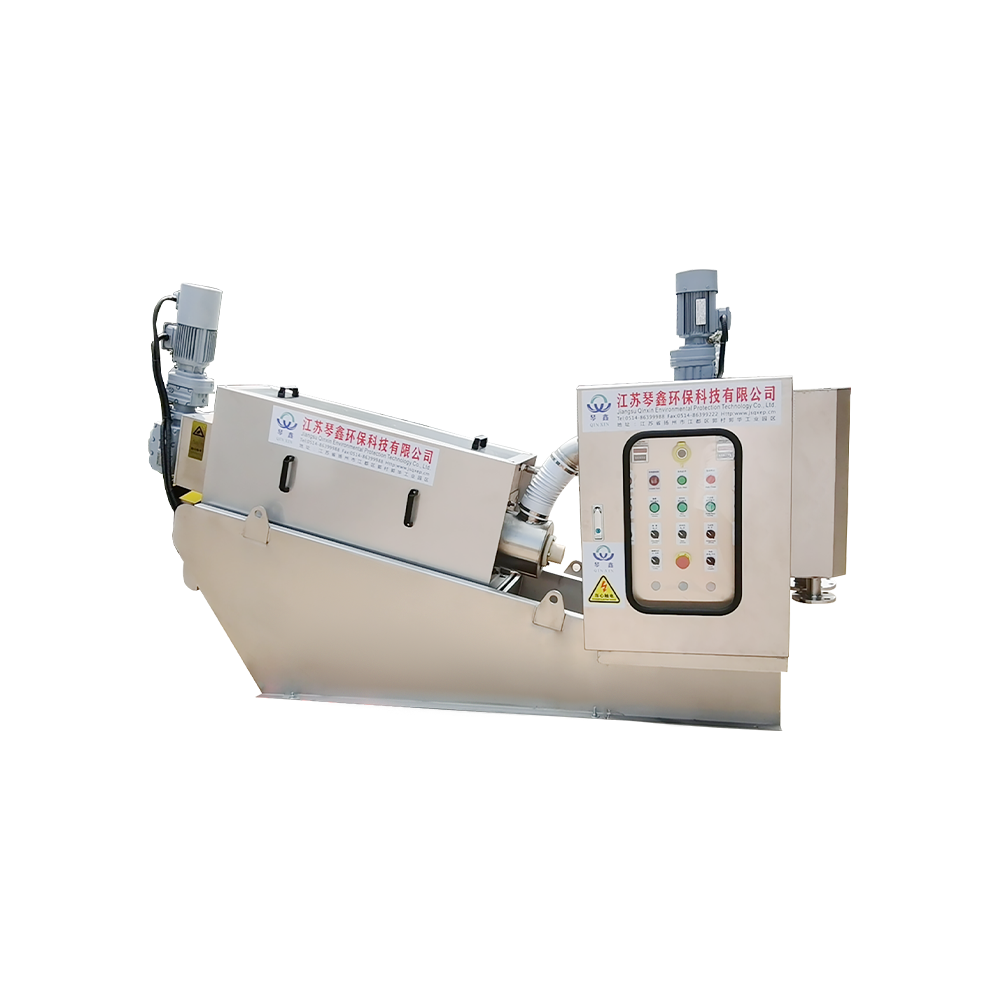
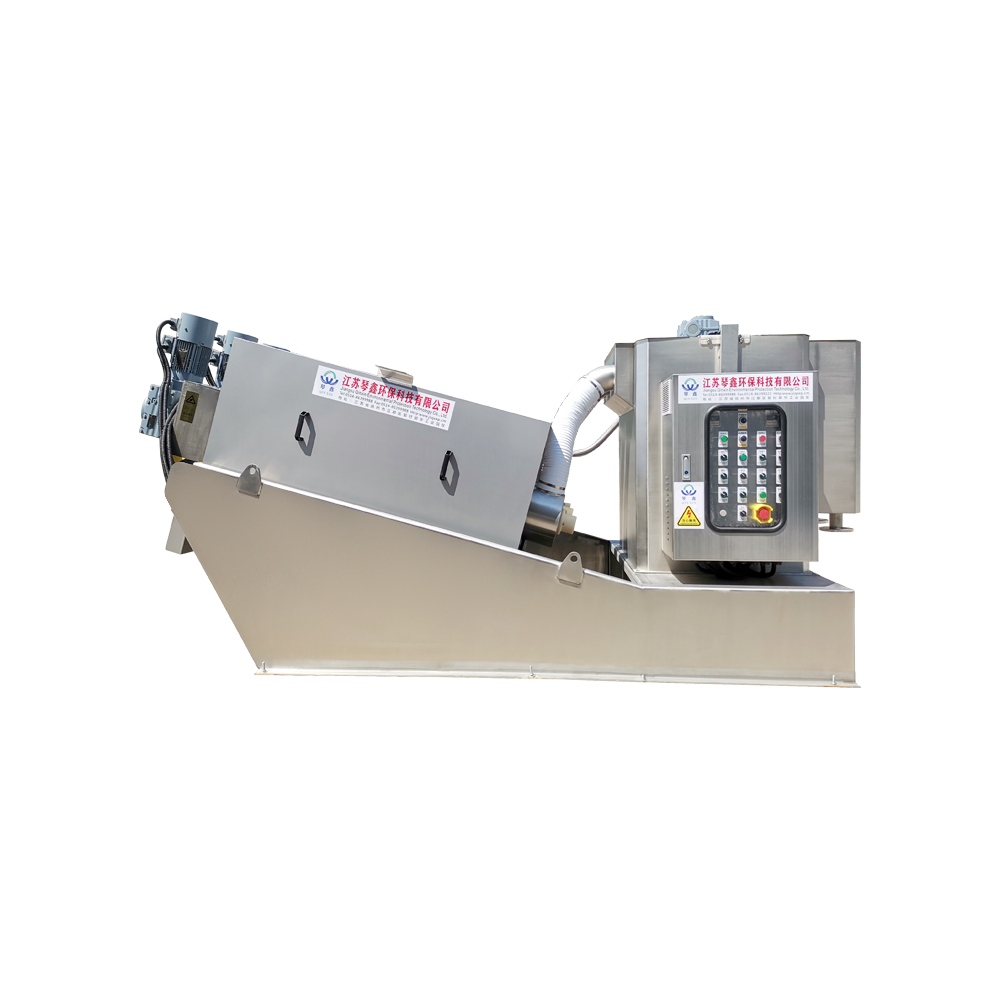
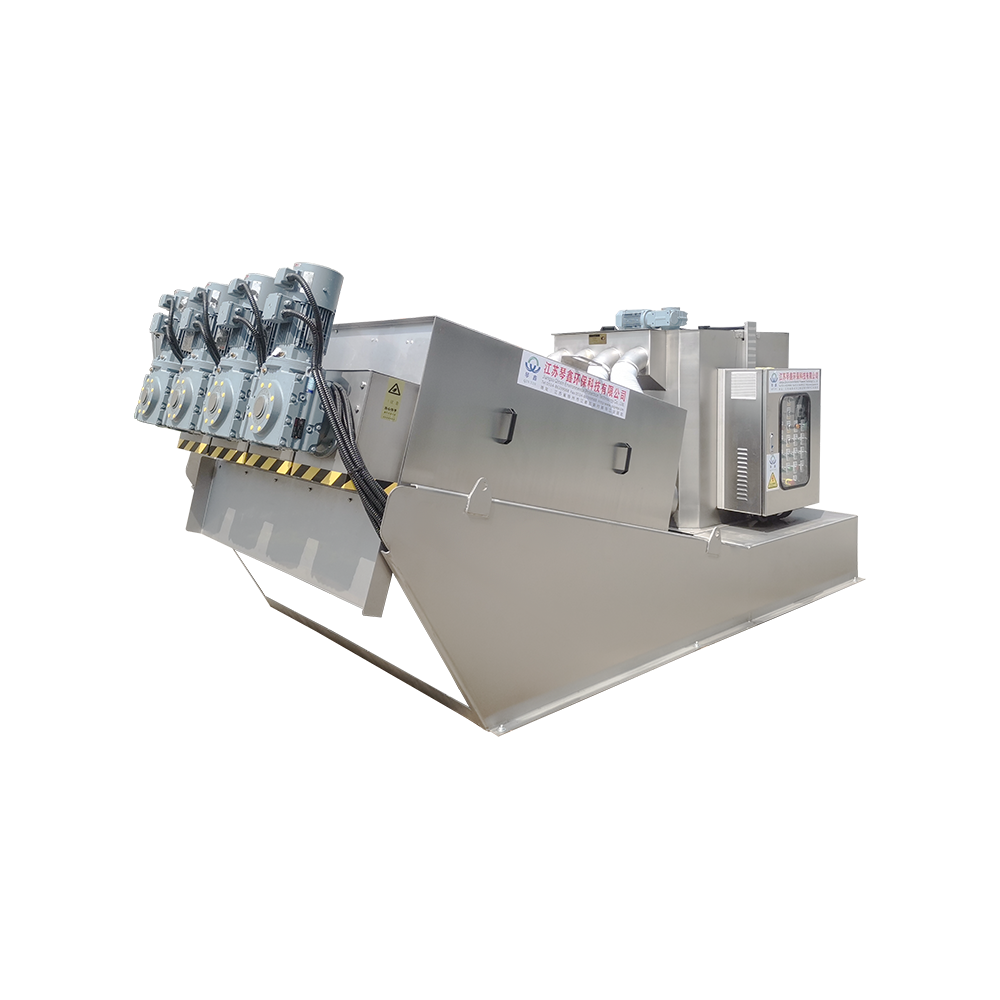
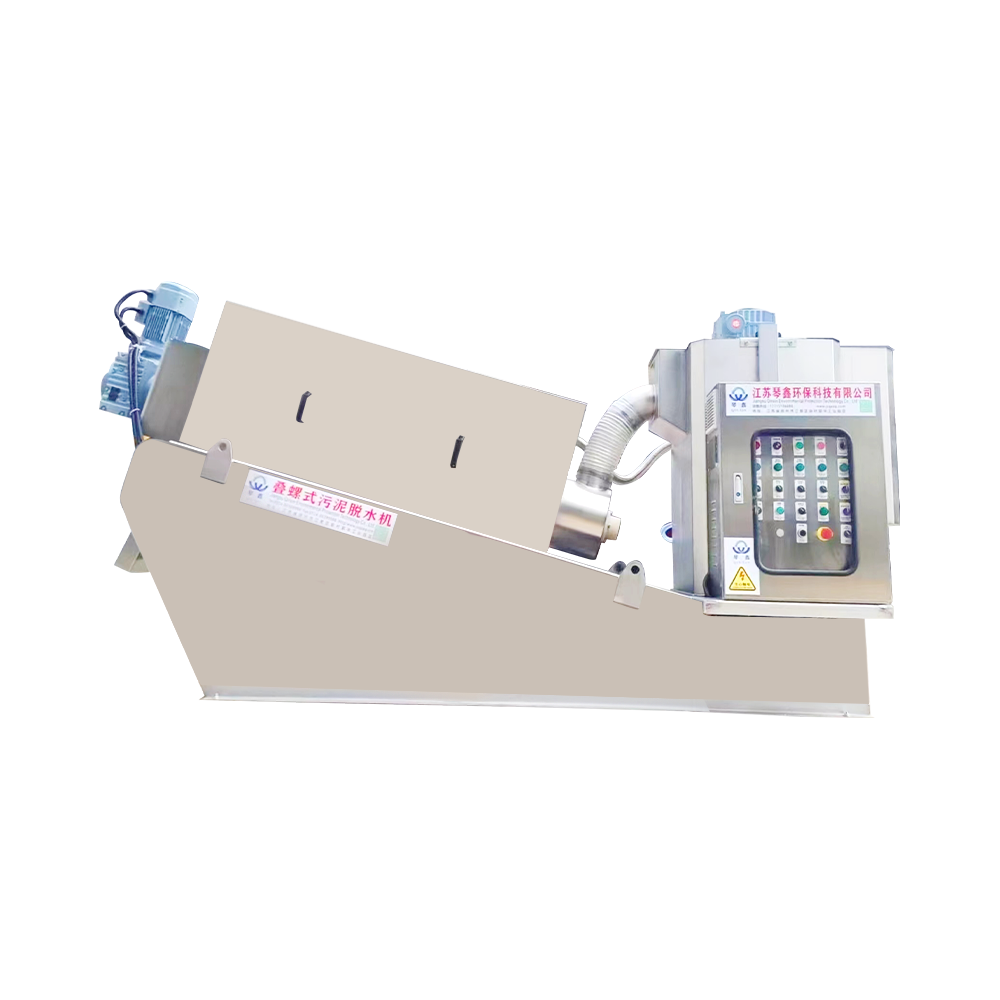
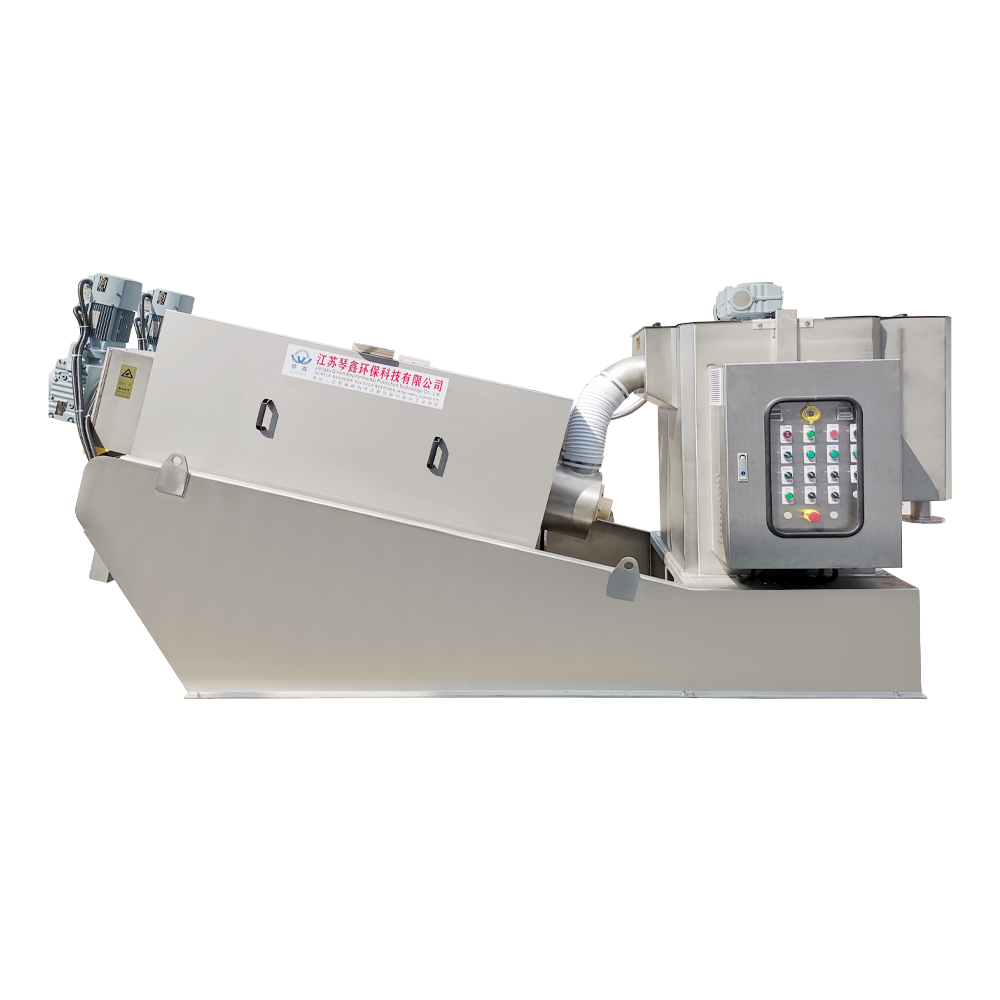
For municipal wastewater and general biological sludge, a standard configuration with a stainless screw, a 0.3 to 0.4 mm screen gap and an adjustable cone is a reliable baseline. The QXDL303 eco-friendly automatic screw press sludge dewatering machine is a good example: its low-speed drive, self-cleaning multidisk body and balanced screen area are designed for the variable loads that municipal plants and industrial wastewater stations commonly feed.
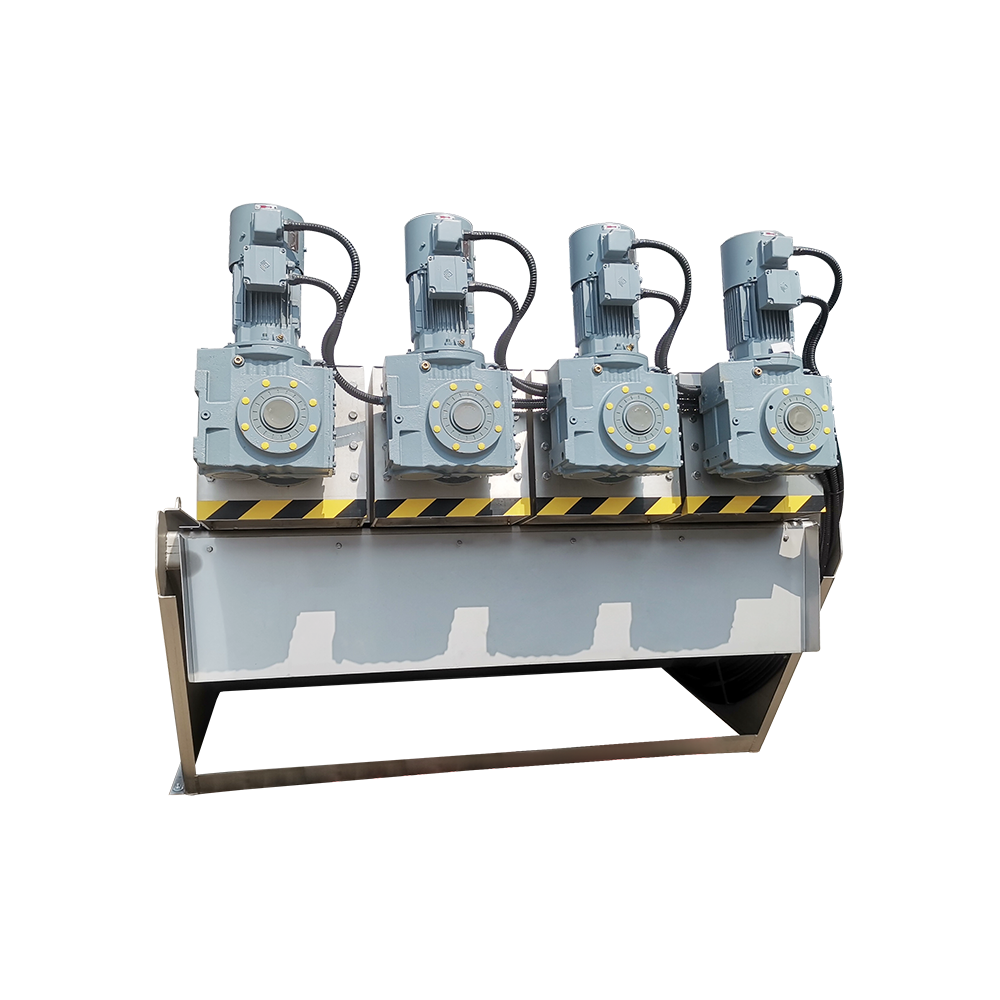 Custom Waste Water Treatment Eco-friendly Spiral Screw Sludge Dewatering MachineYangzhou Qinxin Environmental Protection Technology Co., Ltd. Is China Custom Waste Water Treatment Eco-friendly Spiral Screw Sludge Dewa...View Product →
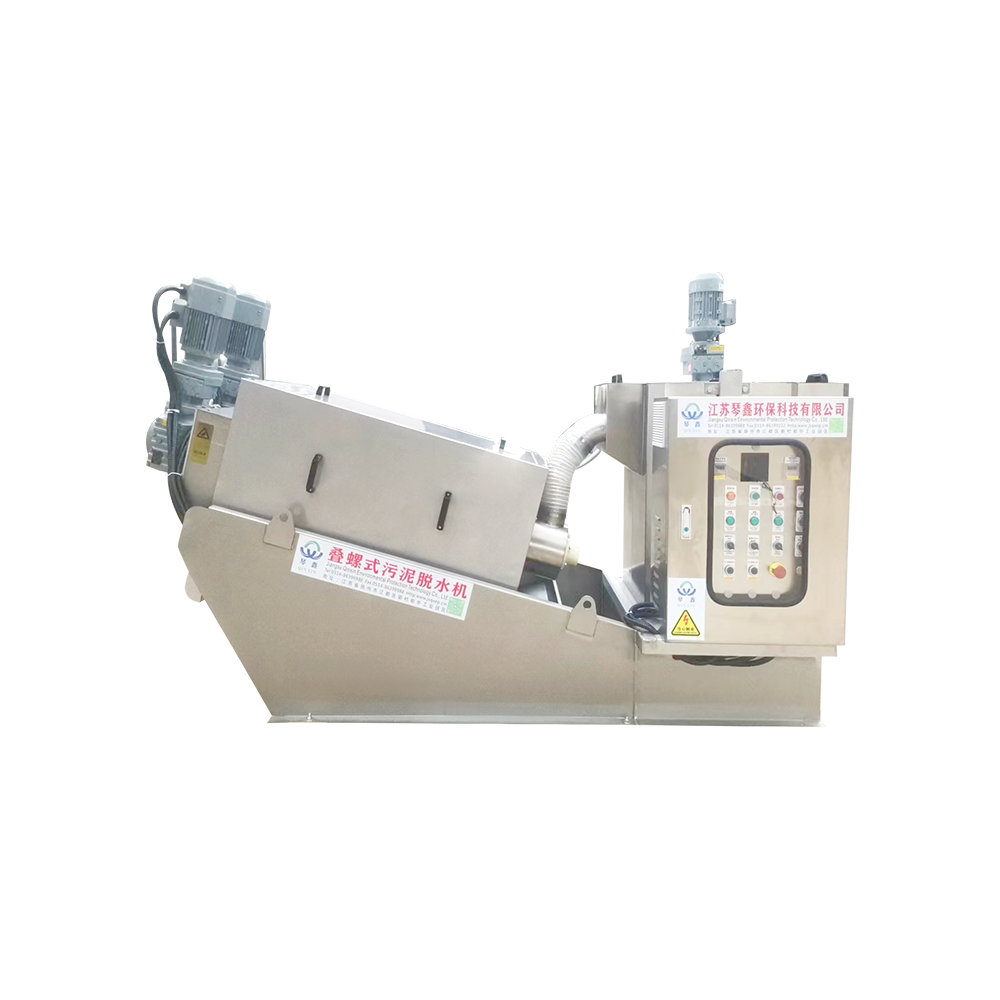
Chemical and industrial wastewater changes the picture. Aggressive compounds and abrasive suspended solids raise the requirements for material quality and torque protection. A machine built for industrial duty, such as the QXDL132 industrial spiral screw sludge dewatering machine, uses corrosion-resistant materials and a reinforced drive train to handle higher solids loads without overstressing the screen and shaft.
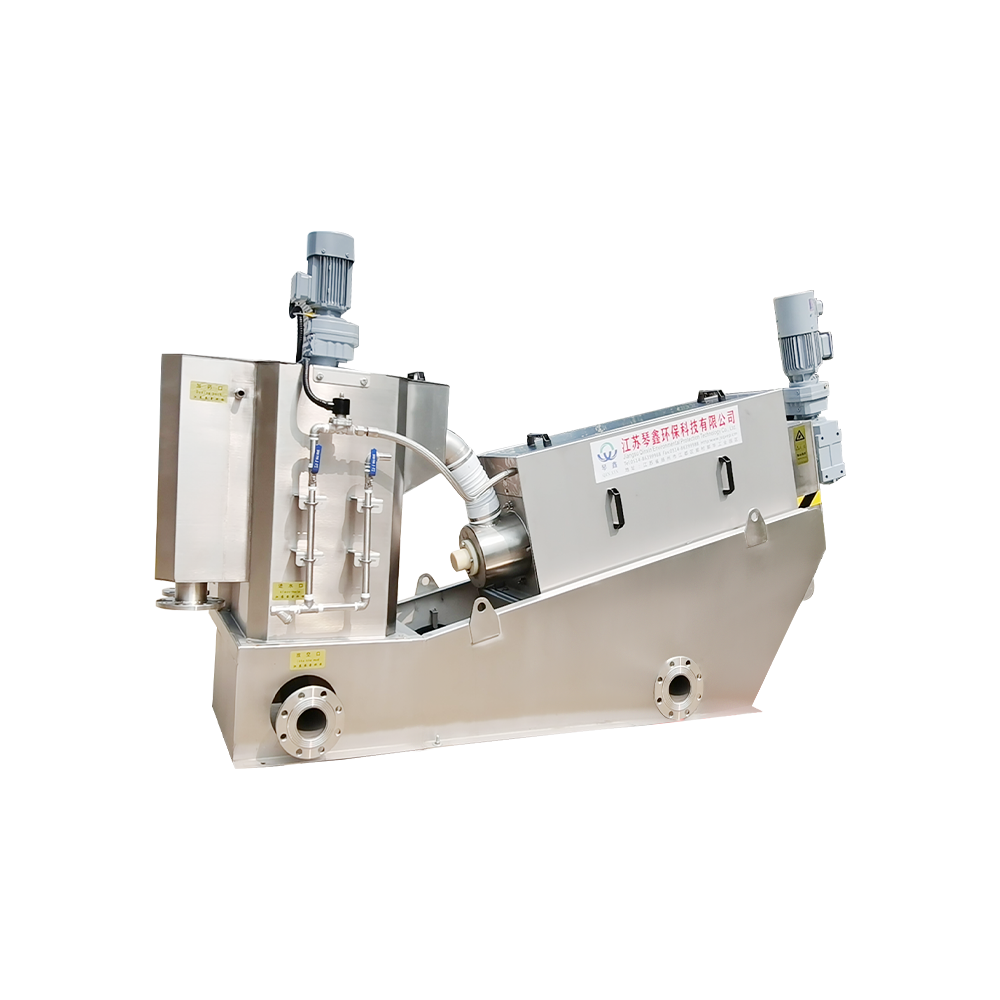 Custom Food Grade Energy-Saving Press Dewatering Machine Spiral Screw Sludge DewYangzhou Qinxin Environmental Protection Technology Co., Ltd. Is China Custom Food Grade Energy-Saving Press Dewatering Machine Spiral Sc...View Product →
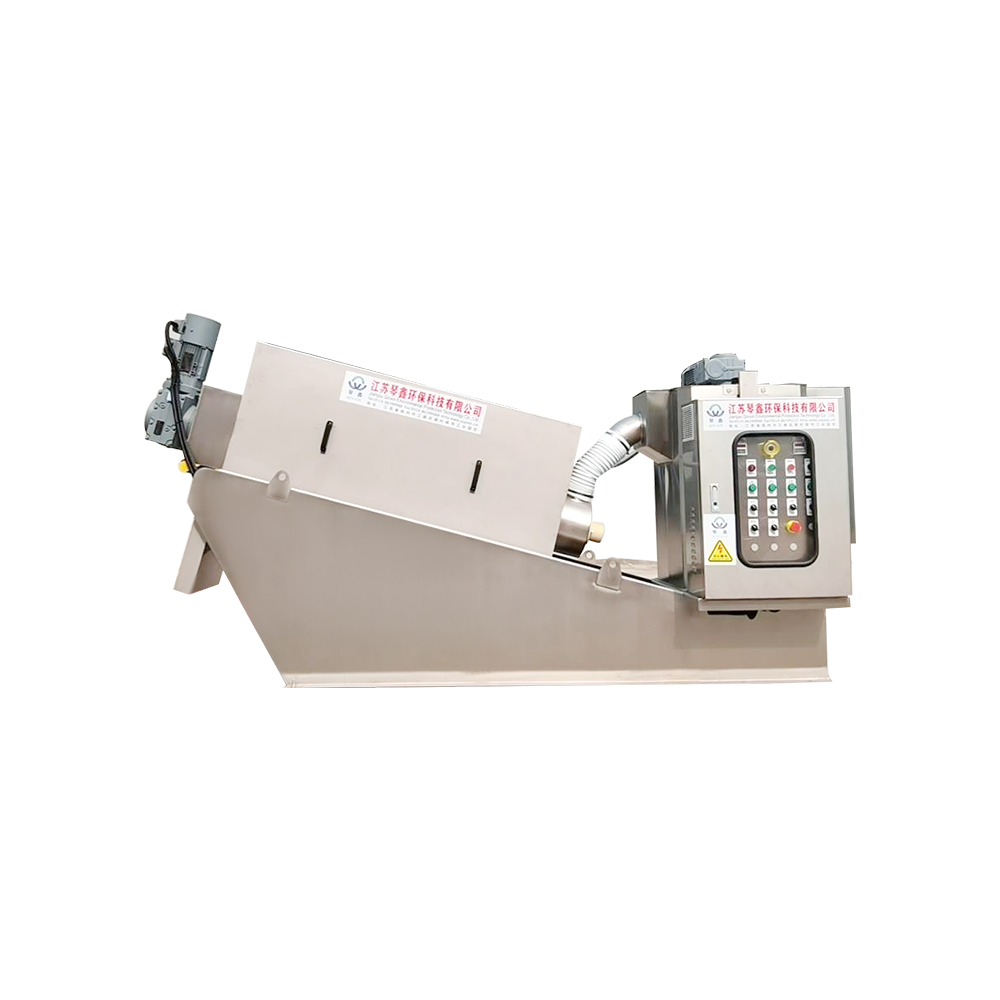
Food processing plants need the same dewatering performance, but under stricter hygiene rules. The QXDL251 food-grade energy-saving screw press is designed for dairy, beverage and fish-processing lines where the machine is flushed, inspected and kept clean between batches.
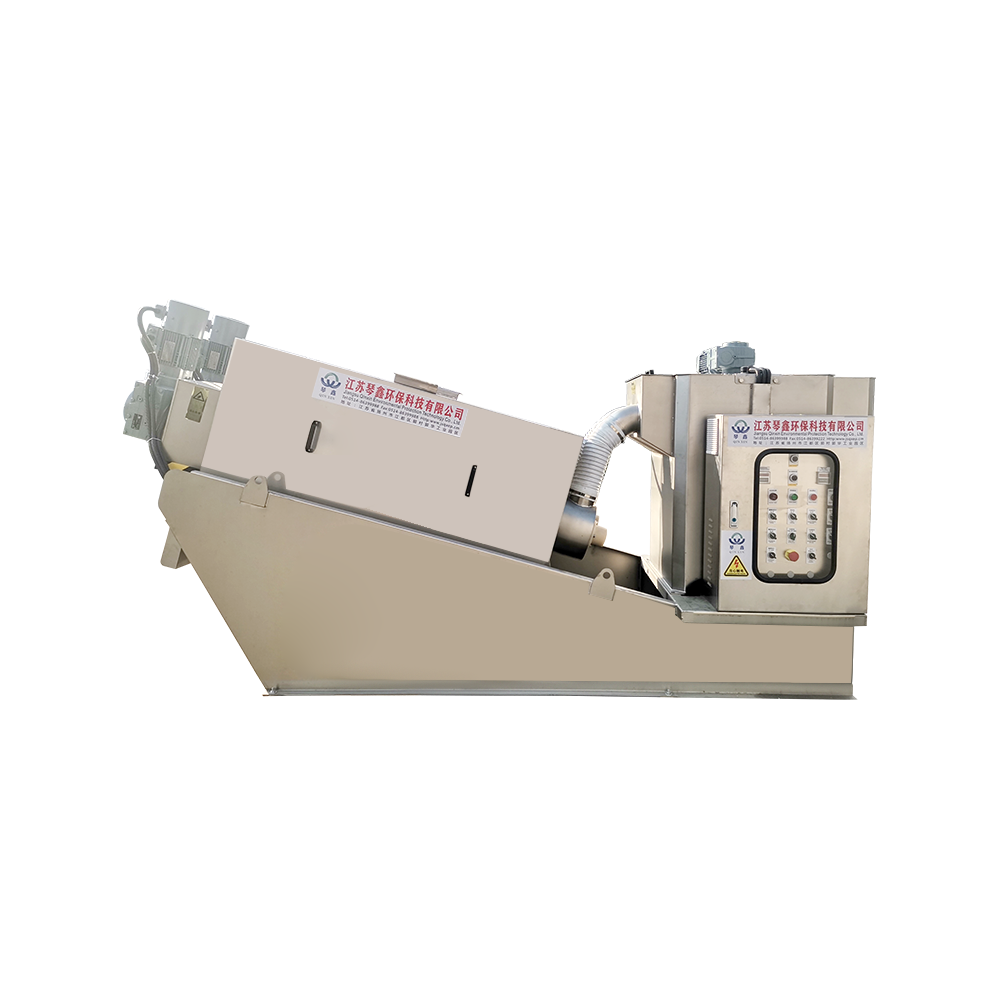
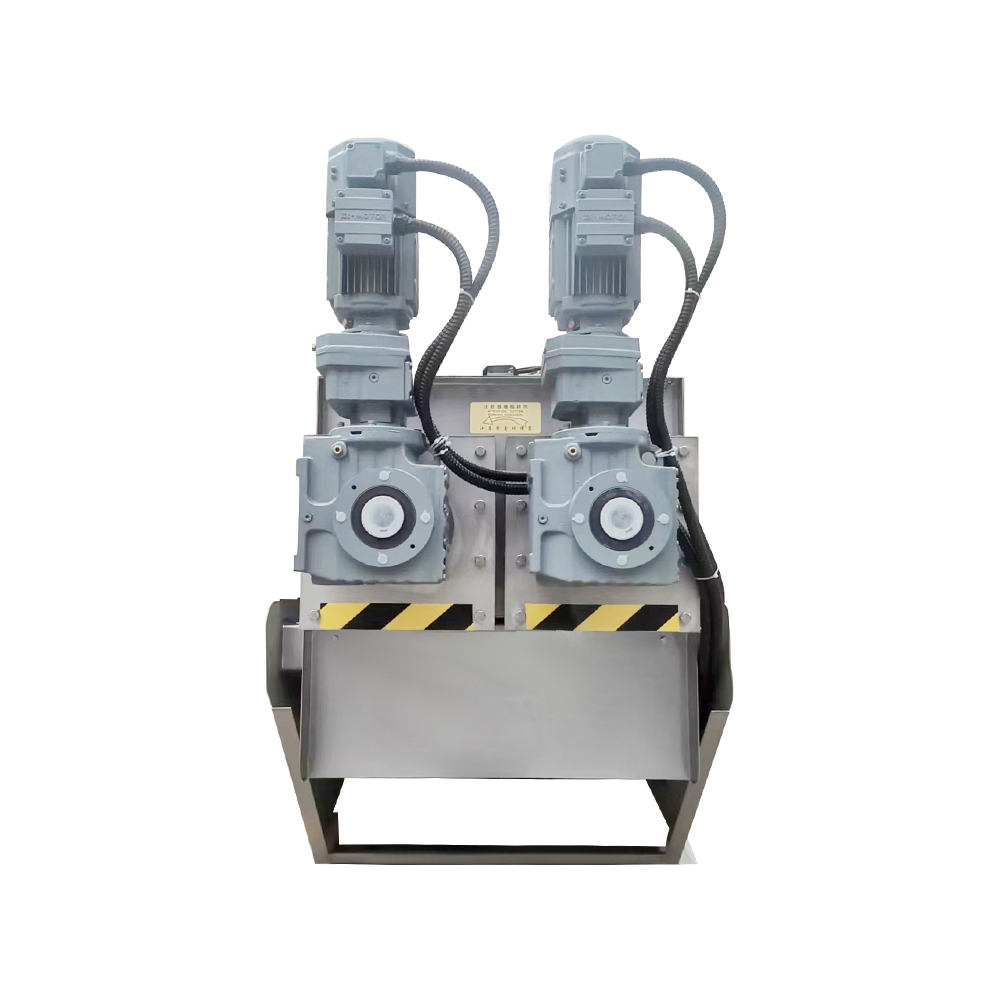 Custom Integrated Horizontal Food Grade Spiral Screw Sludge Dewatering Machine QYangzhou Qinxin Environmental Protection Technology Co., Ltd. Is China Custom Integrated Horizontal Food Grade Spiral Screw Sludge Dewate...View Product →
Whatever the sludge type, the most reliable way to confirm that the components are correctly selected is a pilot test with a sample of the actual sludge.
Component-Level Maintenance That Keeps a Screw Press Running
A screw press carries a reputation for being low maintenance, but each component follows its own service rhythm. The inspections below catch the most common problems before they turn into downtime.
- Inspect the screw flights for wear and measure the clearance between the screw and the screen.
- Open and rinse the screen basket to remove grease and scale before the slots blind.
- Verify that the cone adjustment still matches the target cake dryness.
- Monitor the torque reading on the drive, because a gradual rise is an early warning of blinding or wear.
- Calibrate the polymer dosing pumps so floc quality stays consistent.
- Check the gearbox oil level and seals every quarter.
Understanding the main components of a screw press turns a specification sheet into an operating plan. When the hopper, screw, screen, cone, drive and dosing system fit both the sludge and the hours the plant runs, a screw press delivers the dry cake, low energy cost and low operator attention that explain its popularity in municipal and industrial wastewater treatment.

 TOP
TOP