
 ENG
ENG
 English
 русский
 Español
 Tiếng Việt
 ไทย
ไทย
Article Directory
- 1 Energy Efficiency Becomes a Measured Specification
- 2 Polymer Dosing Moves Toward Precision Control
- 3 Automation And Reduced Operator Attention
- 4 Material Selection Is the New Maintenance Strategy
- 5 Application-Specific Dewatering Lines Are Replacing One-Size-Fits-All Machines
- 6 Cake Dryness Supports Resource Recovery And Carbon Accountability
- 7 How to Prepare for the Next Procurement Cycle
Sludge dewatering looks different today than it did five years ago. Wastewater plants are no longer choosing a press solely on cake dryness; they are comparing electricity consumption, polymer usage, wash water volumes, material grades, and the number of operator hours required to keep the machine running. The direction is clear: the future trends in sludge dewatering technology are about total lifecycle cost, process stability, and fit to a specific sludge stream, not about a single headline performance number.
Consider two plants with the same daily sludge volume. One runs a belt filter press at roughly 18 percent dry solids, with continuous belt washing and five kilograms of polymer per ton of dry solids. The other runs a low-speed screw press at 24 percent dry solids, with intermittent washing and automated dosing. The difference in monthly operating cost is large enough to change the payback calculation of the entire dewatering upgrade. That gap is what the next generation of equipment is closing.
Energy Efficiency Becomes a Measured Specification
The first and most visible shift is that energy consumption per ton of dry solids is moving into tender documents as a hard requirement. Electricity is usually the largest single operating cost in mechanical dewatering, and it is the cost that a plant can reduce immediately by changing equipment. A high-speed centrifuge may deliver a very dry cake, but its motor and drive train consume considerably more energy than a slow-turning screw mechanism doing the same job.
The Operating Cost Comparison Every Plant Should Run
The following comparison reflects typical experience across municipal and industrial applications. It is intended as a planning reference, not a guarantee, because sludge type and conditioning chemistry always shift the numbers.
| Technology | Relative energy use | Wash water demand | Typical cake dryness | Polymer consumption |
|---|---|---|---|---|
| Centrifuge | High | Low | Highest | Moderate to high |
| Belt filter press | Medium | High | Medium | High |
| Stacked screw press | Low | Low | High | Moderate with precision dosing |
Why Low-Speed Screw Presses Fit the Energy Trend
The stacked screw press answers the energy question with a simple mechanical principle: it turns slowly, keeps the sludge under steady pressure, and uses the gaps between fixed and moving rings to self-clean the screen zone. Slow rotation means lower installed power, less heat generation, and less wear on the drive and filter elements. It also means a machine that can be left running while the operator attends to other duties.
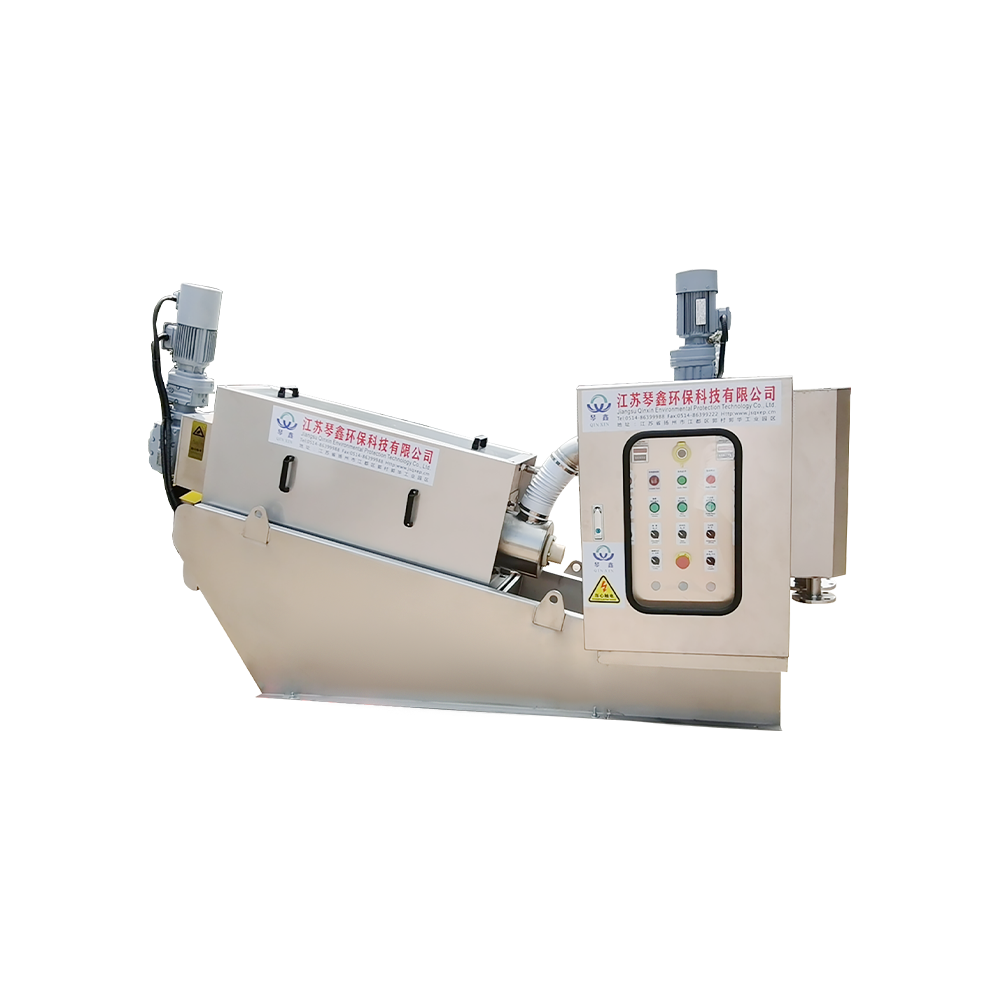
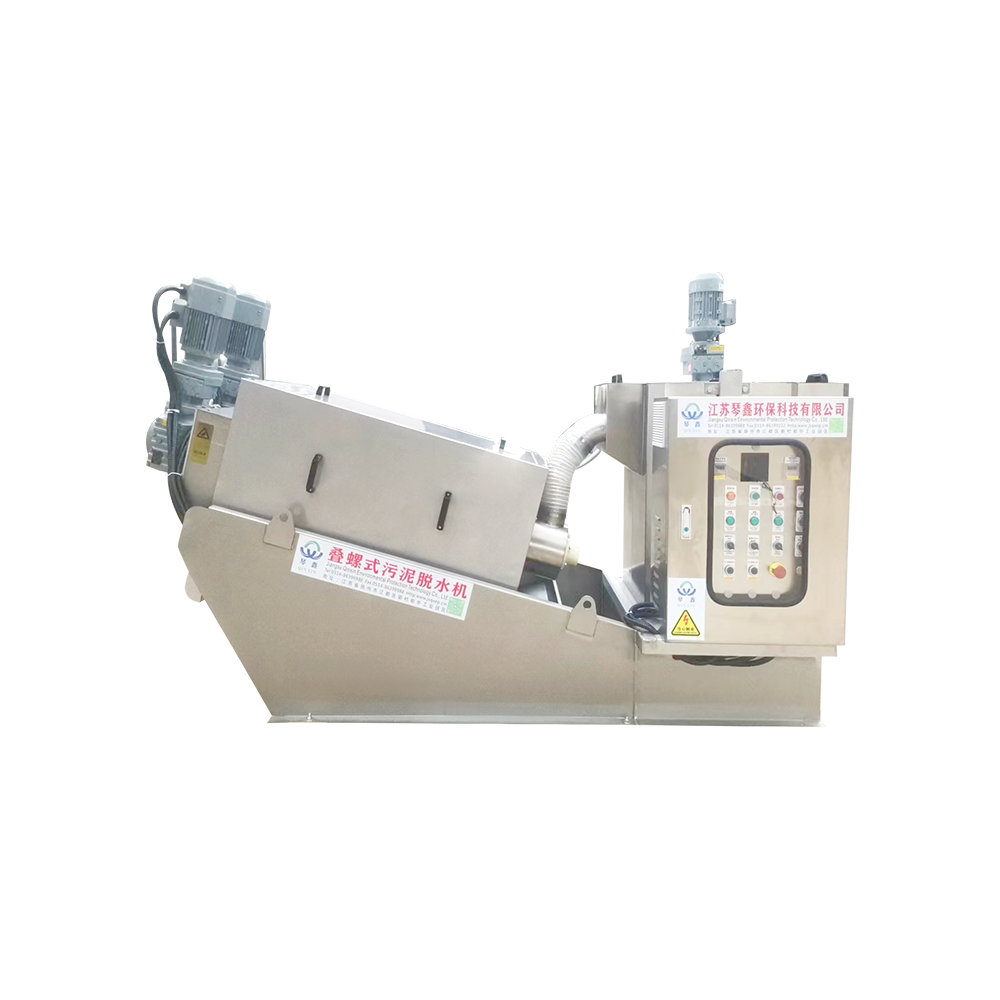
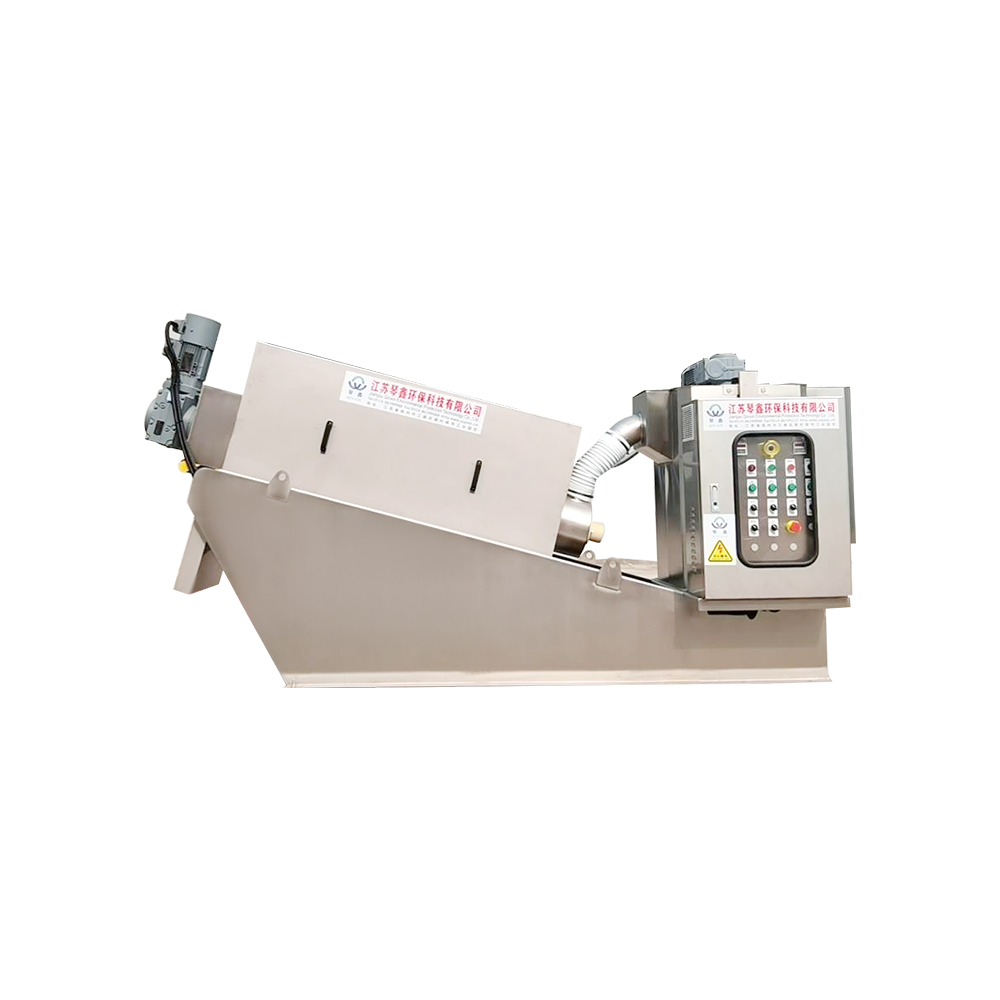
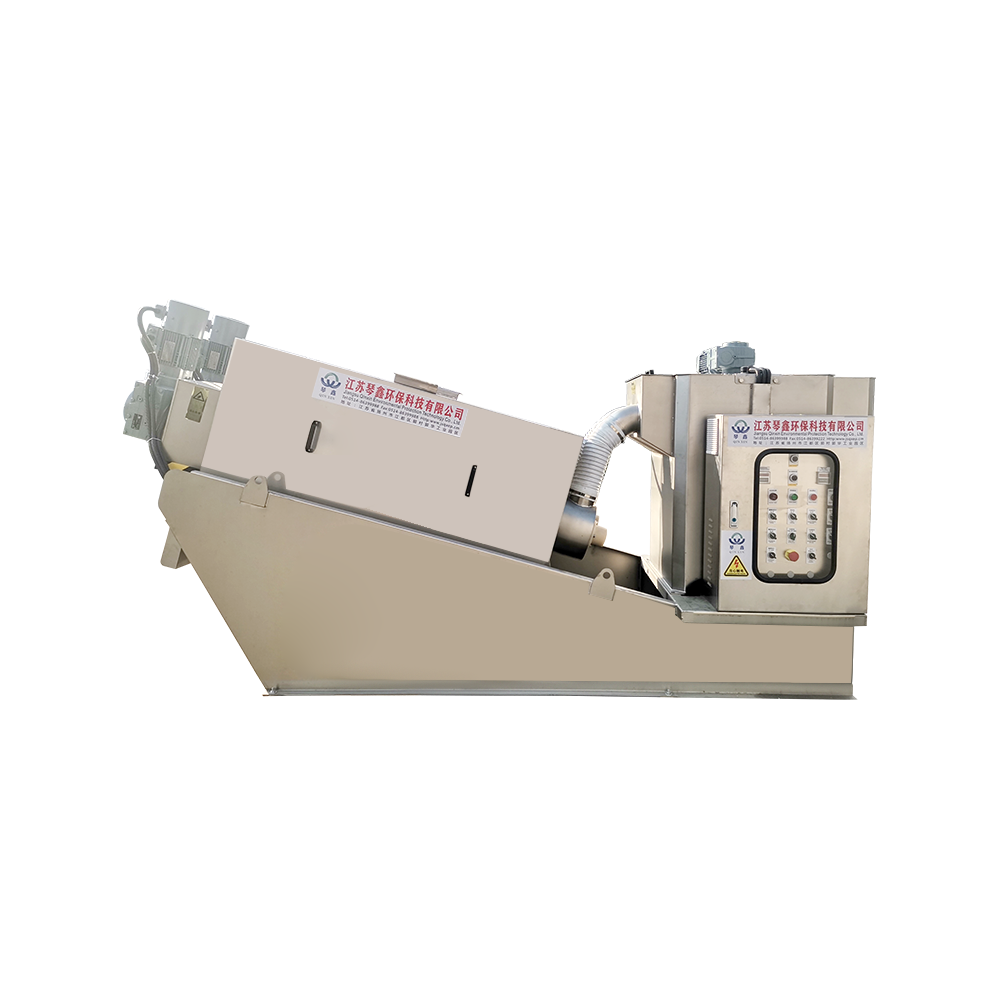
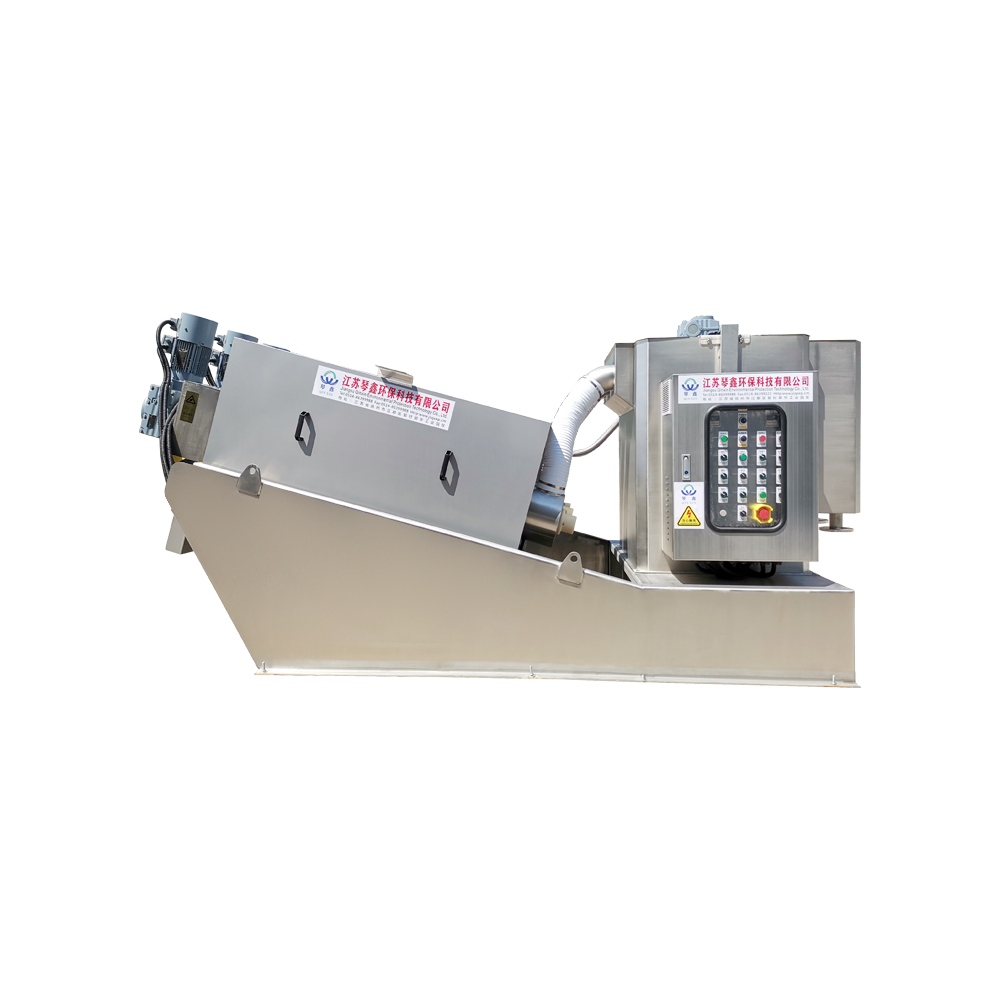
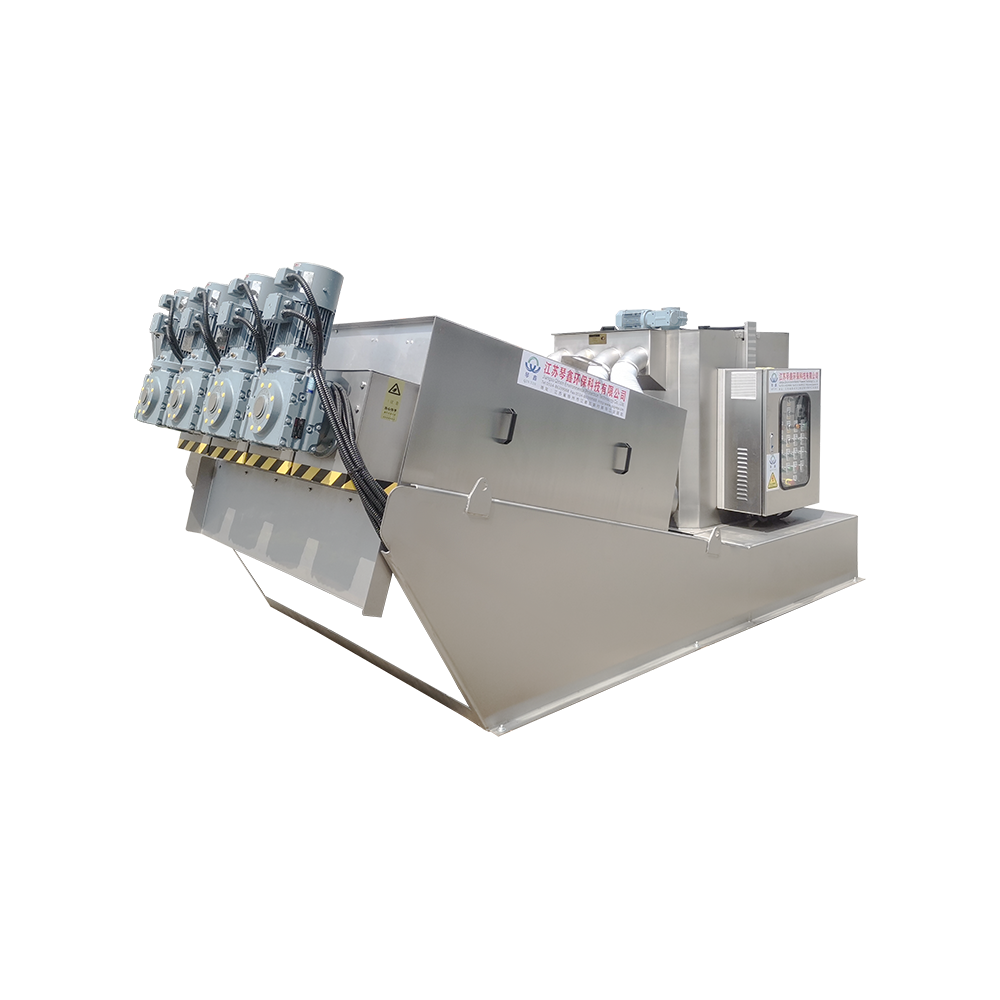
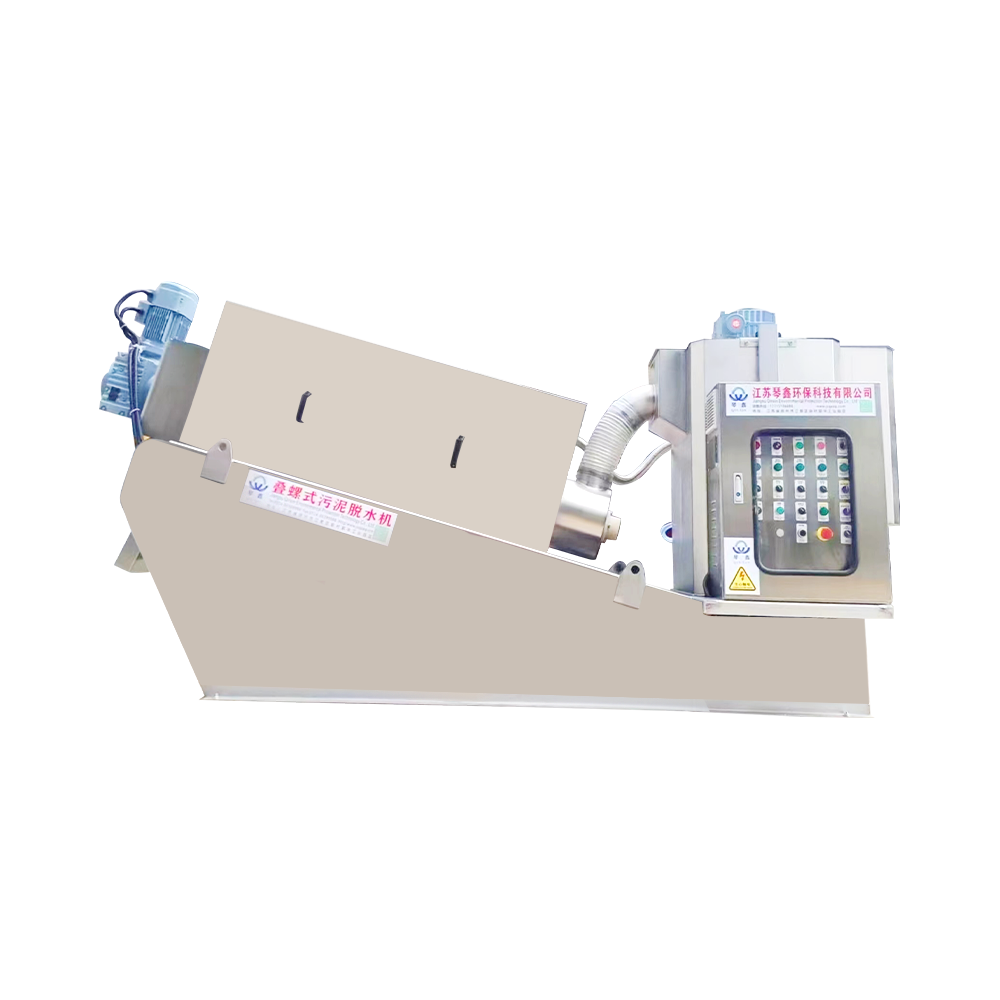
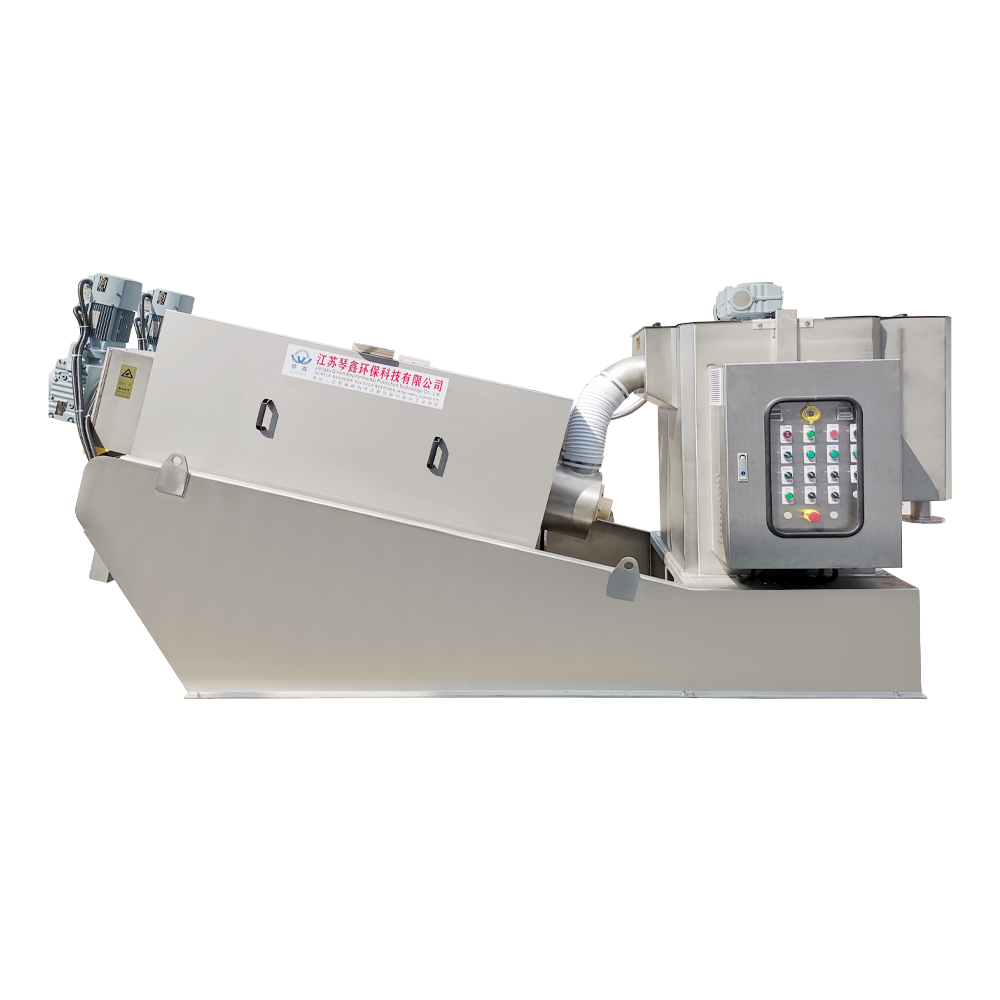
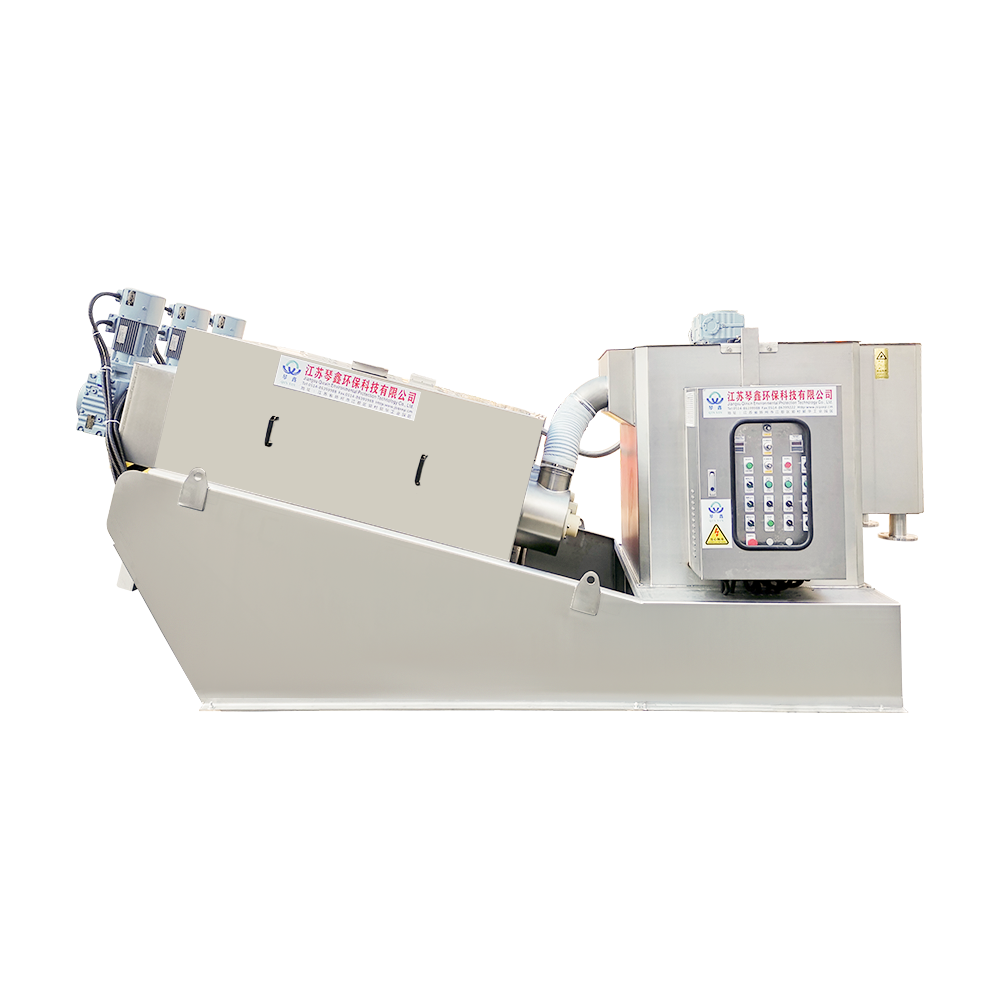
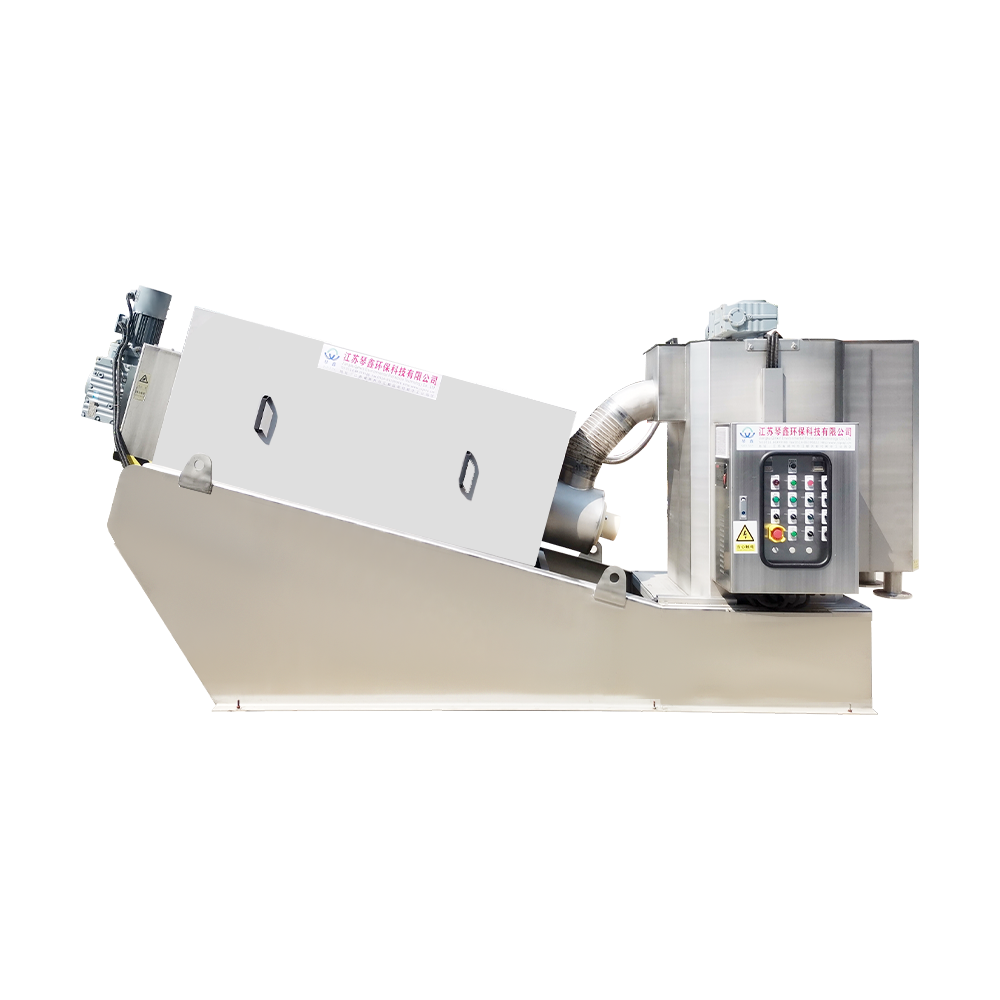
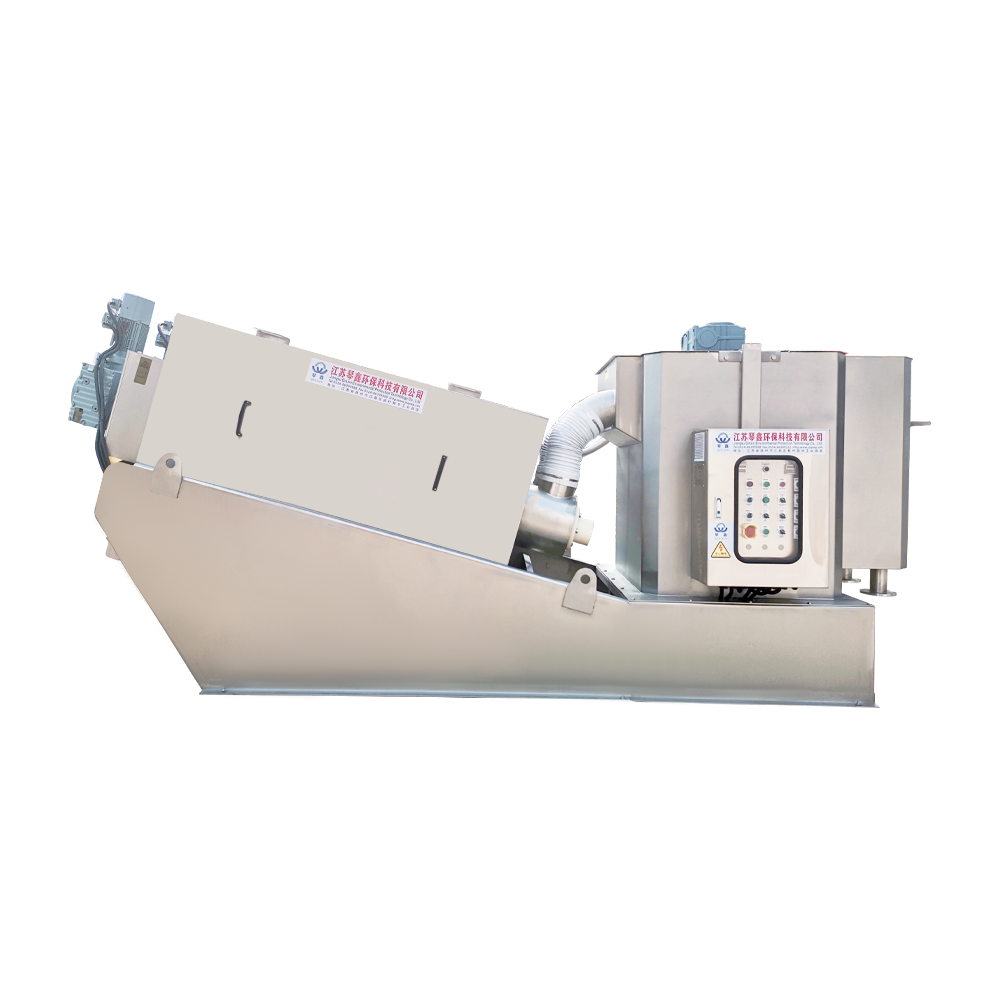
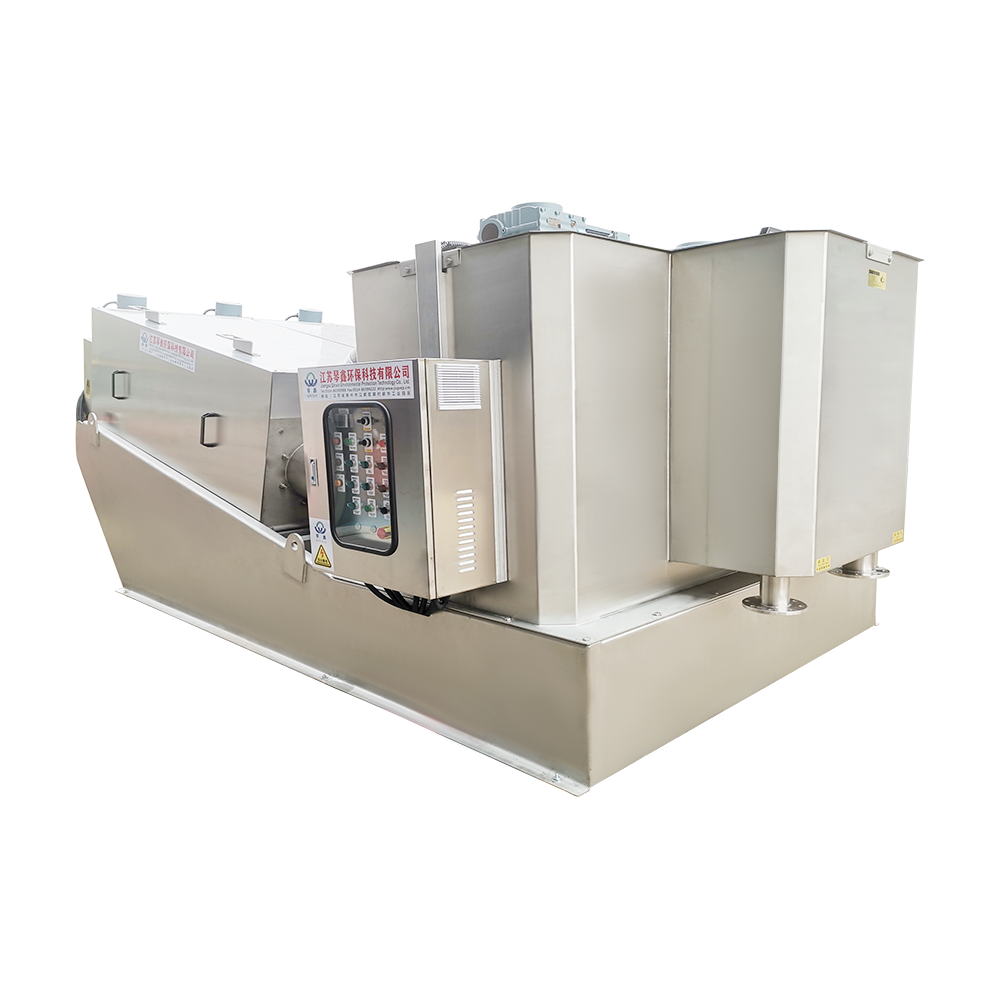
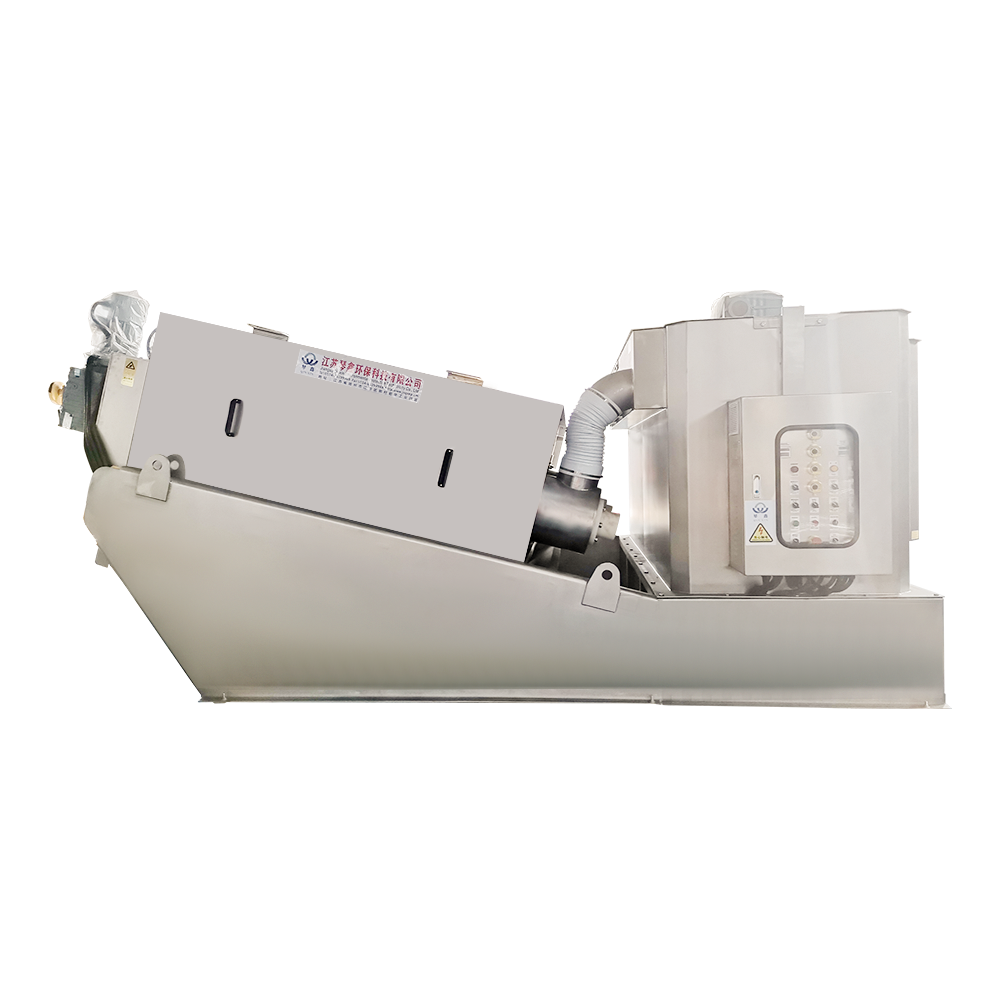
Manufacturers are refining this principle rather than replacing it. Qinxin's eco-friendly automatic dewatering spiral screw sludge dewatering machine, for example, combines a multi-disc double worm design with low-speed operation to reduce energy consumption and wear while keeping solids in the press long enough to reach a stable cake. An added benefit is the reduced footprint and simpler foundation, because a stacked screw press does not transmit the vibration that a centrifuge creates. The practical effect is lower energy and wash water use per cubic meter of sludge, which matters more as electricity prices rise.
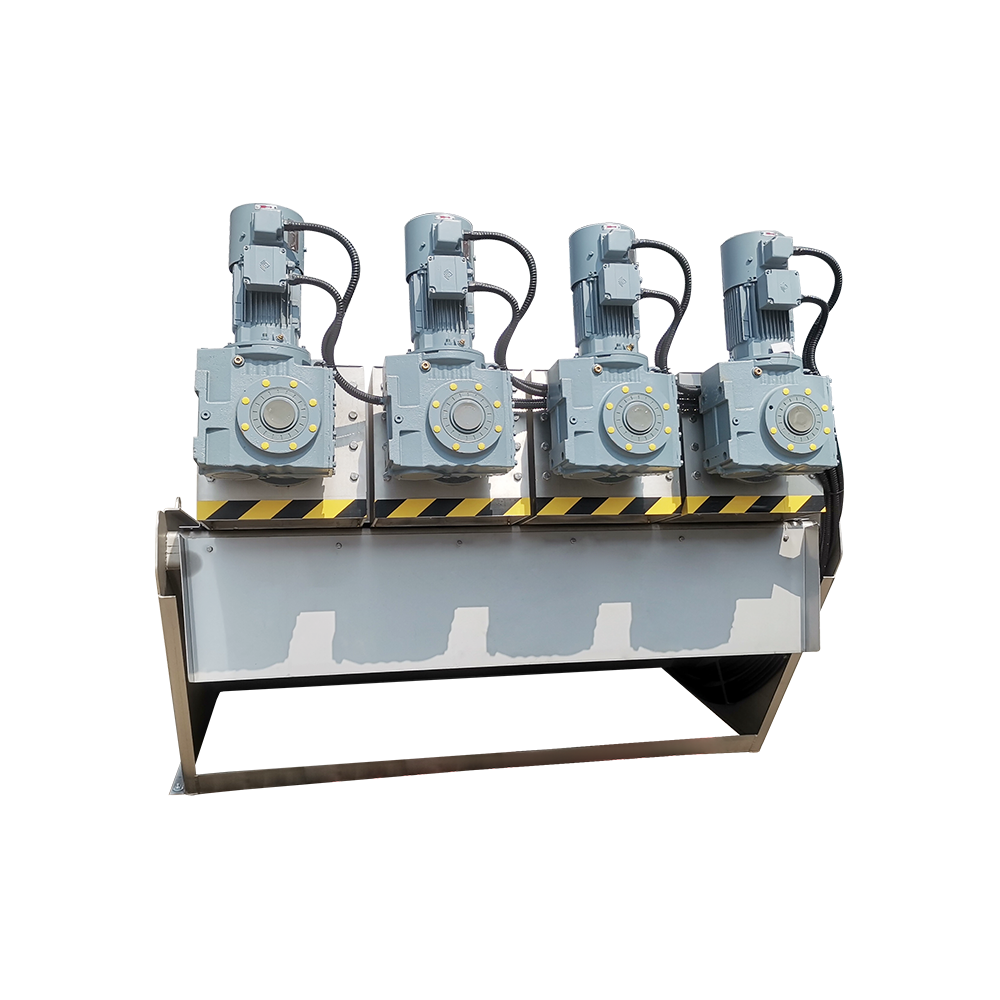 Custom Waste Water Treatment Eco-friendly Spiral Screw Sludge Dewatering MachineYangzhou Qinxin Environmental Protection Technology Co., Ltd. Is China Custom Waste Water Treatment Eco-friendly Spiral Screw Sludge Dewa...View Product →
Polymer Dosing Moves Toward Precision Control
The dewatering machine decides how dry the cake becomes; the dosing system decides how much money the plant spends to make that cake. Polymer, usually polyacrylamide (PAM), is often the second-largest consumable cost in the sludge line, and it is still dosed manually in many plants. Manual dosing drifts. When sludge flow increases and the operator does not react in time, floc formation collapses, cake moisture goes up, and polymer consumption climbs.
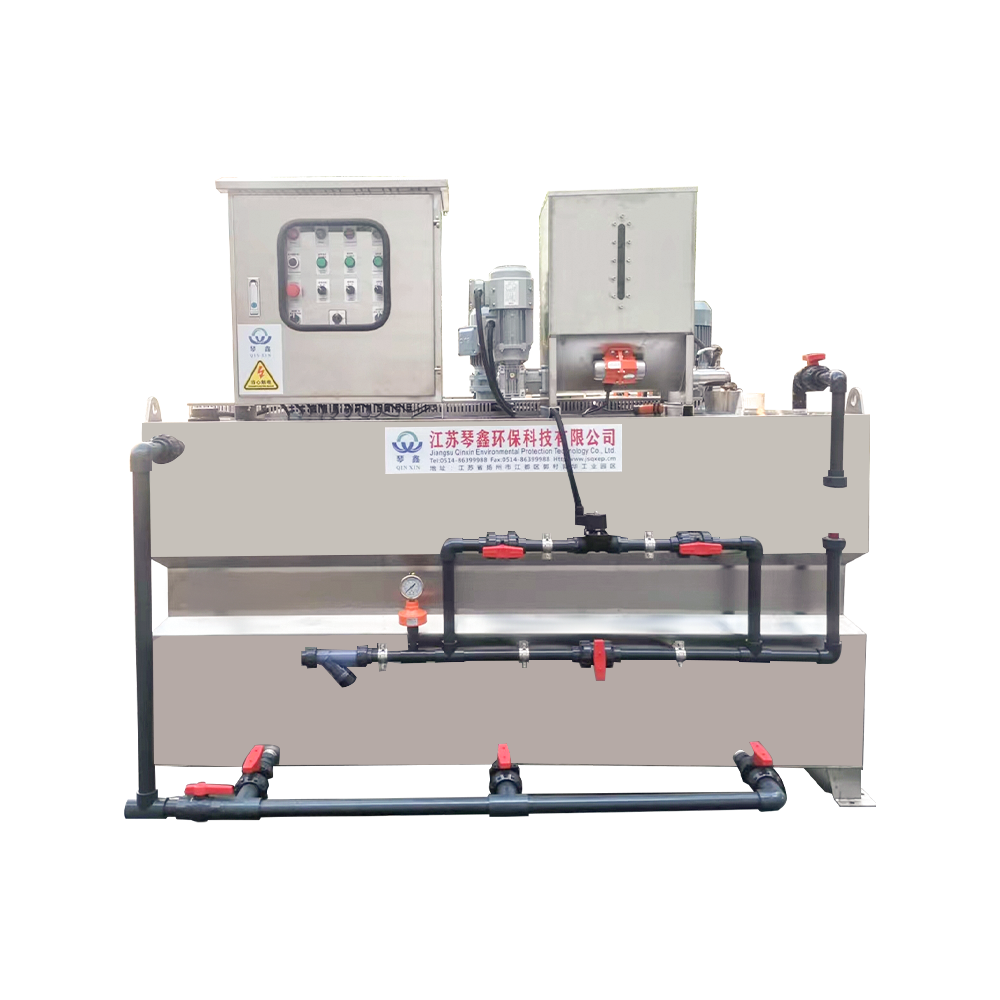
The trend is to treat chemical conditioning as a precision step with the same discipline as the dewatering process itself. Variable-frequency dosing devices prepare polymer at a controlled concentration, age it consistently, and feed it in proportion to the actual sludge flow. Qinxin's integrated polymer dosing variable frequency dosing device is an example of this approach, combining automatic preparation with flow-matched dosing. Plants that adopt this equipment typically stabilize cake dryness and reduce chemical waste at the same time, because flocs are formed uniformly instead of in bursts.
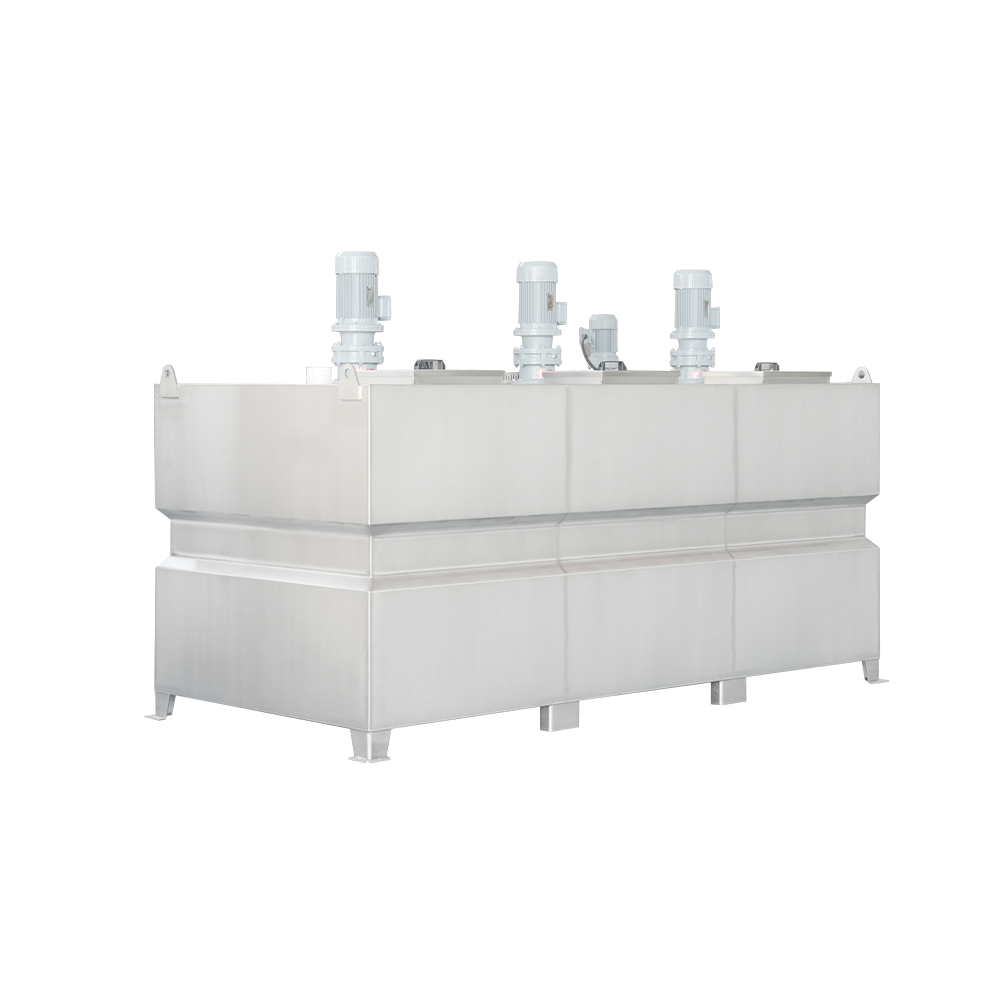 Custom Automatic Integrated Powder Chemical Dosing Variable Frequency Dosing DevYangzhou Qinxin Environmental Protection Technology Co., Ltd. Is China Custom Automatic Integrated Powder Chemical Dosing Variable Freque...View Product →
The financial impact is not marginal. A mid-sized plant treating 15 tons of dry solids per day can easily spend more than one hundred thousand dollars a year on polymer. Cutting consumption from five kilograms to four kilograms per ton of dry solids, while holding cake quality, saves tens of thousands of dollars every year.
Automation And Reduced Operator Attention
Operator time is becoming one of the scarcest resources in wastewater operations, particularly in smaller municipal plants and industrial facilities where one person covers several process steps. The future of dewatering equipment, therefore, is defined less by maximum throughput and more by how long the machine can run unattended.
Newer screw press designs support this through self-cleaning screen zones, torque-based overload protection, and automated start-stop logic. Washing is triggered by actual pressure or running time instead of a fixed daily schedule. Variable-speed drives adjust throughput to the incoming sludge concentration. For smaller plants without a dedicated laboratory, automated dosing and torque monitoring effectively replace routine manual checks. The result is fewer manual inspections, lower risk of human error during flocculation, and a measurable reduction in the labor cost per ton of dewatered cake.
Material Selection Is the New Maintenance Strategy
Corrosion, not mechanical wear, is frequently the real reason a dewatering machine fails or loses performance after a few years. Municipal sludge contains grit; chemical, pharmaceutical, printing and dyeing, and electroplating wastewater brings chlorides, acids, and solvents that can attack carbon steel and ordinary castings within months.
Where Corrosion Shortens Dewatering Equipment Life
The damage rarely appears on the outside of the machine. It shows up inside the filter zone, on the shaft and rings, and in the discharge chute where cake sits between batches. Once pitting starts, dewatering performance drops slowly, spare part costs rise, and the plant begins accepting a lower cake dryness just to keep the line running.
Stainless Steel Grades That Matter in Practice
The specification trend is to state material grades explicitly. SUS304 stainless steel is a sound baseline for municipal sludge and general industrial wastewater. SUS316 is preferred where chlorides are elevated, pH is acidic, or the equipment is washed frequently with aggressive cleaning agents, as is common in food and dairy plants. The same machine platform can be built in either grade, which is why procurement documents should list the material of the shaft, filter plates, and frame separately rather than accepting a generic stainless steel claim.
Application-Specific Dewatering Lines Are Replacing One-Size-Fits-All Machines
A sludge dewatering machine that works well on municipal mixed sludge may struggle on fibrous livestock manure or on food processing waste with high fat content. The one-size-fits-all era is ending. The clearest trend in the equipment market is the proliferation of configurations built on the same screw press principle but adapted to the chemistry and physical behavior of a specific stream.
Food and beverage plants, for example, need equipment that is easy to clean, compact in layout, and built from materials that tolerate sanitizing routines. Qinxin's integrated horizontal food-grade spiral screw sludge dewatering machine is one such configuration, designed around the space and hygiene constraints of food processing facilities. Livestock farms, in contrast, need machines that handle high total solids and fibrous manure without constant attention, while printing and dyeing plants require configurations that tolerate aggressive chemicals. The underlying press technology is the same; the execution is deliberately different.
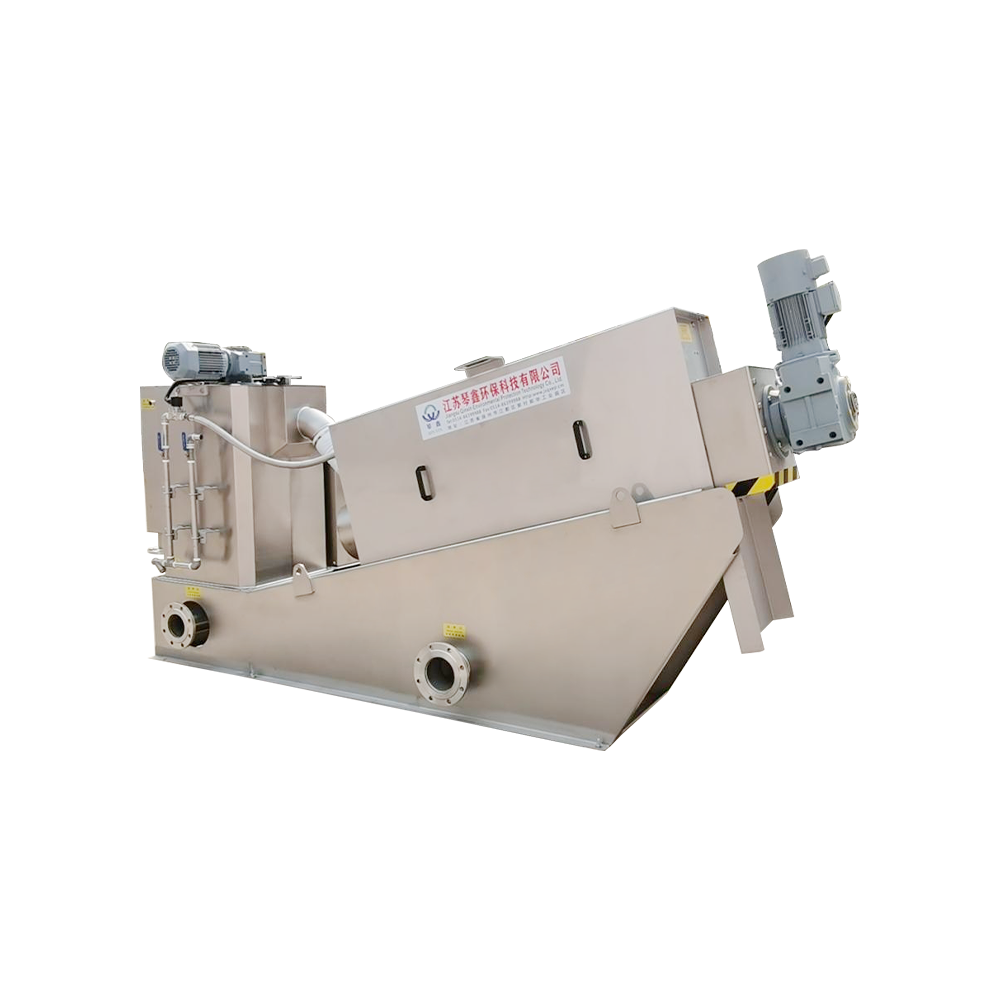 Custom Eco-friendly Solid-Liquid Separation Spiral Screw Sludge Dewatering MachiYangzhou Qinxin Environmental Protection Technology Co., Ltd. Is China Custom Eco-friendly Solid-Liquid Separation Spiral Screw Sludge De...View Product →
Cake Dryness Supports Resource Recovery And Carbon Accountability
Sludge disposal costs are weighed by the ton, and the water left in the cake is paid for twice — once when it is transported, and again when it consumes fuel in an incinerator or takes up space in a landfill. Cake dryness is therefore a financial metric, not just a process indicator.
The next phase of dewatering technology will be judged on how consistently it holds a dryness band — typically 20 to 25 percent dry solids for mixed municipal sludge on a screw press — even when the incoming solids concentration fluctuates through the day. Stable dryness is what makes downstream routes such as incineration, cement kiln co-processing, or agricultural use viable. It also enables upstream automation: when the press performs predictably, the dosing system, the feed pump, and the conveying line can be synchronized into one reliable process train.
How to Prepare for the Next Procurement Cycle
The signal for buyers is straightforward. The next dewatering purchase should be evaluated on documented performance rather than the lowest quotation. Ask for energy and polymer consumption figures, material certificates, pilot test results on the actual sludge, and a clear statement of the wash water demand. If a supplier cannot provide these, the risk is simply transferred to the plant owner.
The future also favors suppliers who can deliver the press and its supporting equipment as one integrated line, because the largest savings come from the interaction between the dewatering machine and the dosing, screening, and conveying units around it. Choosing equipment from a sludge dewatering equipment manufacturer that builds the complete process train avoids the compatibility gaps that appear when components are sourced from different vendors. That integration, more than any single component, is what will define the most efficient sludge dewatering plants in the coming years.

 TOP
TOP