
 ENG
 English
 русский
 Español
 Tiếng Việt
 ไทย

Article Directory
Why the Type of Screw Press Matters
A municipal wastewater plant near a chemical park recently asked us whether a screw press could replace its aging belt press. Before the plant could evaluate quotes, we had to separate one important question from the rest: which type of screw press does the sludge actually need? The answer matters because screw presses are not interchangeable; the mechanical design, material grade, and application focus determine whether the machine will run for years or fail within months.
In broad terms, available wastewater screw presses can be divided into two structural families: conventional single-screw presses and multi-disc (stacked or volute) screw presses. Within each family, manufacturers then add application-specific versions for municipal sludge, food-processing waste, chemical effluent, and livestock manure. The operating principle—a rotating screw that moves sludge against a filtration screen—remains the same, but the geometry, materials, and auxiliary systems change dramatically from one type to another.
Structural Types: Single-Screw and Multi-Disc Screw Presses
Conventional Single-Screw Presses
A conventional single-screw press uses one tapered screw inside a rigid cylindrical screen. As the screw rotates, it advances the sludge and gradually increases the pressure by reducing the screw pitch or shaft diameter. This design is most effective when the incoming sludge is already concentrated or contains fibers, such as primary sludge with paper content, pulp and paper waste, or screened agricultural material. Because the screen is fixed, the machine can produce cake dryness in the 25-30% range with relatively little polymer when fed with high-solids slurry.
The limitation is the filtration area. In a single-screw press, only the lower part of the screen is actively filtering at any moment, and the machine relies on pressure to force water out. Thin biological sludge, especially with a high fraction of fine particles, tends to blind the screen or require more polymer than a multi-disc design would need. For a closer look at how these machines operate and where they are best applied, the dewatering screw press machine guide explains the working principles and typical uses in more detail.
Multi-Disc (Stacked/Volute) Screw Presses
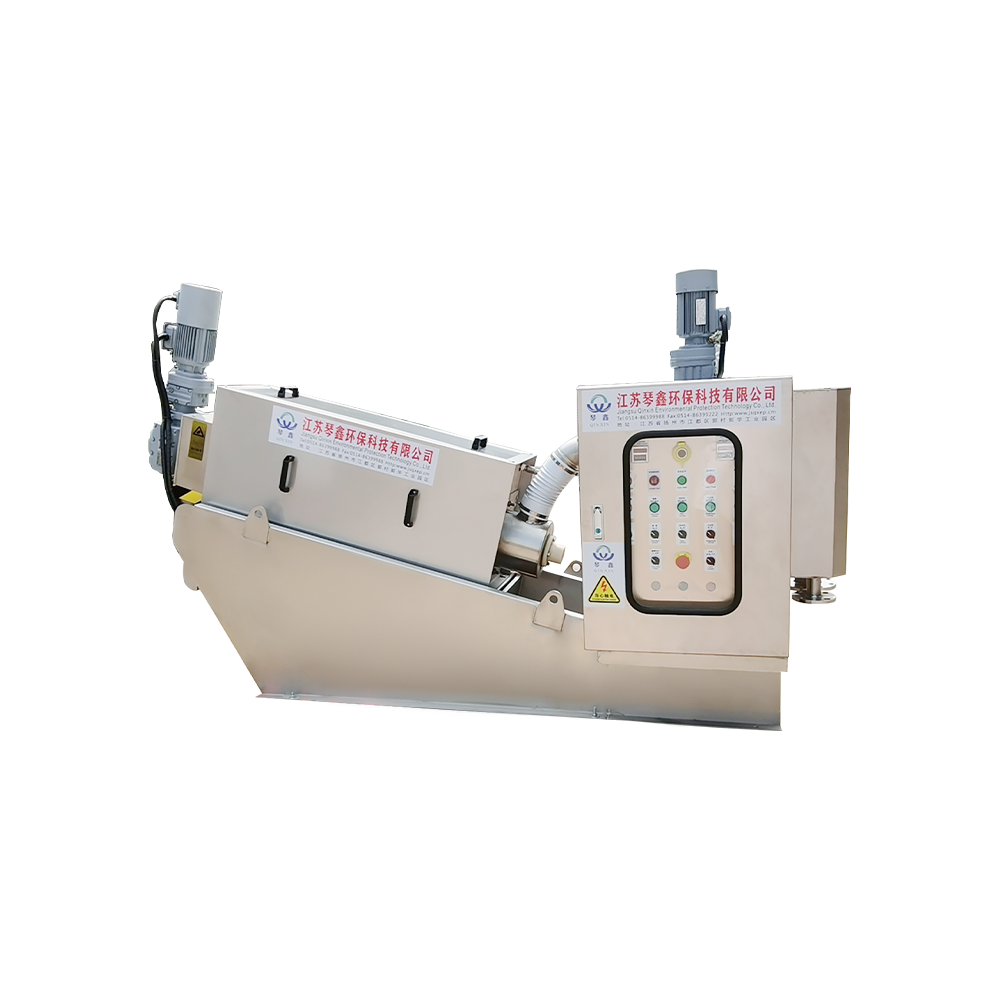
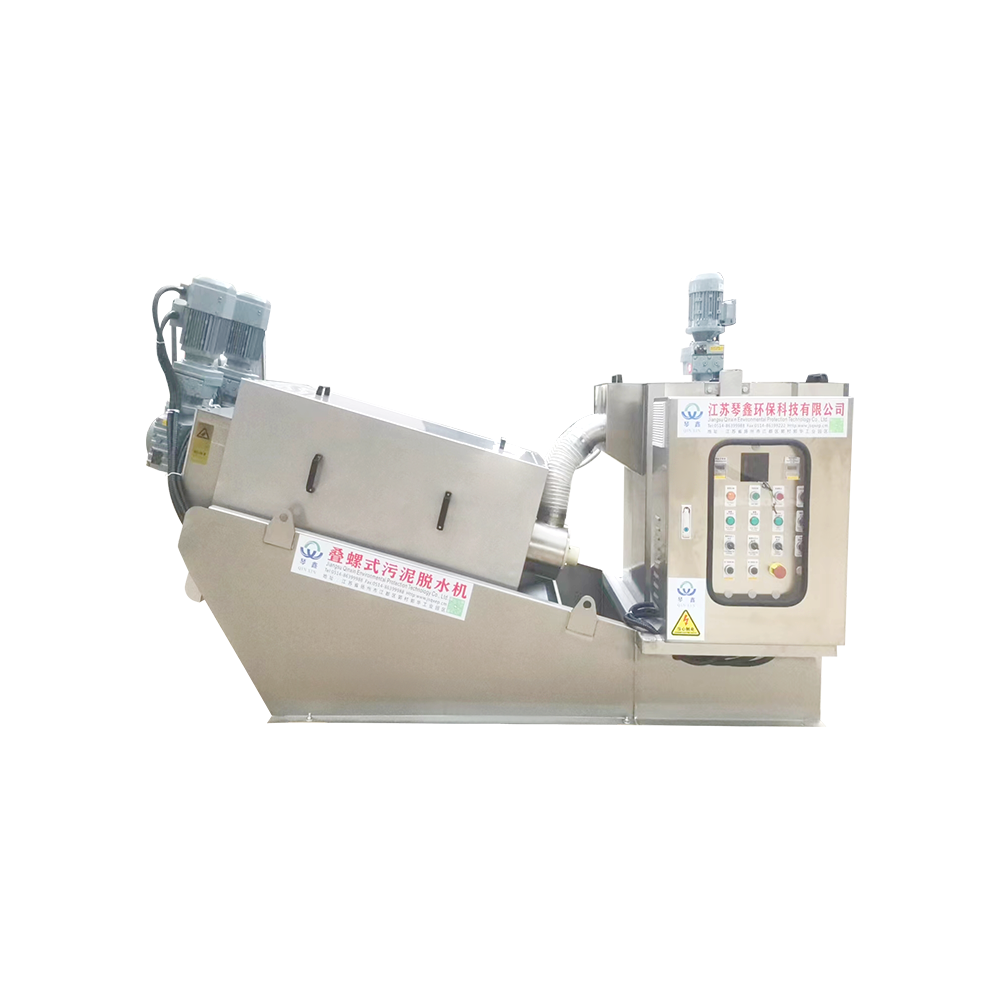
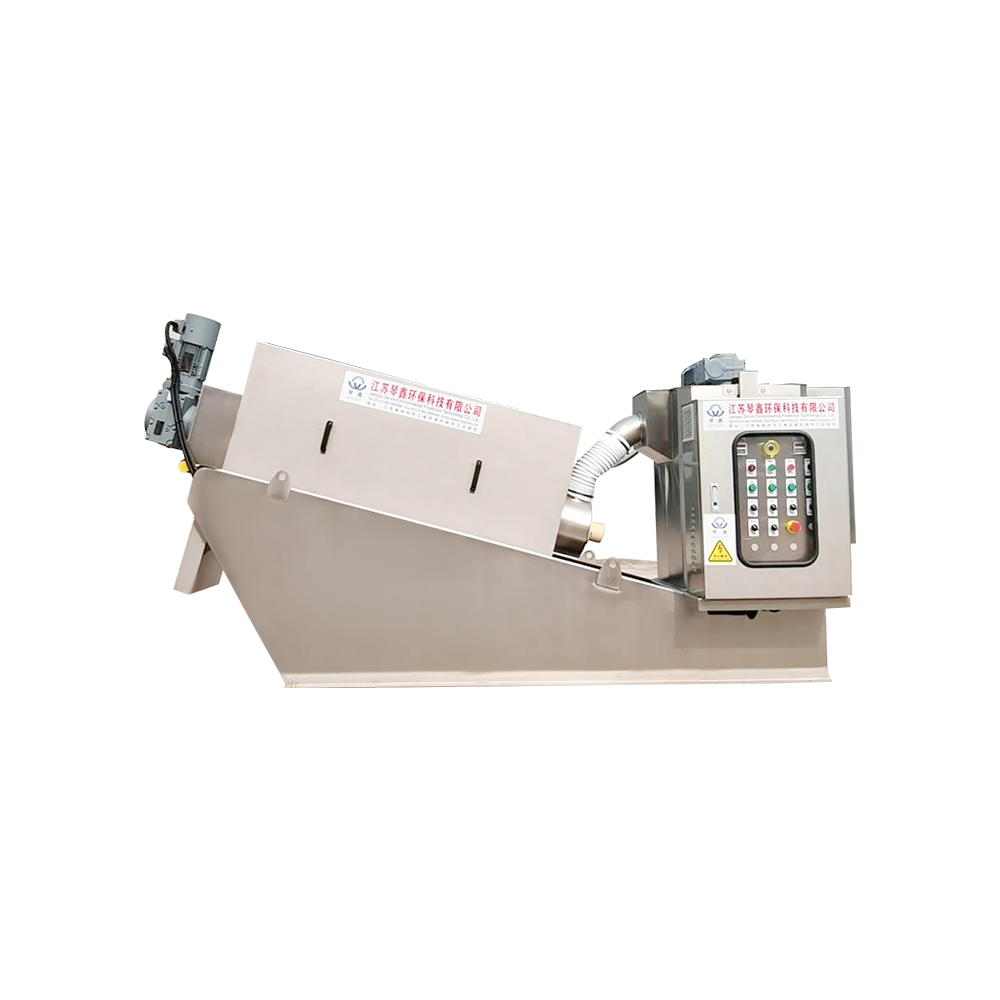
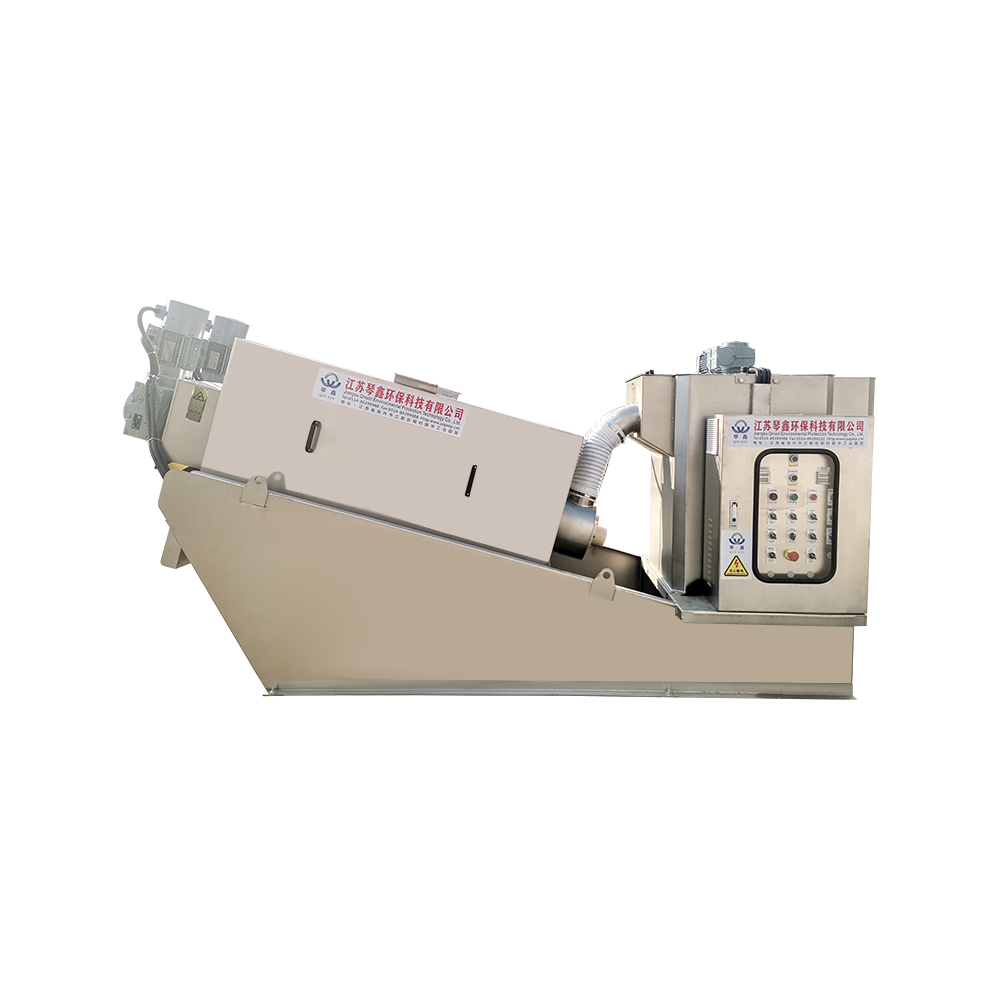
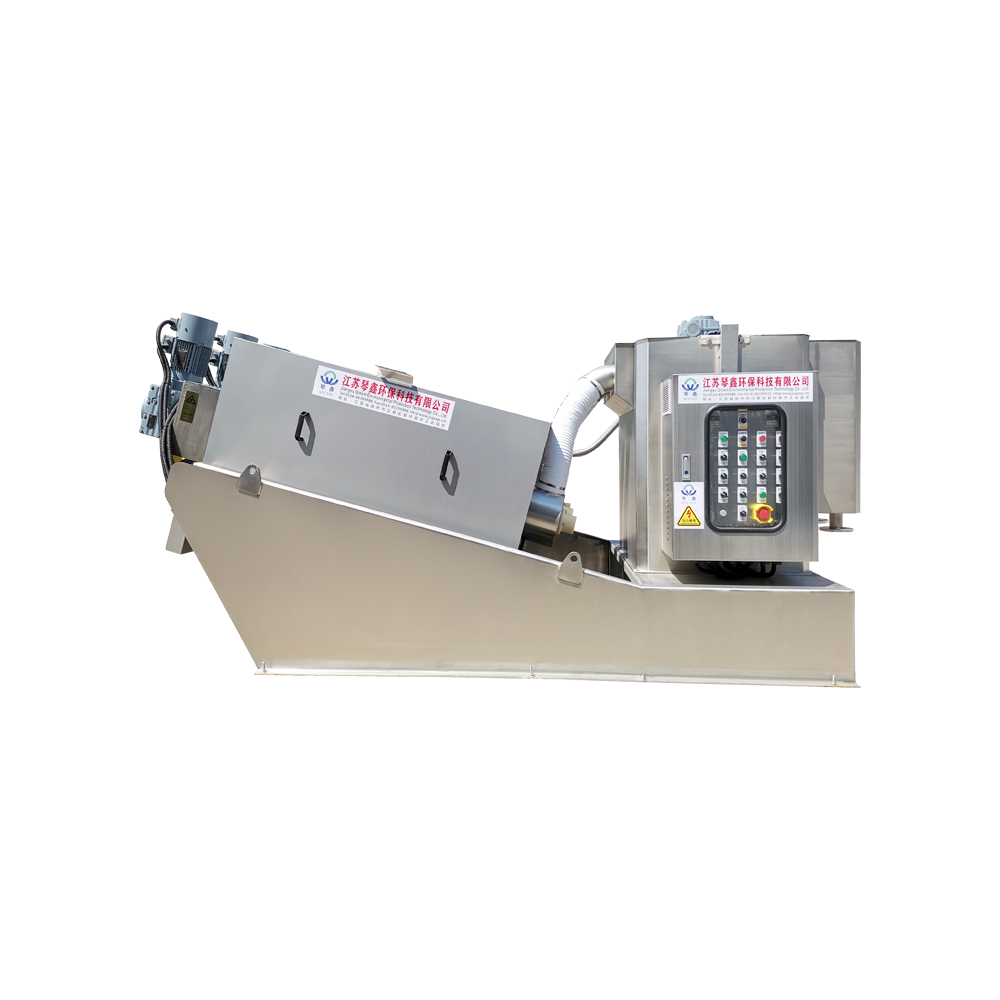
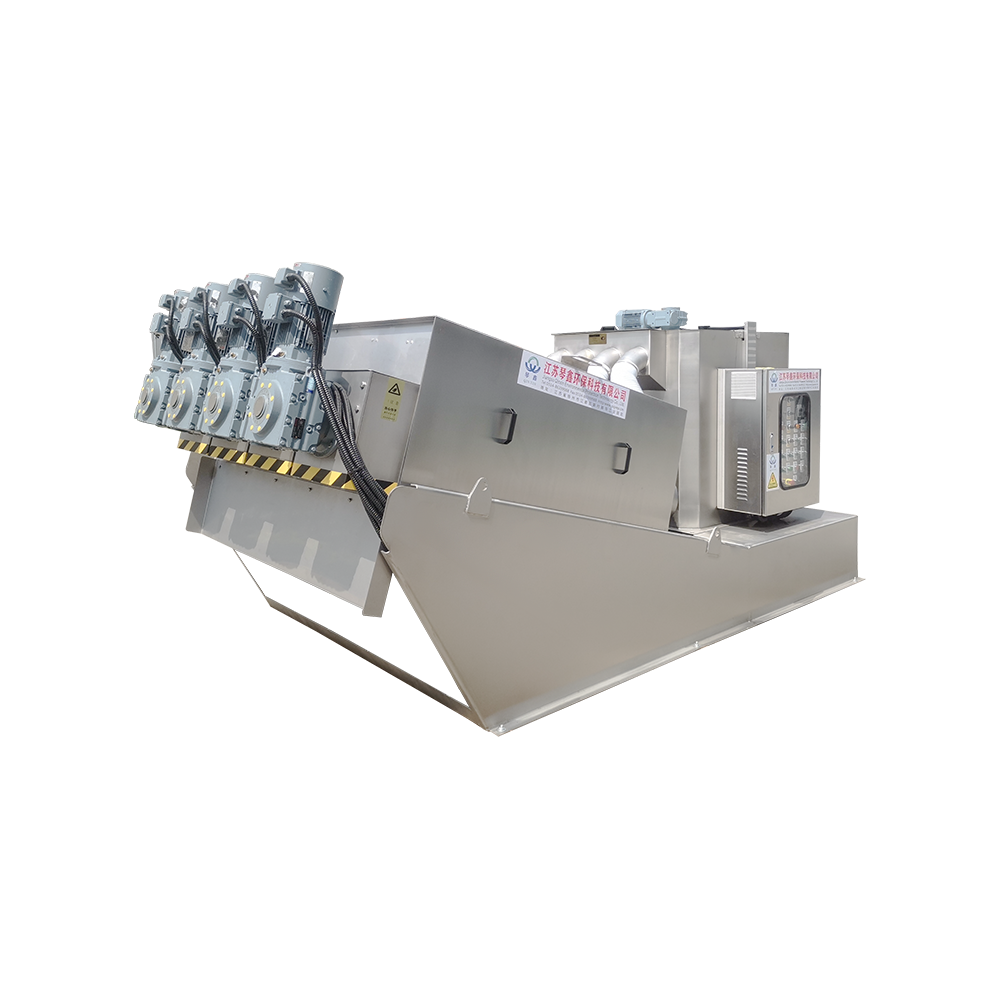
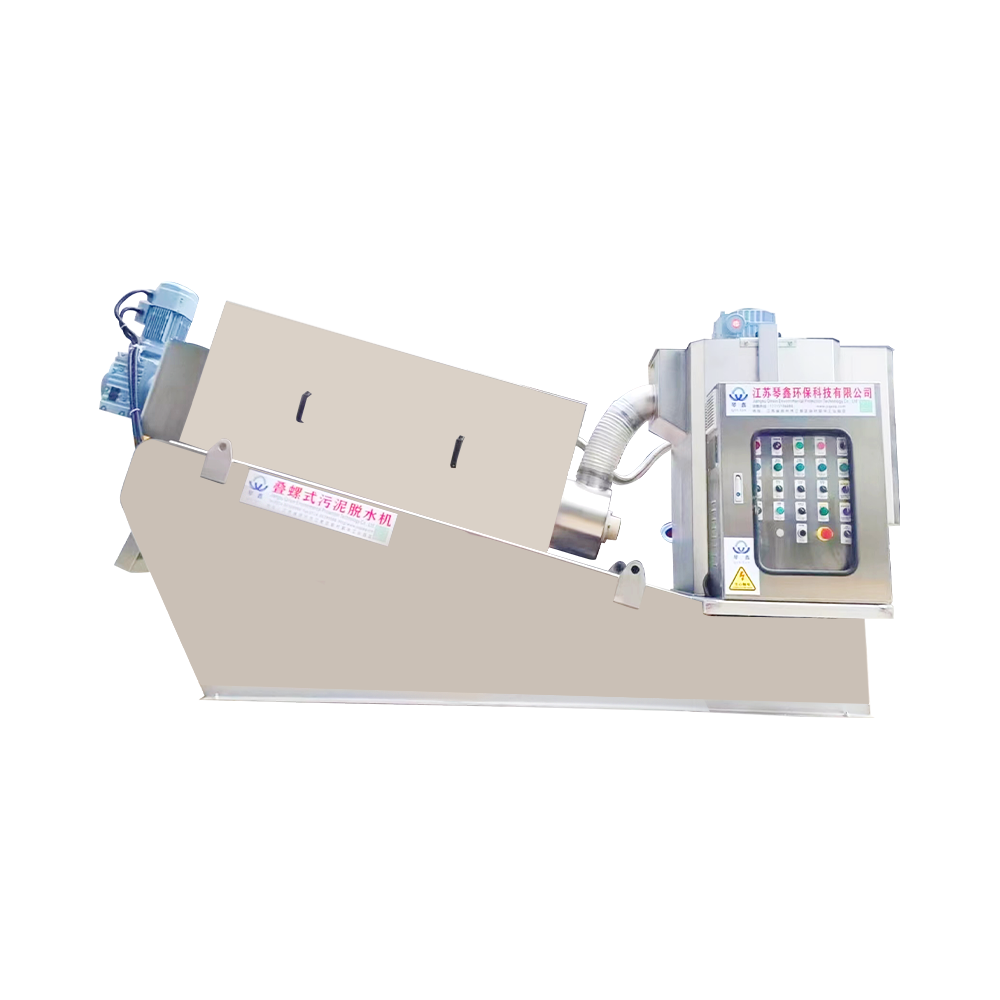
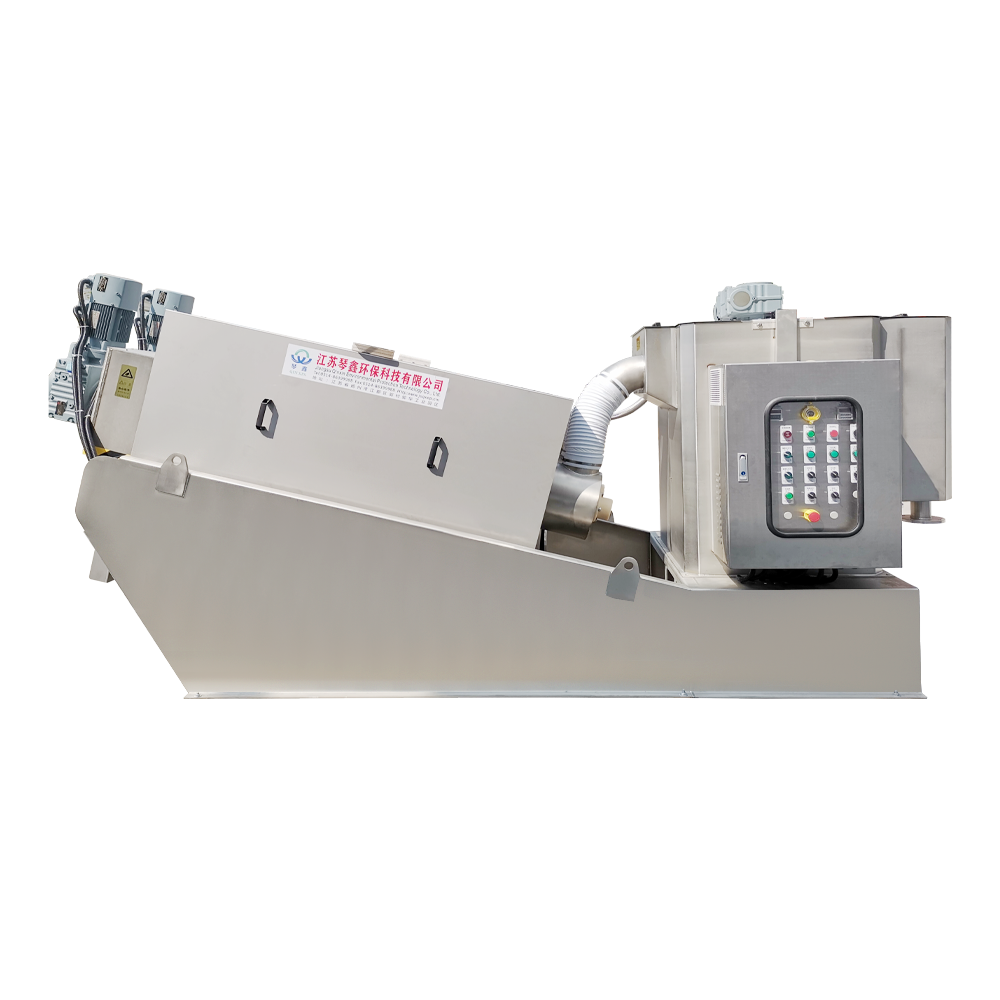
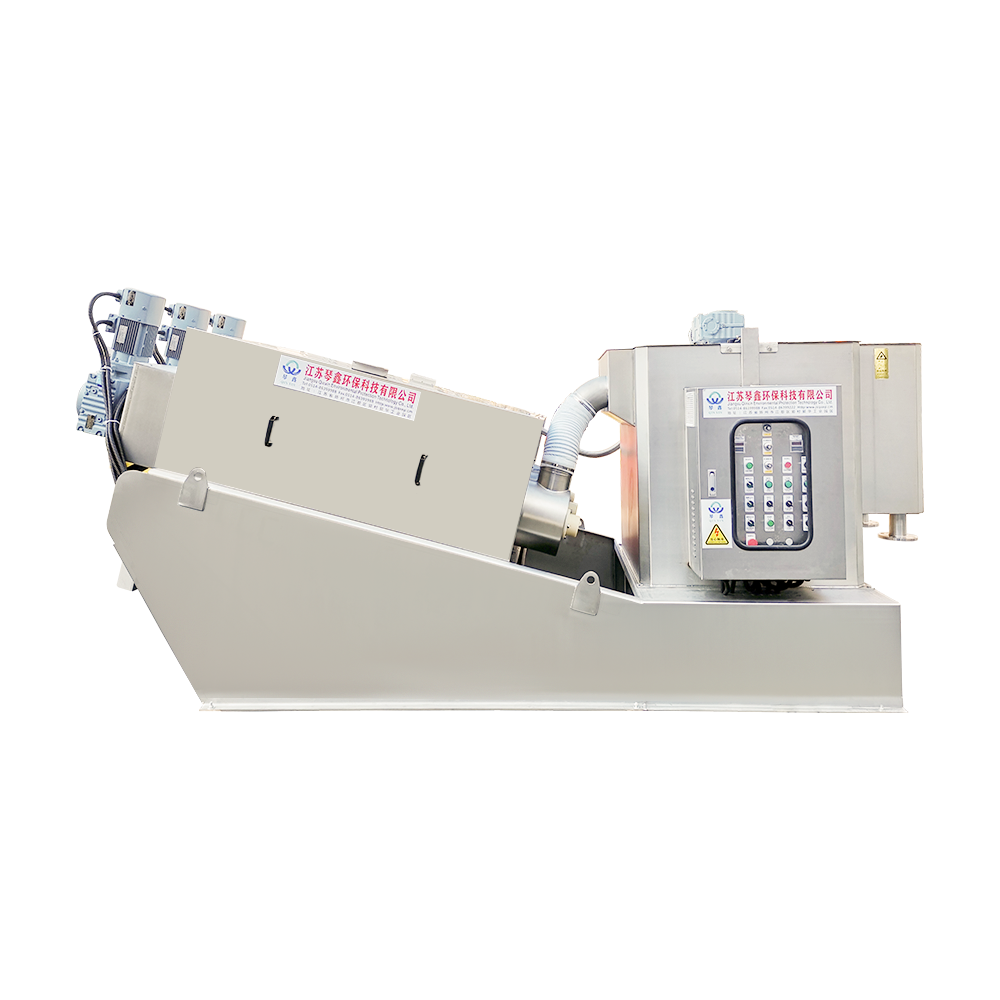
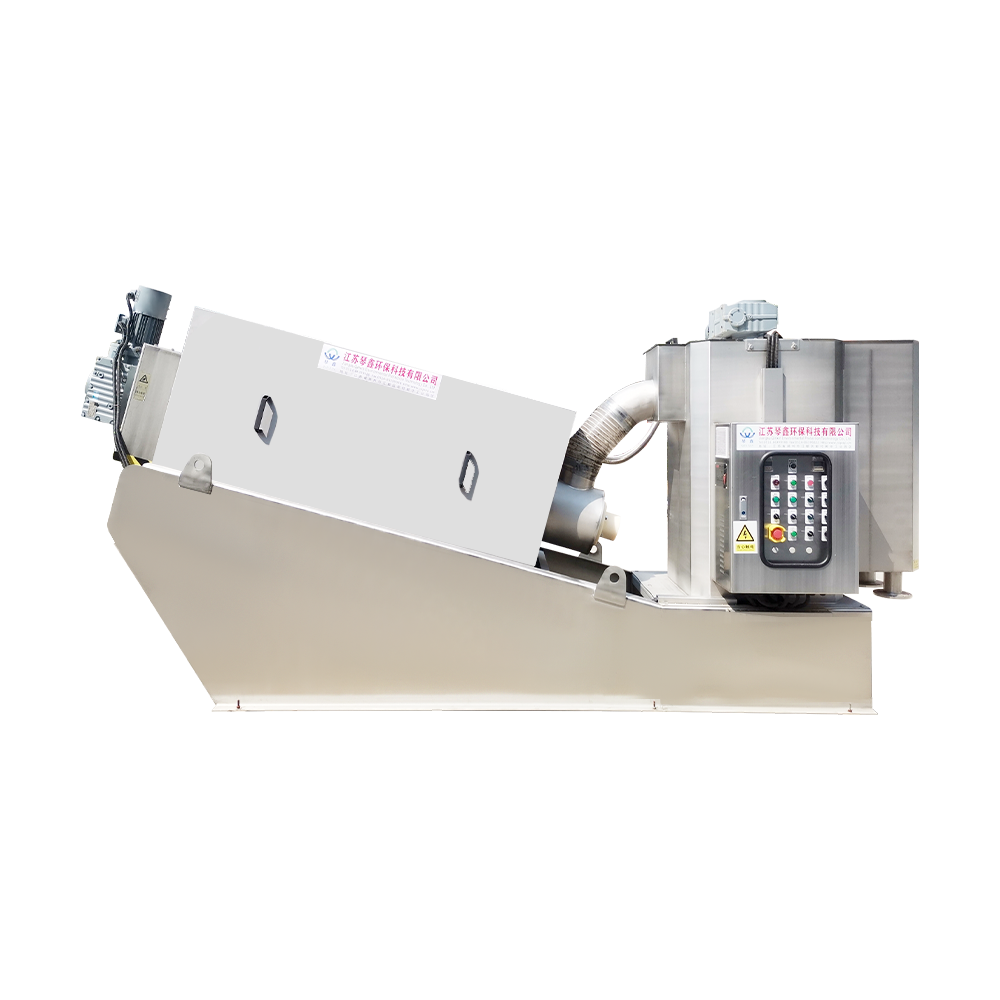
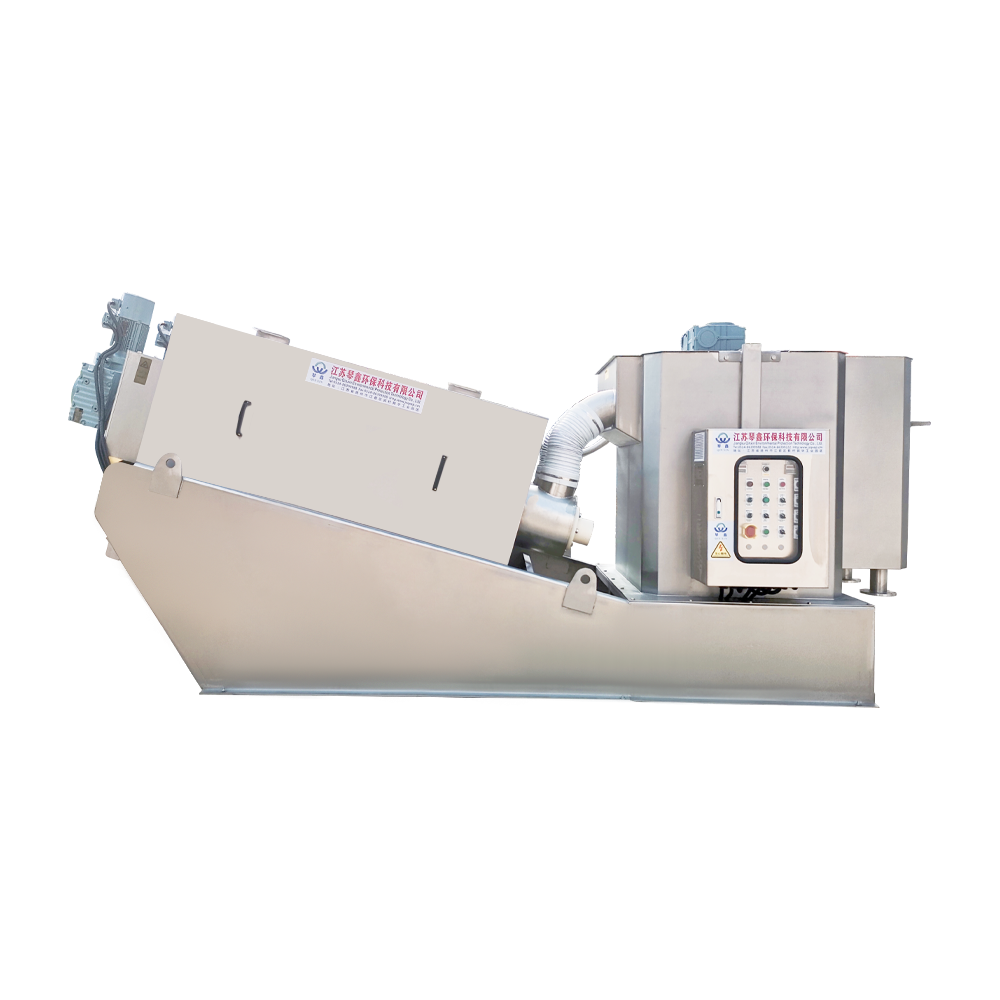
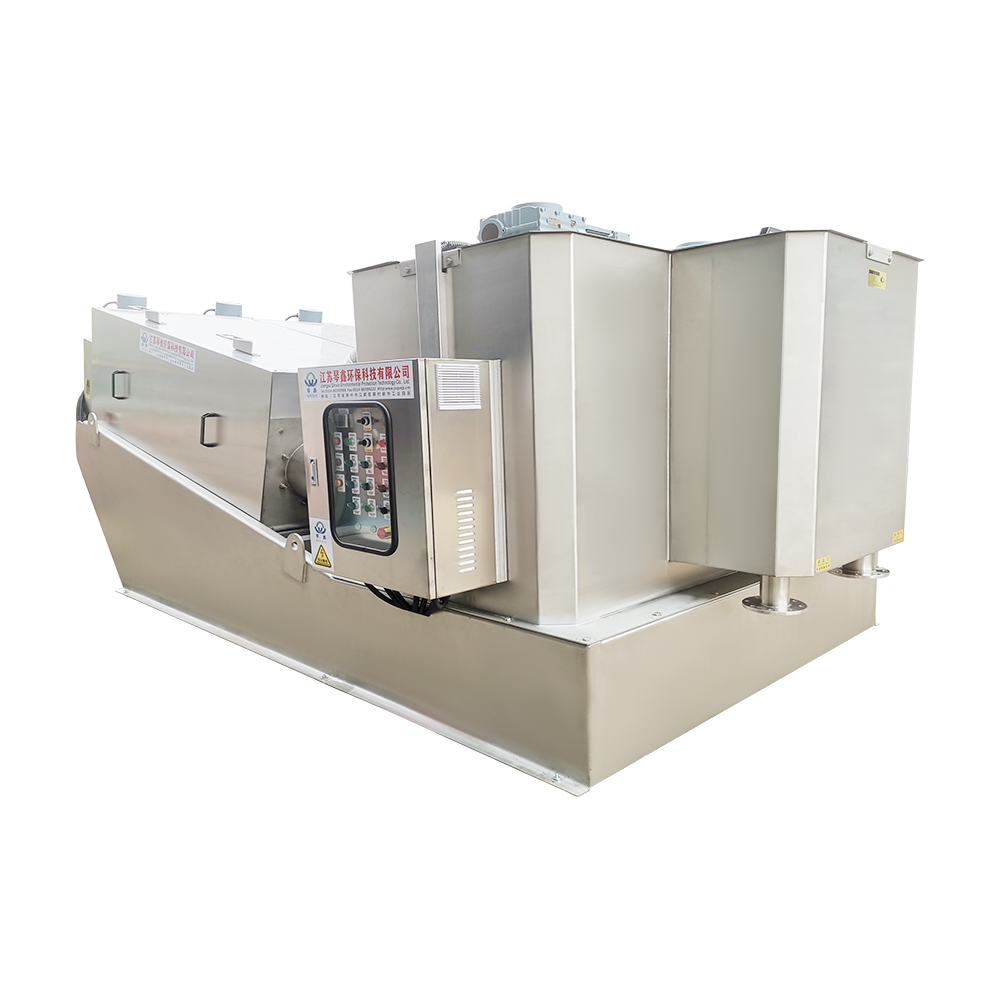
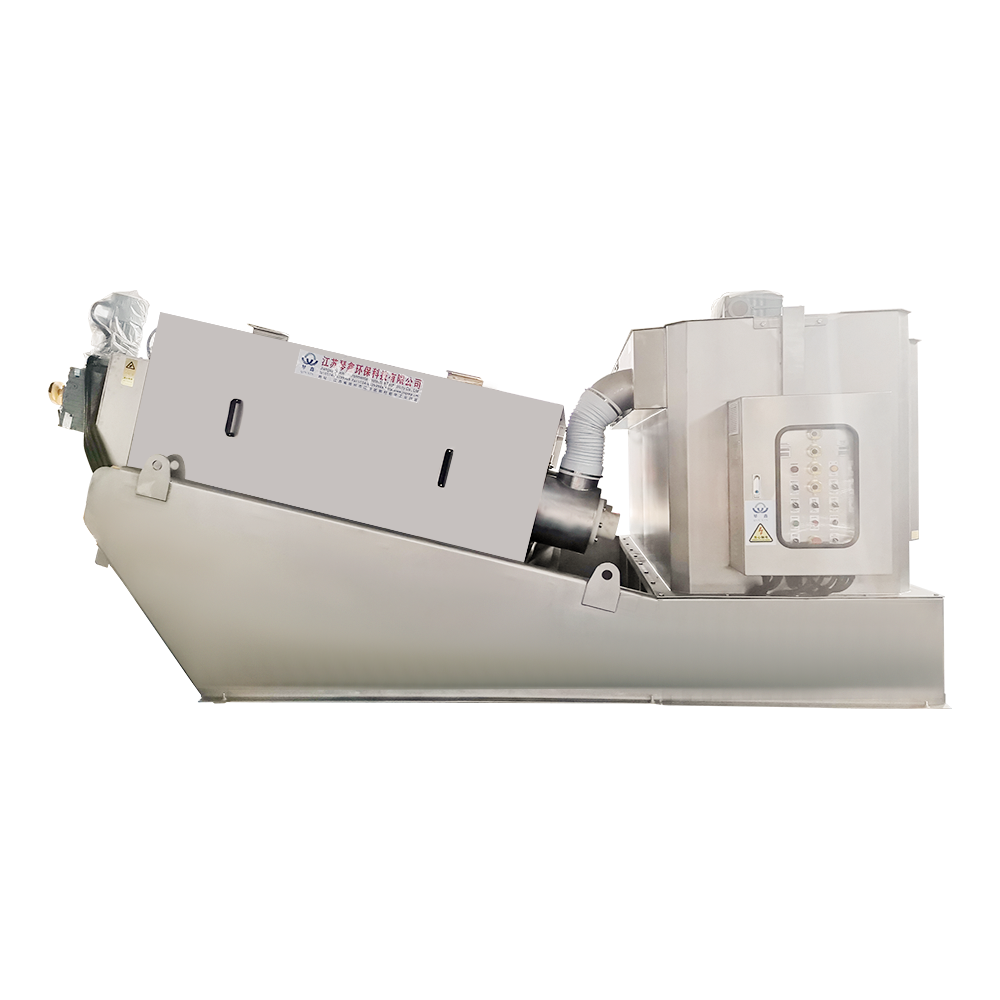
The multi-disc screw press replaces the rigid screen with a stack of fixed and moving rings. The screw sits inside the stack, and the tapered design compresses the sludge as it travels toward the discharge end. Between the rings, the gaps act as a self-cleaning filter because the moving rings shear against each other, releasing captured solids and keeping the filtration channels open. This type can operate on feed concentrations as low as a few thousand milligrams per litre, which means many municipal plants can feed it directly with a modest amount of polymer conditioning.
For industrial wastewater with variable solids loading, a multi-disc machine is often the more forgiving option. A representative example is the QXDL303 multi-disc screw press for industrial wastewater, which uses the stacked-ring design to handle fluctuating loads while keeping energy consumption low. The main trade-off is that cake solids may be slightly lower than a well-run single-screw press on fibrous feed, so the target dryness must be realistic.
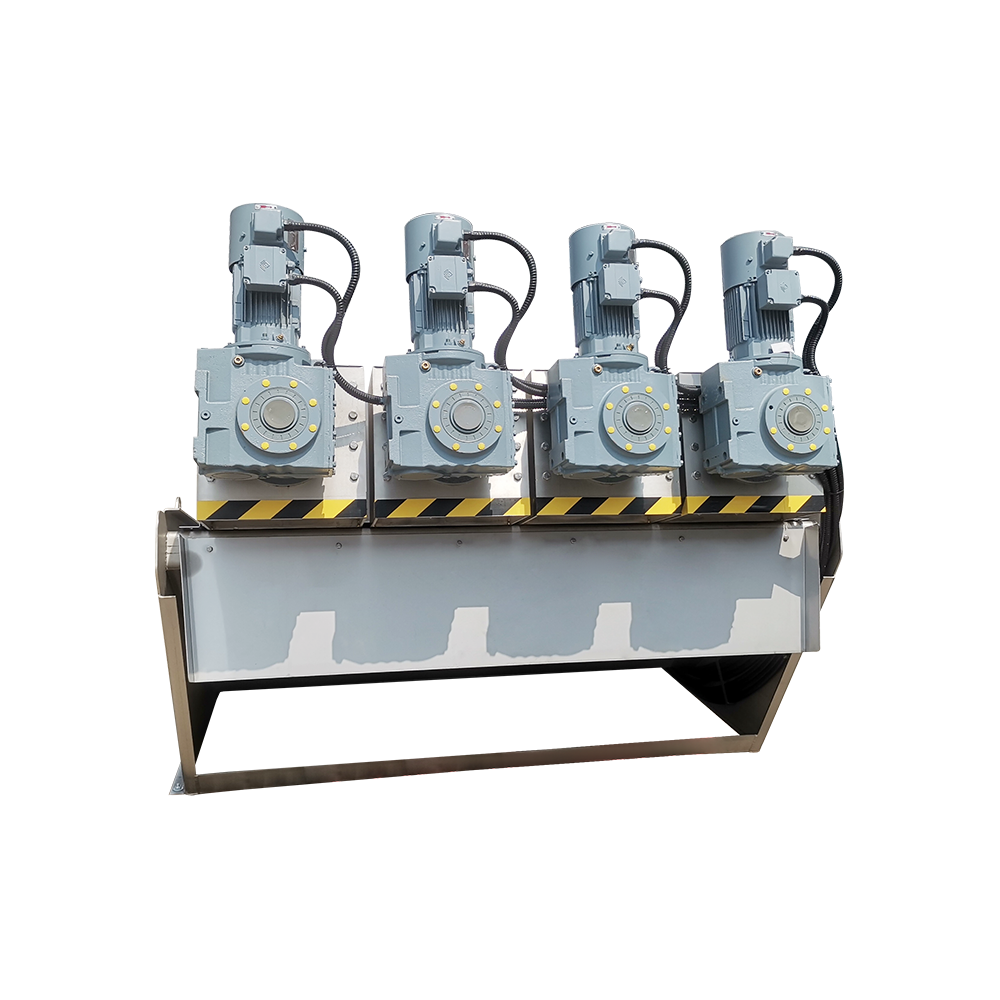 Custom Waste Water Treatment Eco-friendly Spiral Screw Sludge Dewatering MachineYangzhou Qinxin Environmental Protection Technology Co., Ltd. Is China Custom Waste Water Treatment Eco-friendly Spiral Screw Sludge Dewa...View Product →
Application-Specific Wastewater Screw Press Types
Municipal and Mixed Sludge Units
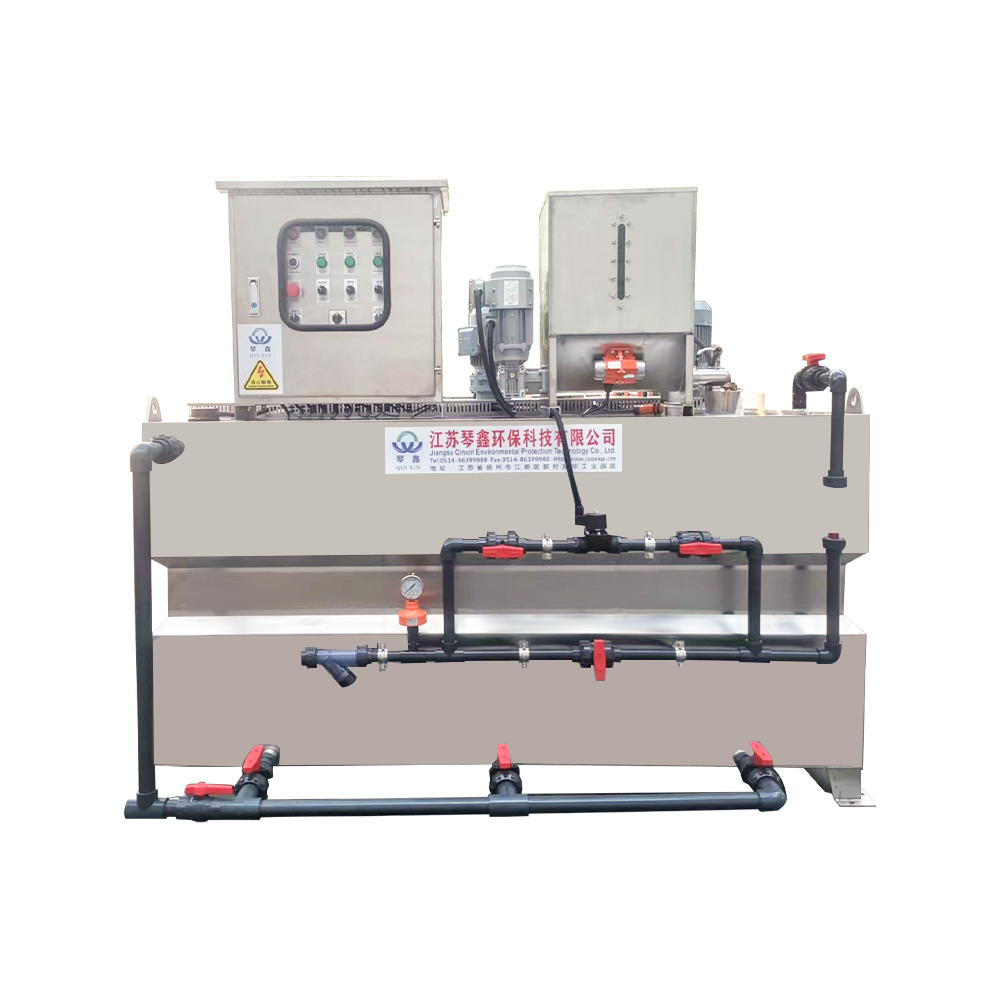
Municipal wastewater screw presses are designed for a mixture of primary and secondary sludge. They normally include a slow-turning screw, a large ring stack, and an integrated polymer-mixing chamber so that the sludge is conditioned just before entering the dewatering area. These units are expected to run continuously with minimal operator attention. Typical cake dryness for digested municipal sludge is 20-25%, and the machines are selected more for reliability and low energy cost than for maximum dryness.
Food-Grade and Hygienic Designs
Food and beverage wastewater contains fats, proteins, and fine particles that cause rapid fouling if the surface is not smooth and easy to drain. A food-grade screw press is made with polished stainless steel, hygienic seals, and in some cases a horizontal integrated layout to reduce stagnant areas. When a plant has to meet food-safety standards, the manufacturer must confirm that all product-contact parts are compatible with cleaning agents and not just the frame. The food-grade QXDL251 screw press is one example of a machine designed specifically for food-processing wastewater, with the filtration stack and screw built to tolerate grease and protein without excessive cleaning.
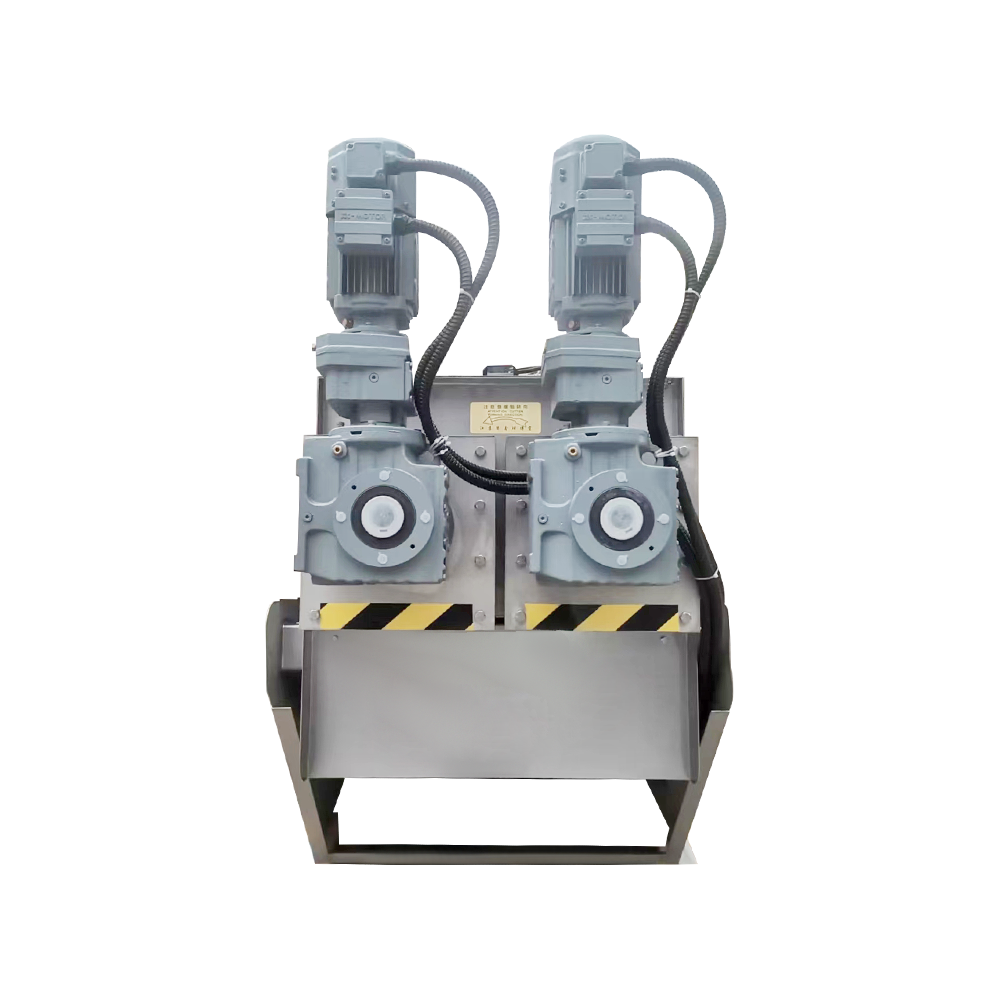 Custom Integrated Horizontal Food Grade Spiral Screw Sludge Dewatering Machine QYangzhou Qinxin Environmental Protection Technology Co., Ltd. Is China Custom Integrated Horizontal Food Grade Spiral Screw Sludge Dewate...View Product →
Chemical and Corrosion-Resistant Types
Chemical wastewater often has extreme pH, dissolved salts, or organic solvents. A screw press for this service uses 316L stainless steel or higher alloys for the wetted parts, and the shaft seal is designed to prevent leakage of aggressive liquids. In explosive atmospheres, the drive and electrical box must match the required zone rating. This is a real purchasing risk: a standard municipal machine installed on chemical sludge can suffer corrosion on the rings and screw within two years, leading to loss of filtration gap and a sharp drop in cake dry solids. The machine must also tolerate intermittent operation without stale sludge accumulating in the internal volume.
Agricultural and Livestock Waste Units
Livestock manure slurry contains grit, bedding fiber, and high solids. Agricultural screw presses use wider ring gaps and more robust bearings to handle abrasive particles. They are typically constructed with hardened screws and thicker side plates. The machine should still produce a cake that can be composted or dried, usually 25-30% dry solids after pressing. For on-farm or centralized digesters, a unit like the QXDL403 screw press for livestock wastewater is arranged to prevent clogging from straw and sand while maintaining a steady throughput.
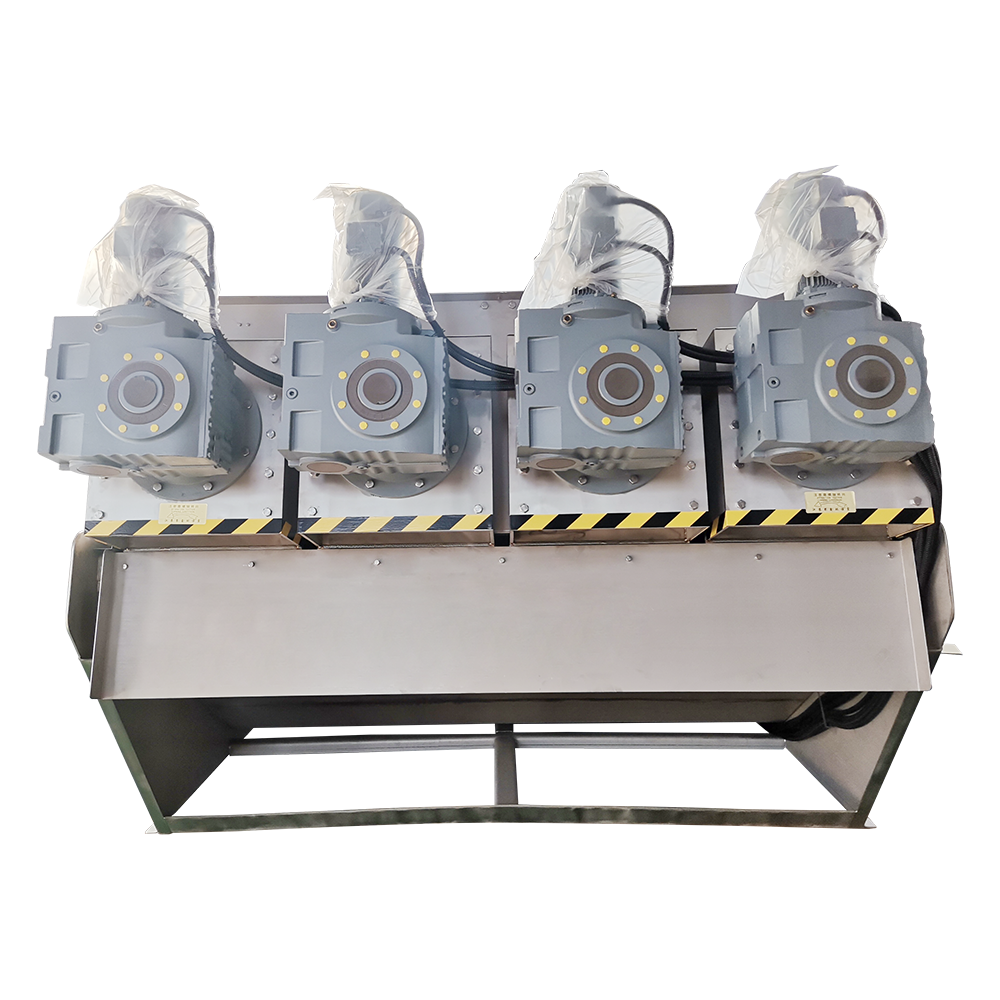 Fully Automatic Screw Press Sludge Dewatering Machine for LivestockOptimize farm waste management with our fully automatic screw press dewatering machine. Efficiently separate solids from livestock wastew...View Product →
Material and Construction Differences
Stainless Steel Grades and Coatings
The material of the screw and the rings or screen is the first thing to check in any specification. 304 stainless steel is adequate for neutral municipal sludge and many food applications. 316L adds molybdenum for chloride resistance and is the preferred choice for coastal plants, chemical streams, and slurries with high salt content. If sand or grit is present, some manufacturers coat the screw or harden the ring surfaces. These material decisions affect the price, so the spec should be matched to the actual water chemistry rather than simply choosing the most expensive option.
Hygienic, Explosion-Proof, and Heavy-Duty Variants
Beyond the alloy, the construction details define the sub-type. Hygienic screw presses have brushed surfaces, removable access covers, and seals approved for food contact. Explosion-proof versions have flameproof motors and special cable entries. Heavy-duty industrial versions have oversized bearings and thicker flanges. It is not enough to say “stainless steel” in a request for quote; the complete specification must include the surface finish, gasket material, motor class, and acceptable pressure rating.
Key Differences at a Glance
The table below compares the most common screw press types on the aspects that affect daily operation.
| Parameter | Conventional single-screw | Multi-disc stacked/volute | Application-specific models |
|---|---|---|---|
| Ideal feed solids | Higher solids, fibrous material | 2,000-50,000 mg/L, low to medium solids | Varies; agricultural models handle grit and fiber |
| Filtration mechanism | Rigid screen with pressure | Self-cleaning ring stack | Ring or screen variant, adapted to waste type |
| Polymer consumption | Often lower on concentrated feed | Moderate, depends on sludge | Specific to solids character |
| Cake dryness | 25-30% on fibrous feed | 20-25% typical | 18-30%, depends on waste |
| Energy demand | Higher | Low speed, low energy | Generally low |
| Maintenance risk | Screen blinding, shaft wear | Ring wear, occasional clogging from rags | Grit or fat handling needs regular checks |
How to Select the Right Wastewater Screw Press
Selection should start with sludge characterisation, not with the press. Measure total solids, settleability, fiber and grit content, oil and grease, and the target cake dryness. If the sludge is thin and biological, a multi-disc screw press is usually the more stable choice because it tolerates varying concentration without frequent adjustment. If the feed is fibrous and already concentrated, a conventional single-screw press can produce a drier cake with lower polymer consumption.
The application category acts as the second filter. Municipal mixed sludge needs a general-purpose unit with reliable automation. Food effluent requires a hygienic food-grade version. Chemical waste requires corrosion-resistant alloys and sealed drives. Agricultural slurry requires heavy-duty construction and wide gaps. The article on screw press adaptability across industrial sludge types gives practical points for comparing these waste streams.
Finally, examine operating constraints: space, available operator time, polymer cost, energy tariff, and maintenance capability. A plant with a small team may prefer a low-speed multi-disc press because the self-cleaning rings reduce manual screen washing. A plant that processes malodorous or hazardous sludge may need a fully enclosed machine. An oily-sludge application may favour a design with a longer cake zone so the pressure can build gradually.
Use a clear checklist and ask for pilot data before committing to a capital purchase. A useful step-by-step method is provided in this guide on how to choose screw sludge dewatering machines.
No type is universally best. The correct wastewater screw press is the one that fits the sludge, the site, and the operating budget. In most cases, the final choice comes down to whether the plant needs the self-cleaning flexibility of a multi-disc machine or the higher cake dryness of a conventional single-screw press, with materials and application-specific configurations narrowing the options further.

 TOP