
 ENG
 English
 русский
 Español
 Tiếng Việt
 ไทย

Article Directory
- 1 The cost of poor dewatering in food processing
- 2 What makes food processing sludge different
- 3 How a screw press handles food processing sludge
- 4 Food-grade design requirements
- 5 Selecting the right machine for the sludge
- 6 Sizing the screw press correctly
- 7 Operating costs compared with alternatives
- 8 The integration question: dosing, screening, and conveying
- 9 Maintenance and reliability in a food environment
- 10 Choosing a supplier that understands food plants
- 11 Final takeaway
The cost of poor dewatering in food processing
A vegetable processing plant treating 300 m³/day of process water produces sludge at roughly 2% dry solids. With a belt press delivering 16% cake dryness, the disposal truck carries 15 tonnes of wet cake per day; with a screw press holding 22% dryness, that figure drops below 11 tonnes. Over a year, the 25% reduction in wet-cake volume is usually worth more than the entire electricity bill of the dewatering building.
The difference matters because haulage is the first line item that changes when a food processor upgrades dewatering equipment. Cake dryness, polymer consumption, and operator time follow close behind.
What makes food processing sludge different
Food processing sludge is dominated by organic material. Volatile solids typically account for 70–85% of dry matter, so the sludge ferments quickly, releases odor, and becomes harder to dewater if it sits in a holding tank overnight. It also changes with the production calendar: a cannery produces fibrous sludge from peels and seeds in summer, a dairy plant produces protein-rich sludge that tends to foam, and a poultry processor deals with fat that can coat screens and raise polymer demand.
Those differences affect every downstream decision—polymer grade, screen gap, washdown frequency, and the cake dryness that is realistically achievable on any given day.
How a screw press handles food processing sludge
The working principle
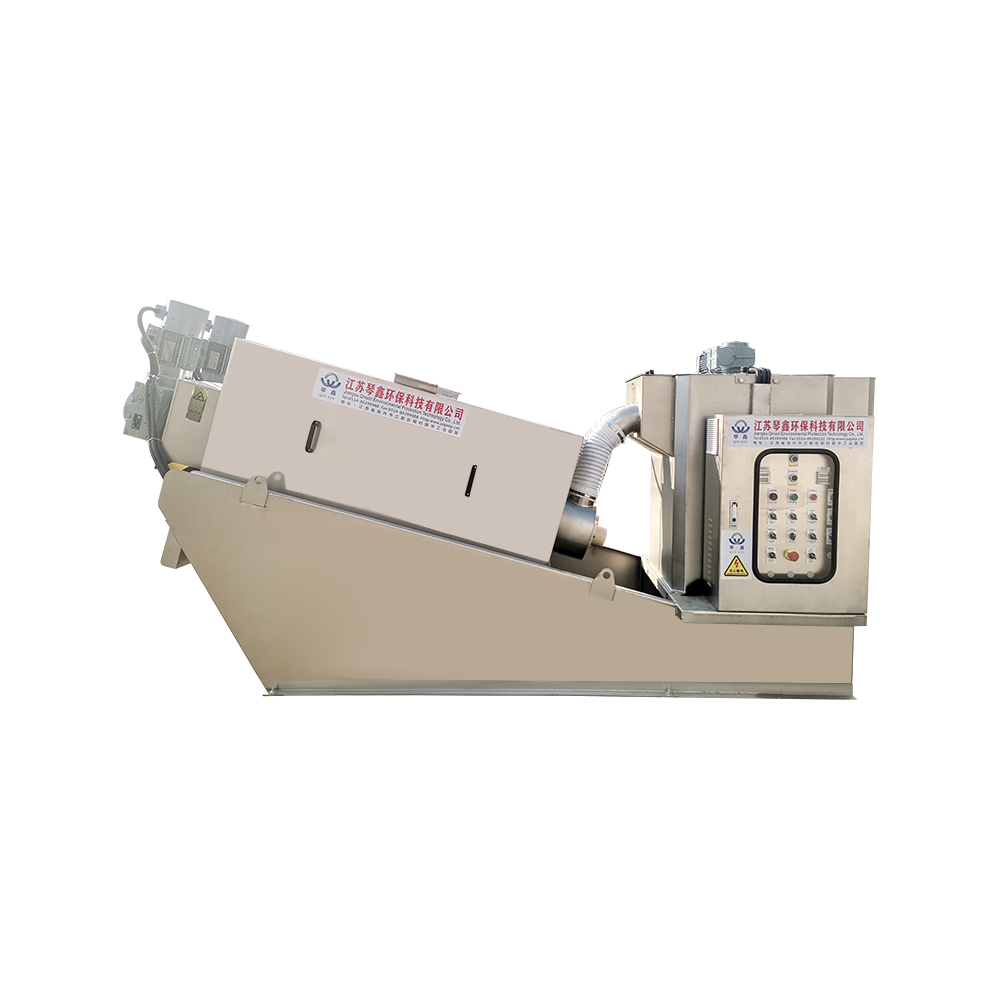
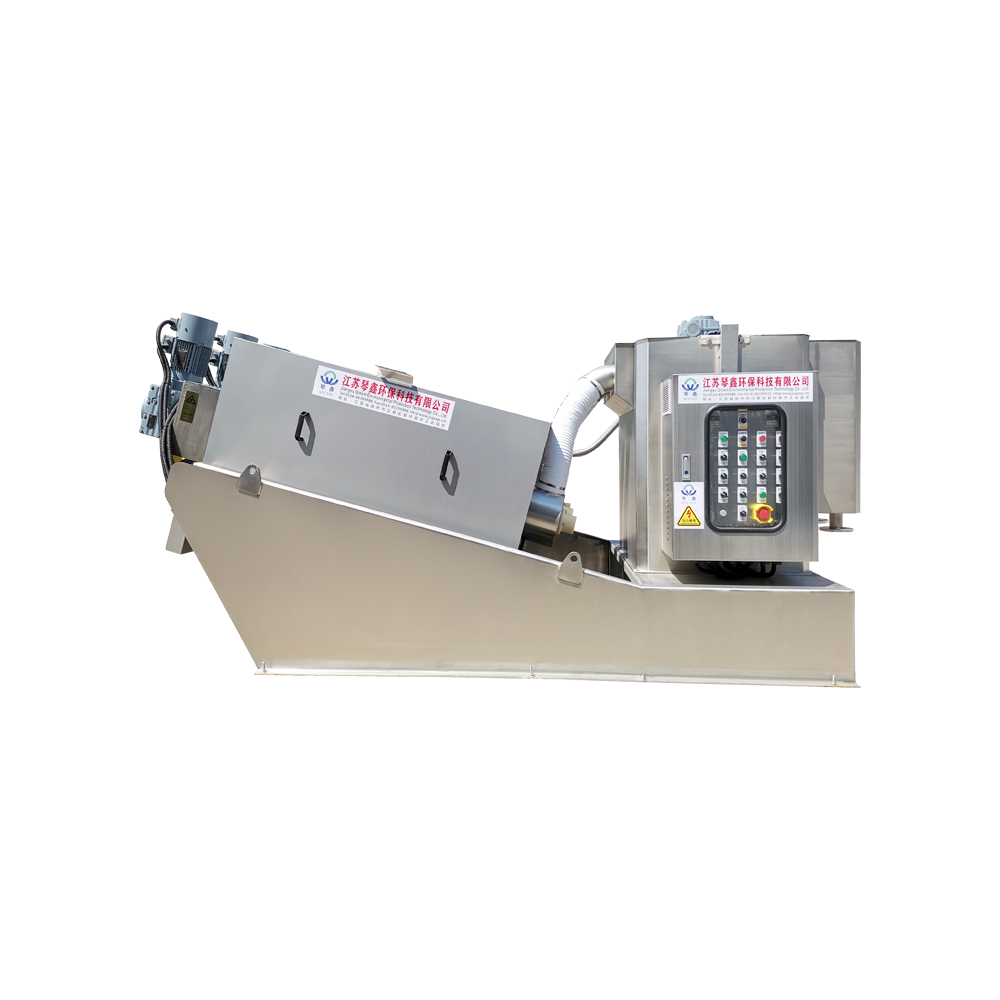
Flocculated sludge enters the feed box and is conveyed through a cylindrical wedge-wire screen by a slowly rotating screw. The screw pitch decreases toward the discharge end, the available volume shrinks, pressure builds gently, and water is pressed through the screen while the cake exits through a discharge cone.
Why low speed matters for food sludge
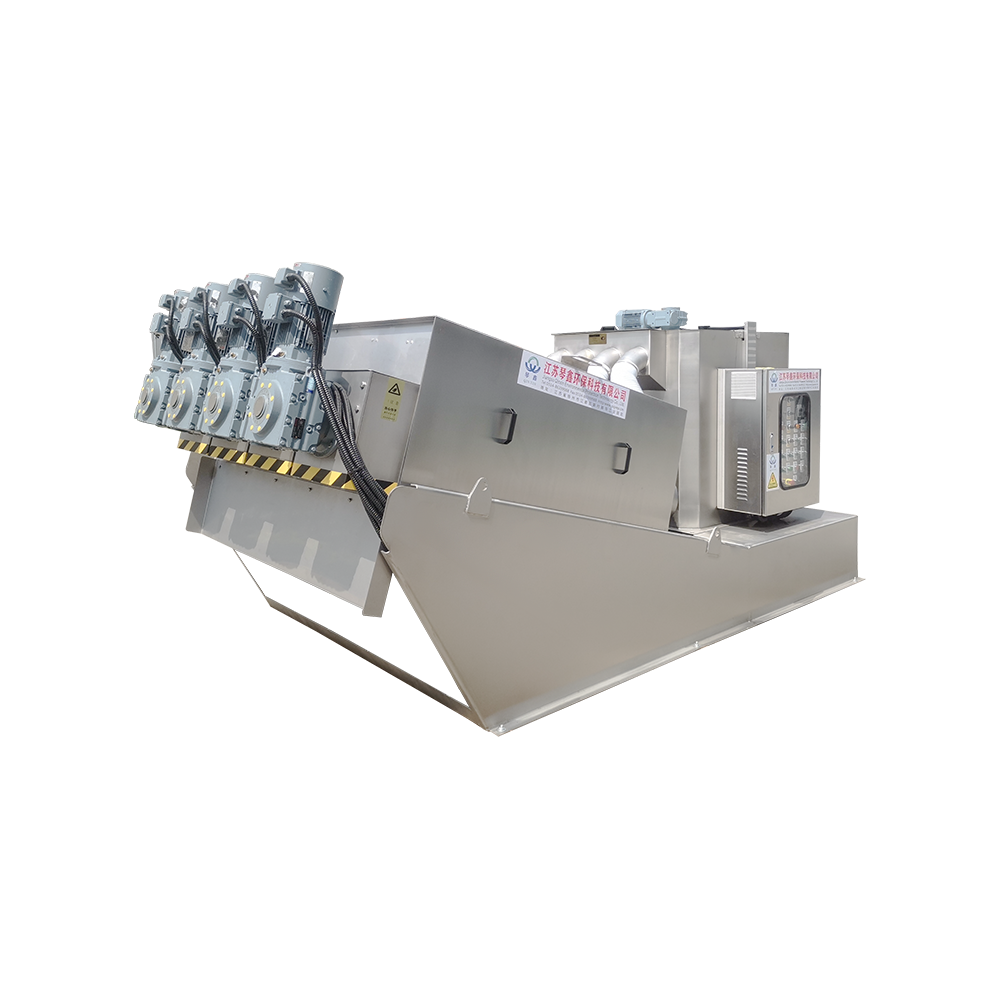
The screw rotates at roughly 2–6 rpm. That low speed is the key difference from a centrifuge: the polymer floc is not destroyed by shear, so solids capture remains high at moderate doses. The same slow rotation gives a continuous self-cleaning action as the flights scrape the screen, which prevents the matting of fibrous vegetable waste that would quickly blind a belt press.
Food-grade design requirements
Food processing sludge is biologically active, and the machine is washed down with hot water, caustic, and sanitizers. A food plant cannot run a standard industrial dewatering machine without risking corrosion, bacterial niches, and failed audits.
Stainless steel and wetted materials
Wetted parts should be stainless steel, with SS316 or SS316L recommended wherever brine, fruit acids, vinegar, or chlorine-based sanitizers are used. The practical differences between SS304 and SS316 in dewatering equipment are covered in our article on SS316 corrosion resistance in dewatering machines; the short version is that chlorides pit lower-grade steel and shorten screen life. Seals and gaskets should be EPDM, PTFE, or silicone to tolerate both sludge contact and hot caustic cleaning.
Cleanability and inspection access
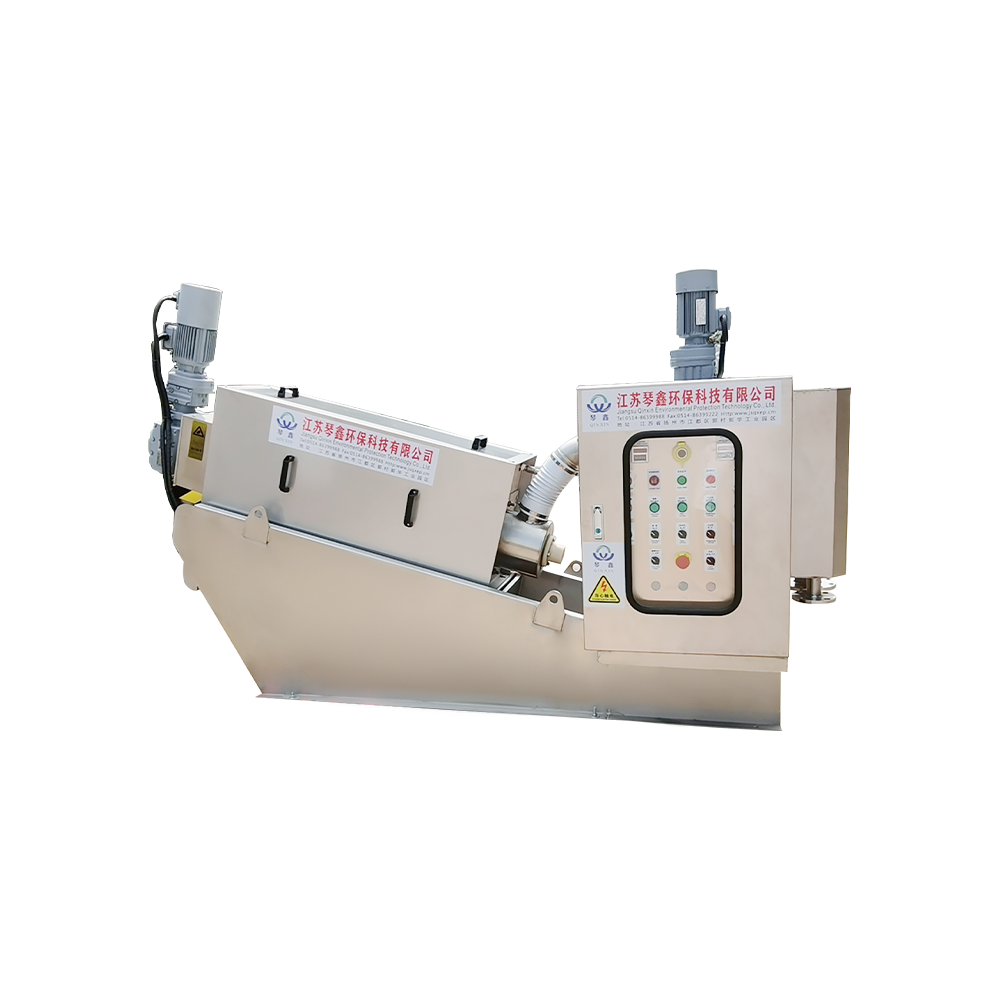
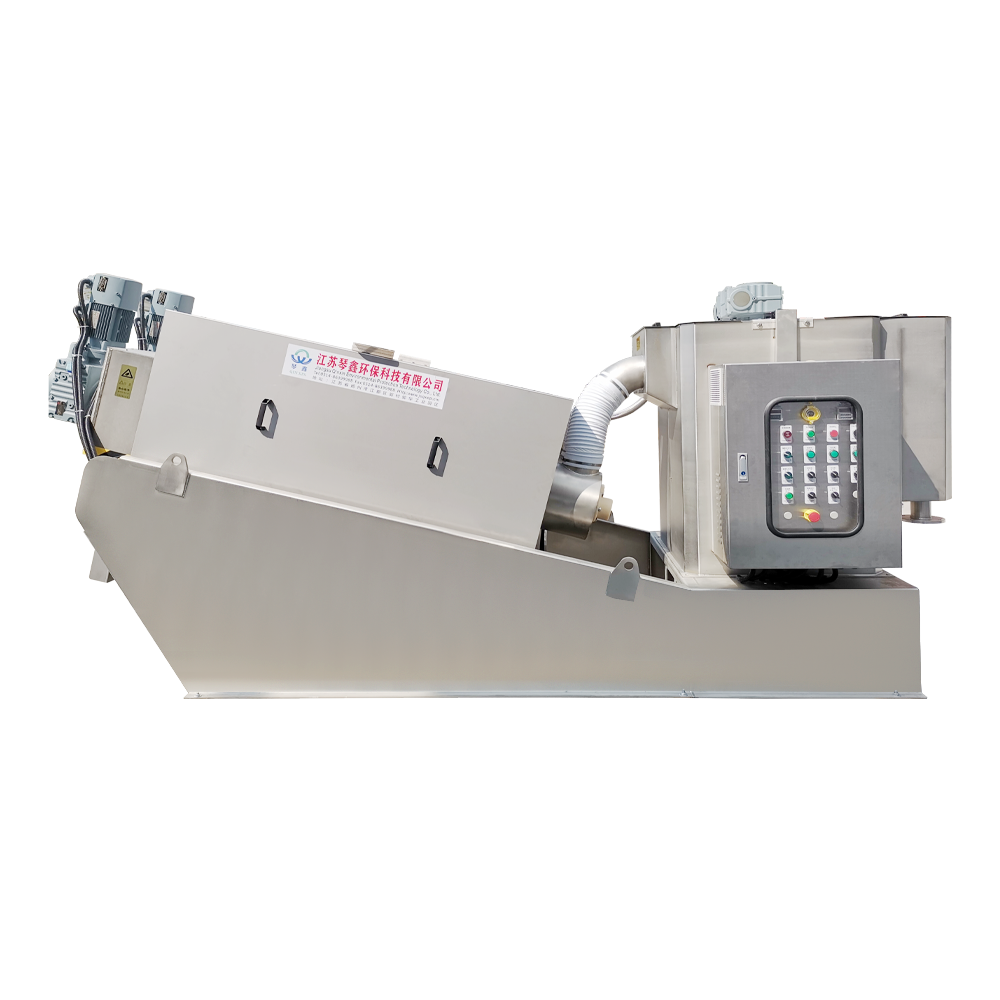
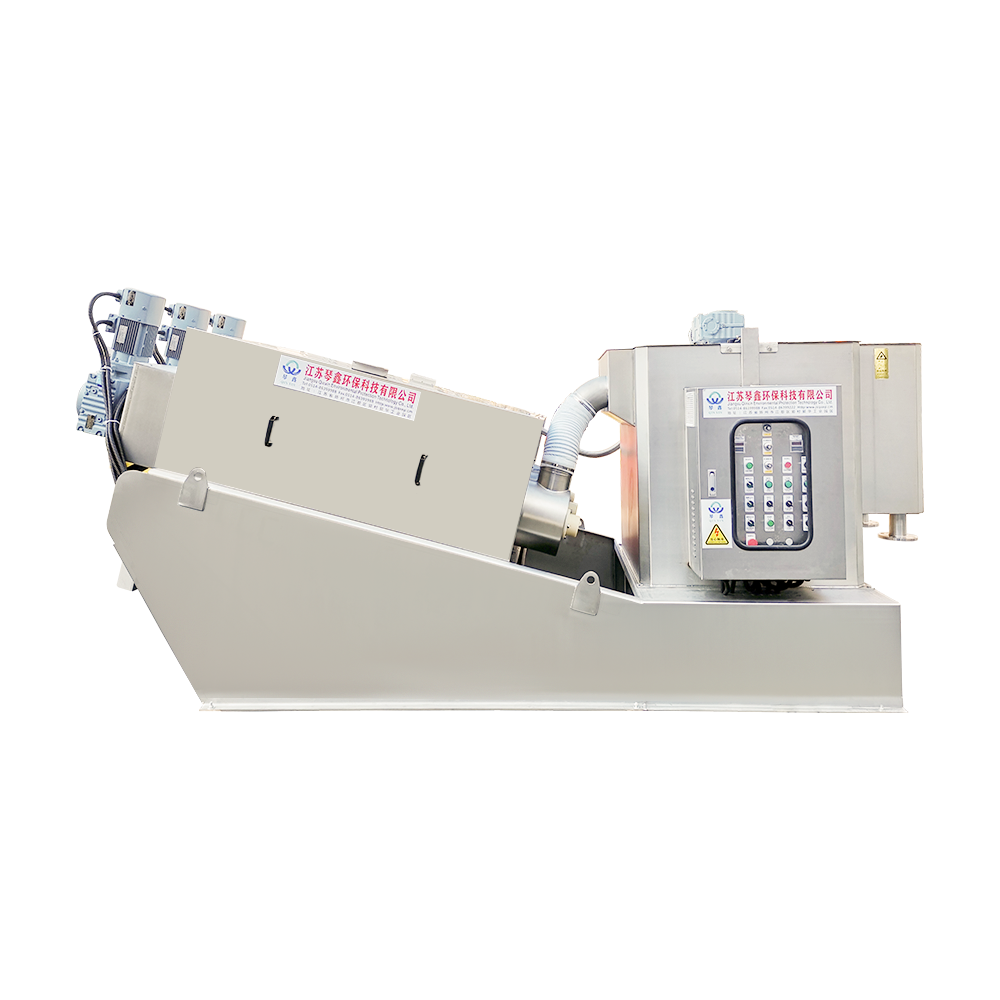
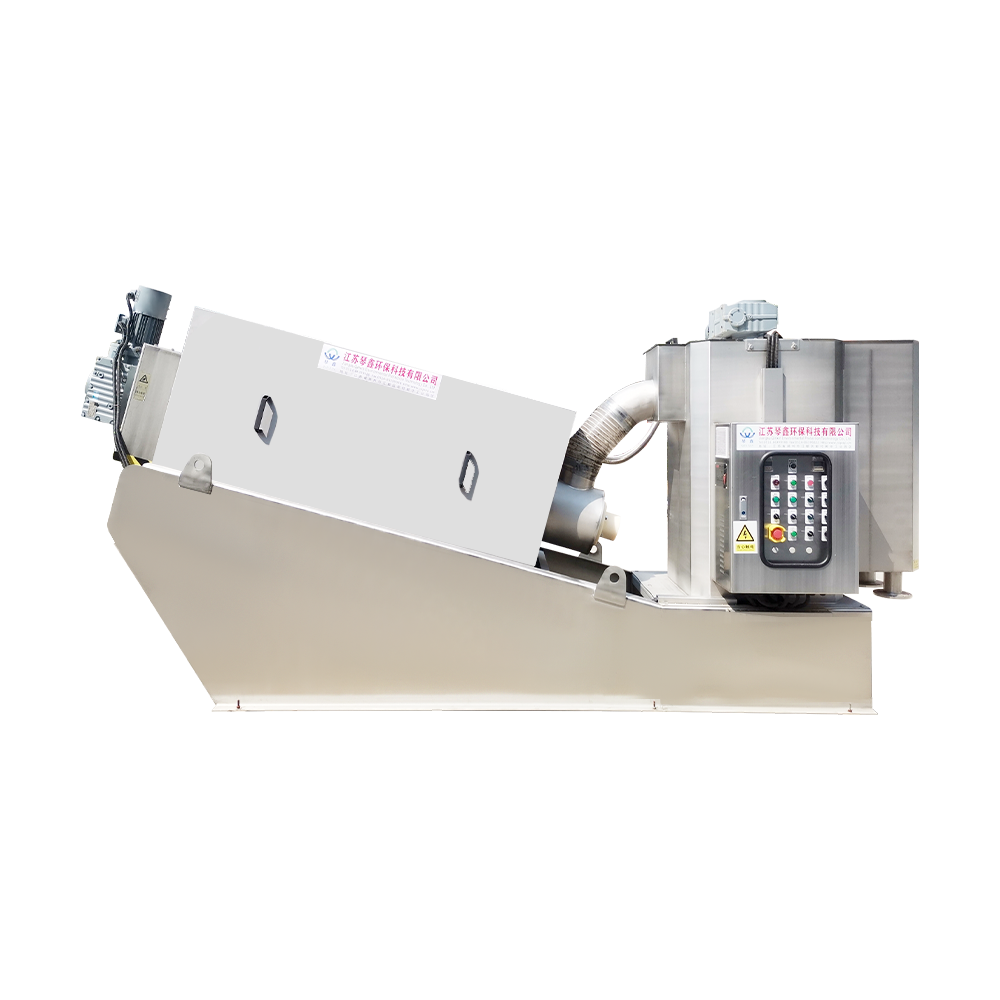
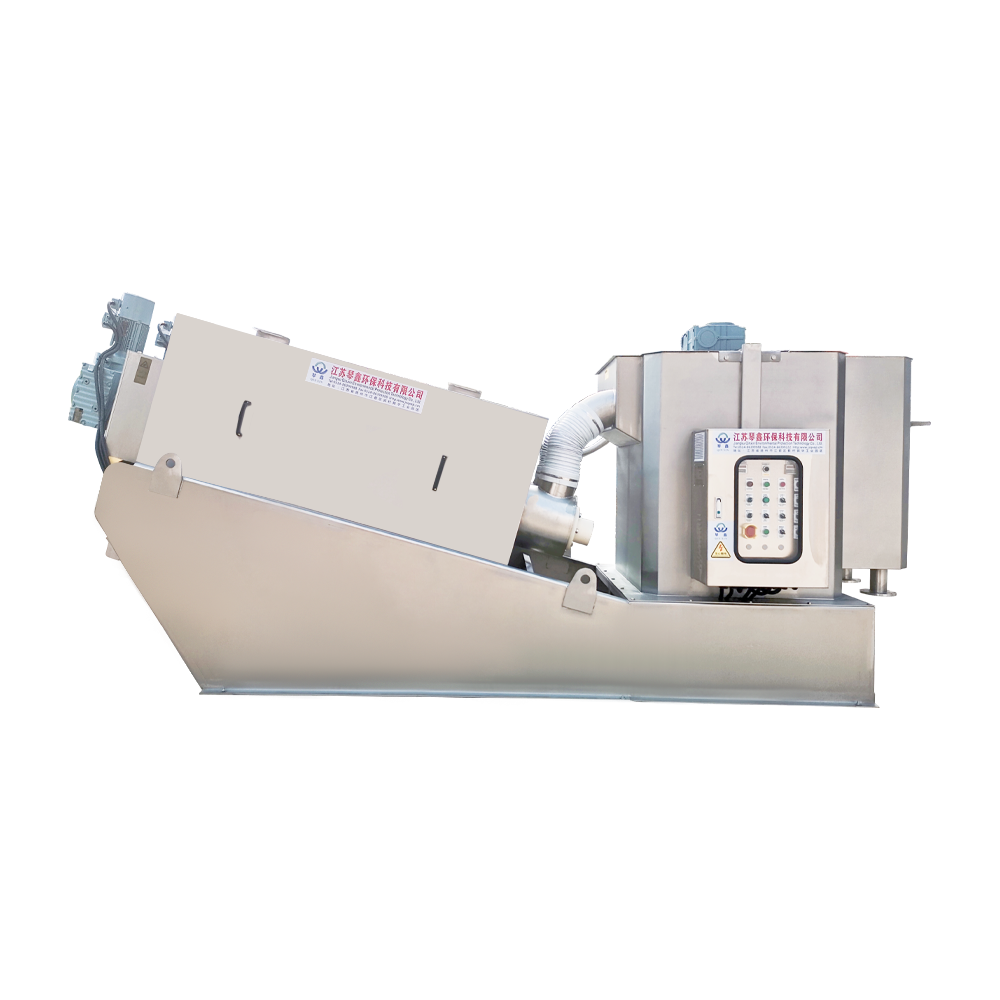
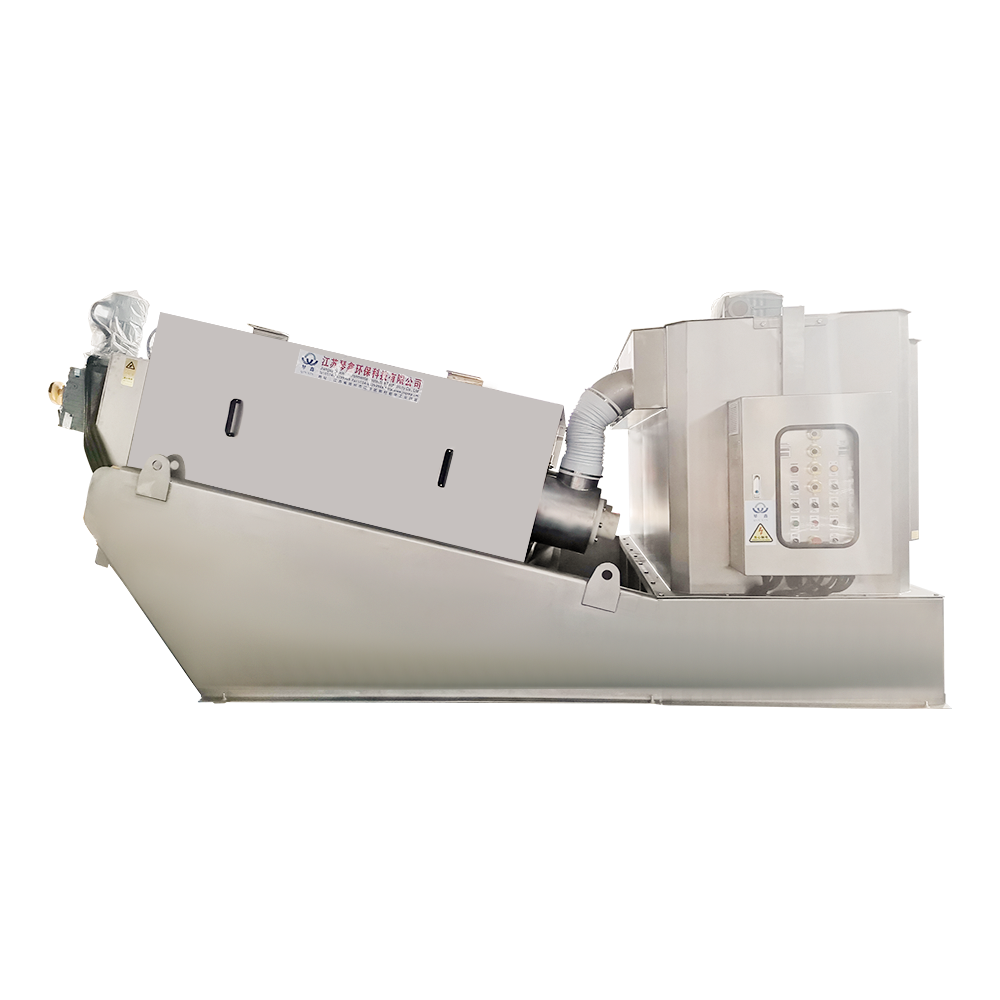
A hygienic machine has no pockets where liquid stagnates, no unfinished surfaces under the flight edges, and full access to the screen and screw for daily washdown. Inspection doors or quick-release covers shorten the cleaning routine and make it more likely to be followed. The food-grade energy-saving screw press QXDL251 is designed for this duty, with stainless steel contact surfaces and screen access that does not require lifting the machine from its foundation.
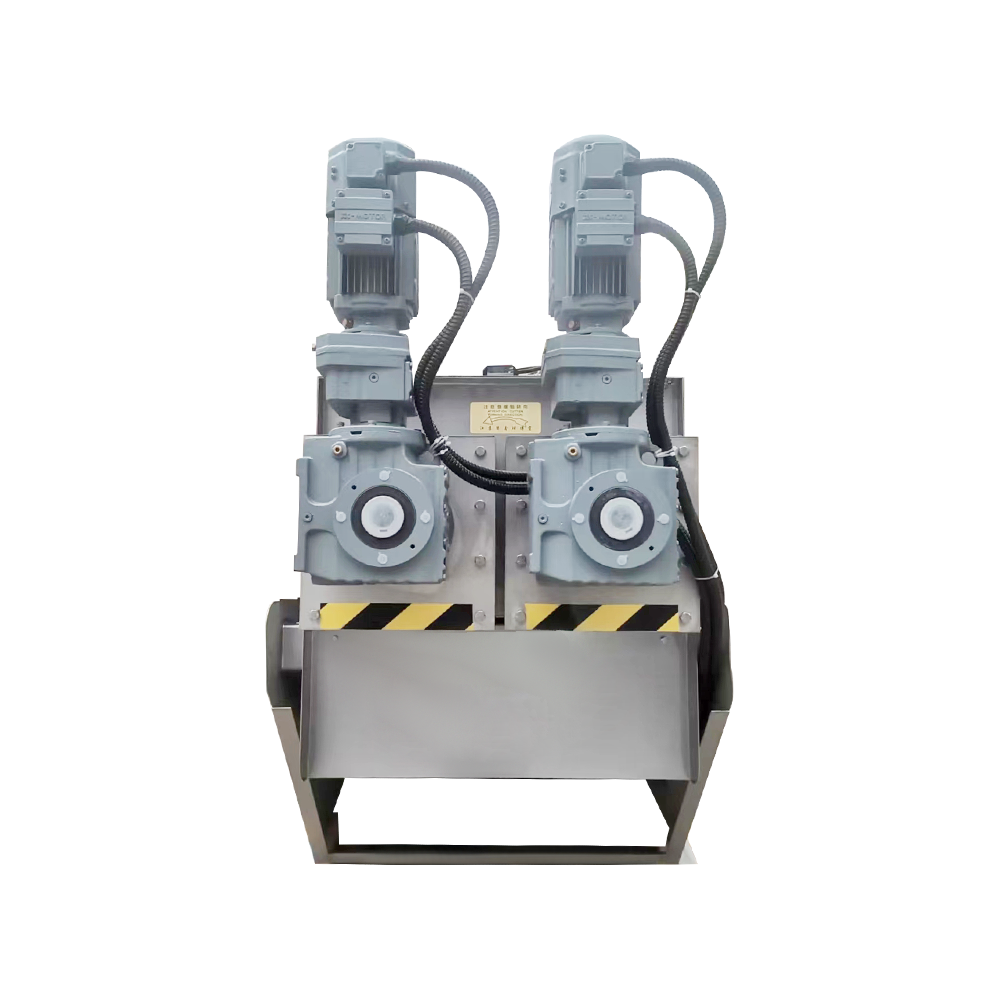 Custom Integrated Horizontal Food Grade Spiral Screw Sludge Dewatering Machine QYangzhou Qinxin Environmental Protection Technology Co., Ltd. Is China Custom Integrated Horizontal Food Grade Spiral Screw Sludge Dewate...View Product →
Selecting the right machine for the sludge
Selection starts with three numbers: hydraulic flow, inlet solids concentration, and target cake dryness. The table below shows representative values for common food processing sludge types.
| Sludge type | Inlet solids | Expected cake dryness | Polymer demand (kg/t DS) |
|---|---|---|---|
| Vegetable processing | 1.5–3.0% | 20–26% | 3–6 |
| Fruit processing | 2.0–4.0% | 18–24% | 4–7 |
| Meat and poultry processing | 1.0–2.0% | 18–22% | 5–8 |
| Dairy processing | 1.5–2.5% | 18–22% | 4–7 |
Cake dryness versus polymer cost
Chasing the last percentage points of dryness usually costs more in polymer than it saves in haulage. The practical approach is to calculate the disposal cost per tonne of wet cake, then find the dryness where additional polymer no longer pays for itself. For most food plants that point sits between 20–24% cake dryness.
Inlet solids and seasonal variability
Below about 1% inlet solids, the machine moves mostly water and polymer is wasted on fine suspended solids that a pre-thickener could have removed. Above 4–5% solids, the screw press can run slower and still meet the target dryness. Because food plants rarely see steady inlet conditions, sizing should be based on the worst two-hour period of the season, not the annual average. The practical guidance on choosing dewatering machines for wastewater treatment walks through this logic step by step.
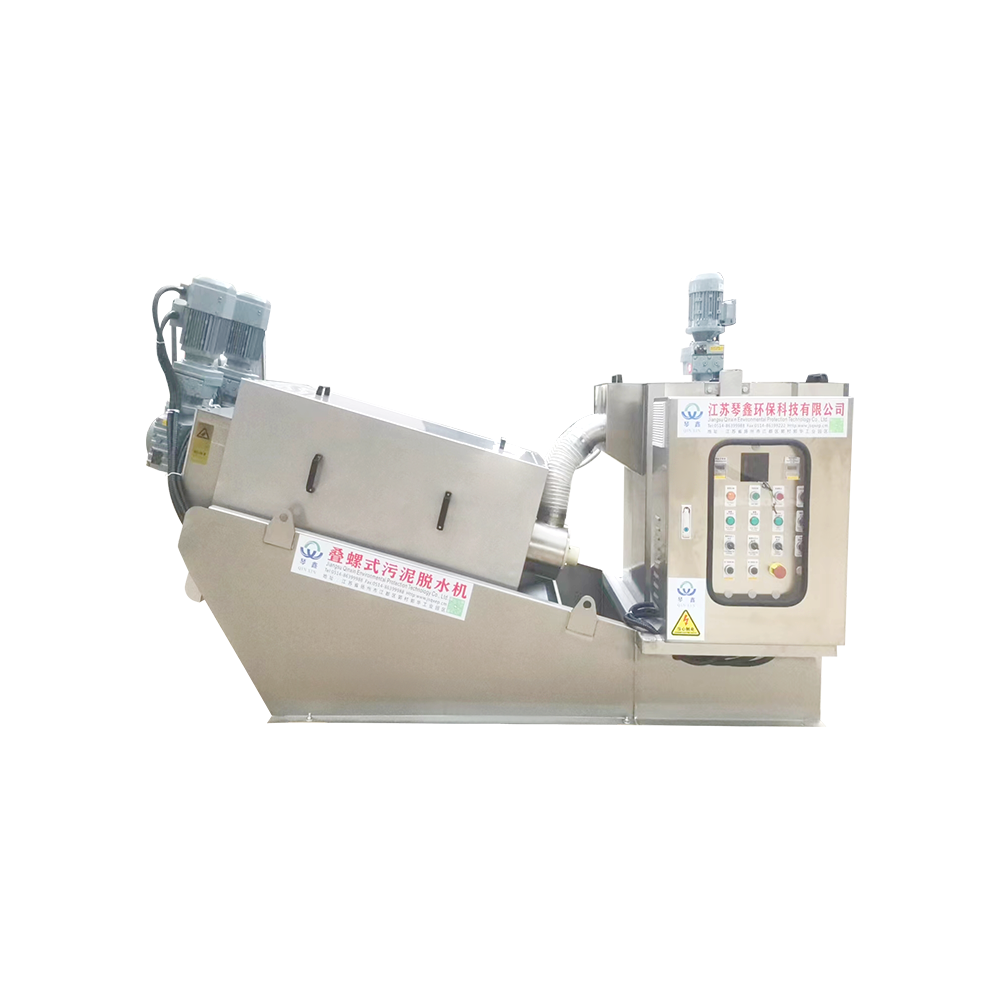
For plants with strong seasonal swings, a slightly larger unit or a two-machine layout is often the better investment. When the food line also handles occasional cleaning or industrial streams, the high-energy-saving industrial wastewater model QXDL352 provides extra capacity while keeping the same operating principle.
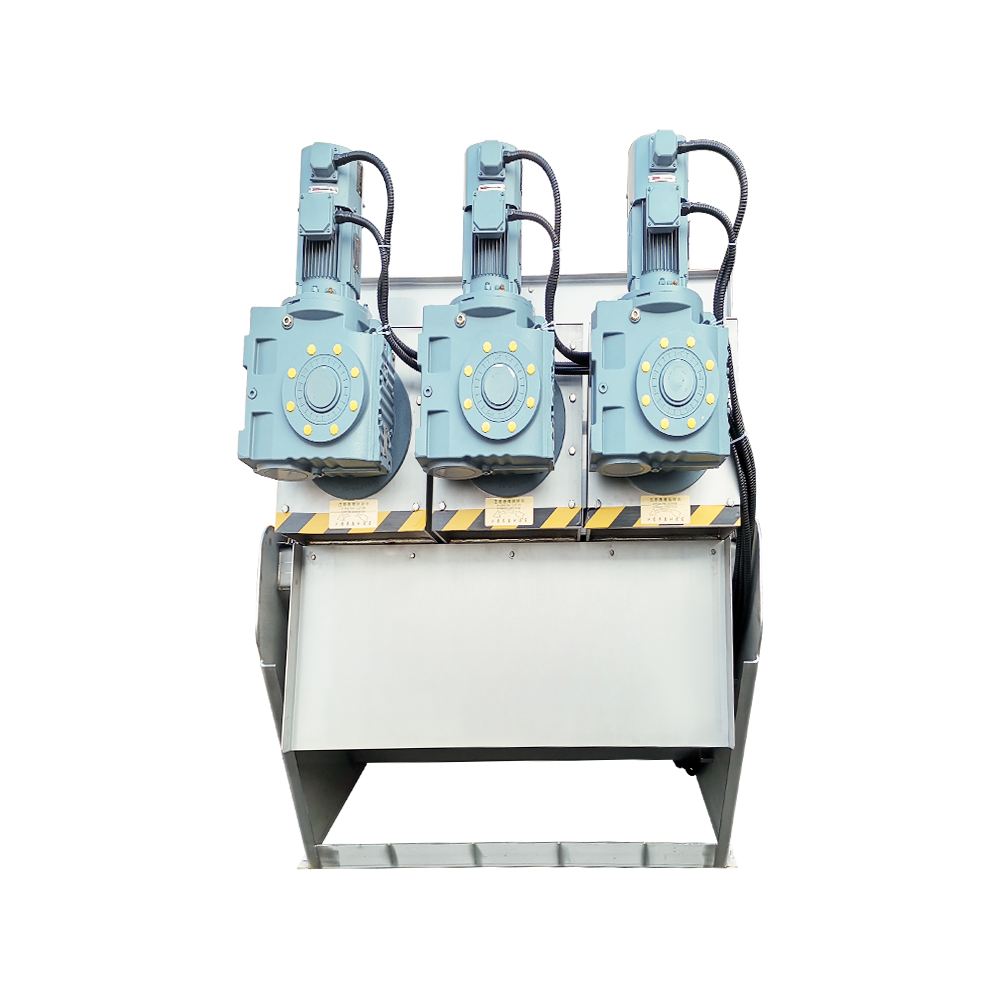 Large Stainless Steel Screw Press Sludge Dewatering Machine - High EfficiencyOptimize your wastewater treatment with our large, high-efficiency stainless steel screw press. This machine provides superior dewatering...View Product →
Sizing the screw press correctly
Sizing must consider both hydraulic load and solids load, because either can be the limiting factor. Hydraulic capacity depends on the screen area and filtrate drainage; solids capacity depends on screw geometry and discharge pressure. A machine sized on average flow will struggle during the two daily hours of peak discharge, producing thin cake and consuming extra polymer.
Provide the supplier with the daily peak flow, maximum inlet concentration, and highest solids loading over any two-hour period. A complete proposal should state the expected cake dryness at the design point, the typical polymer dose, and the filtrate quality—not just the nominal throughput in m³/h.
Operating costs compared with alternatives
Belt press
Belt presses are still common in food plants because of a lower initial price. They need continuous operator attention for tracking, tensioning, and belt washing, and the open design exposes wet sludge to the working environment. For a food processing plant, the hygiene risk alone is usually enough to disqualify them.
Centrifuge
Centrifuges produce the driest cake, sometimes 22–26% on food sludge, but they consume 5–10 times more electricity per tonne of dry solids than a screw press. They are sensitive to abrasive grit, noisy, and need higher polymer doses because the high g-force breaks the flocs. The extra dryness is valuable only if the plant can monetize it; most cannot.
Screw press
The screw press sits between the two. Capital cost is higher than a belt press, but operating cost is far below a centrifuge. Typical electricity consumption is 0.3–0.7 kWh per m³ of sludge treated, polymer use is lower because flocs survive the gentle conveying, and the enclosed design keeps odor and aerosols inside the machine.
The integration question: dosing, screening, and conveying
A screw press only performs at its design point if the sludge arrives evenly flocculated and free of debris. Three integration decisions determine most of the real-world performance.
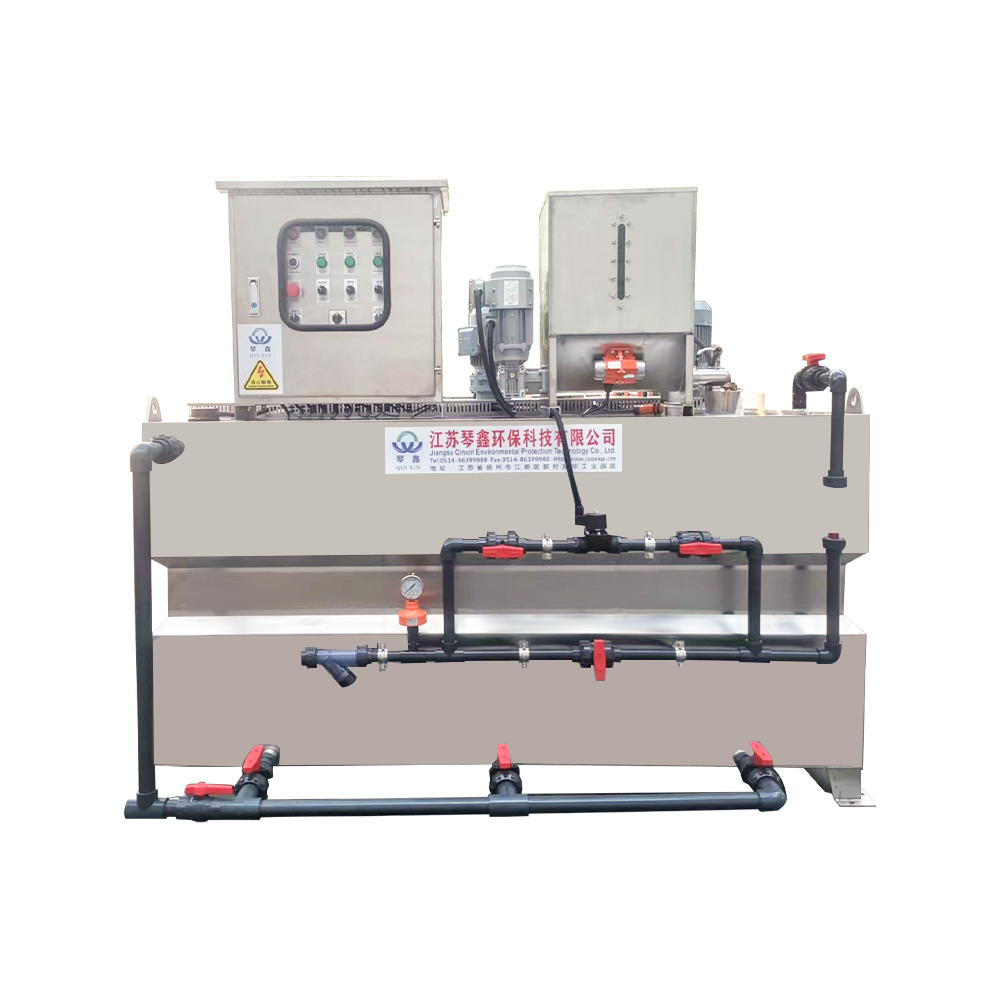
- Polymer preparation and dosing. Automatic dilution and variable-frequency metering stabilize flocculation quality. In food plants, where sludge character changes from day to day, an automated dosing system can reduce polymer consumption by 10–20% compared with manual batch preparation.
- Pre-screening. Fruit pits, seeds, packaging fragments, and bone chips must be removed before the press. A screening device upstream protects the wedge-wire screen and prevents polymer waste on gross solids.
- Cake conveyance. Cake at 20–25% solids moves most reliably with a shaftless screw conveyor, which avoids the bridging that sticky food sludge causes in hoppers.
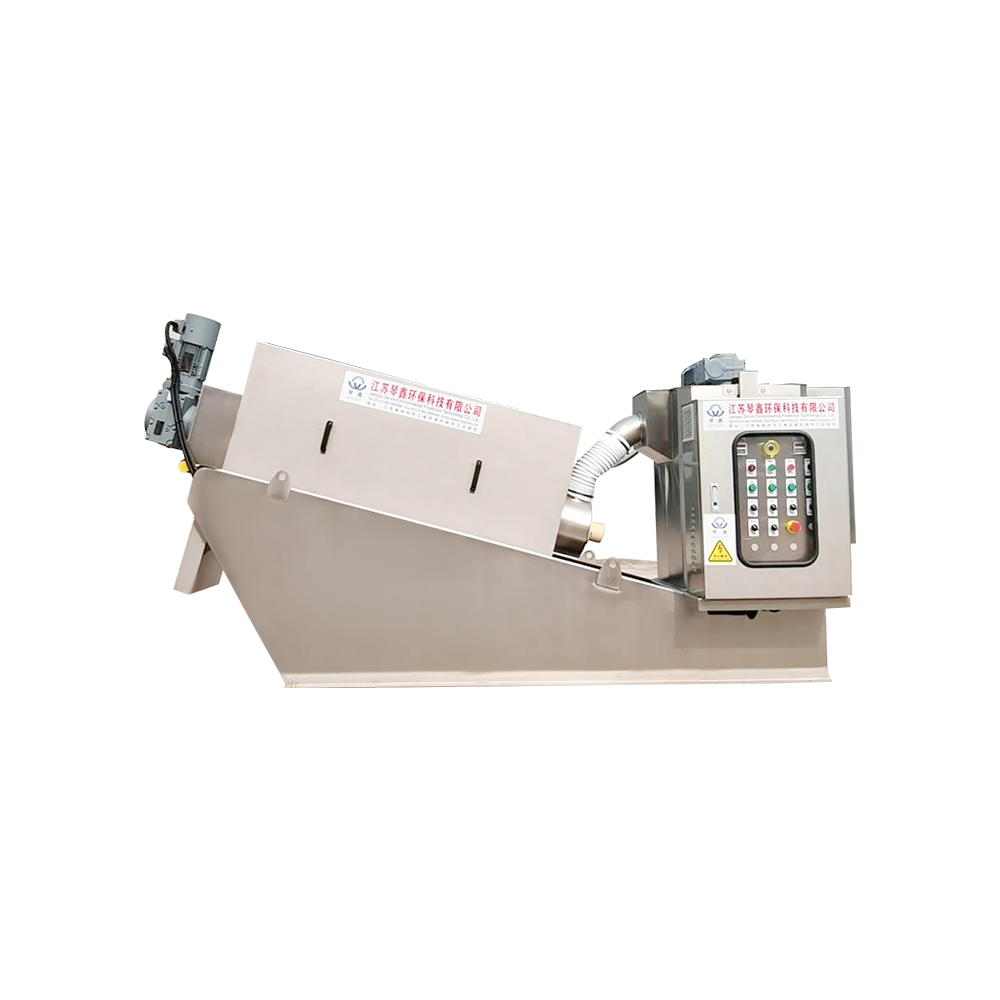
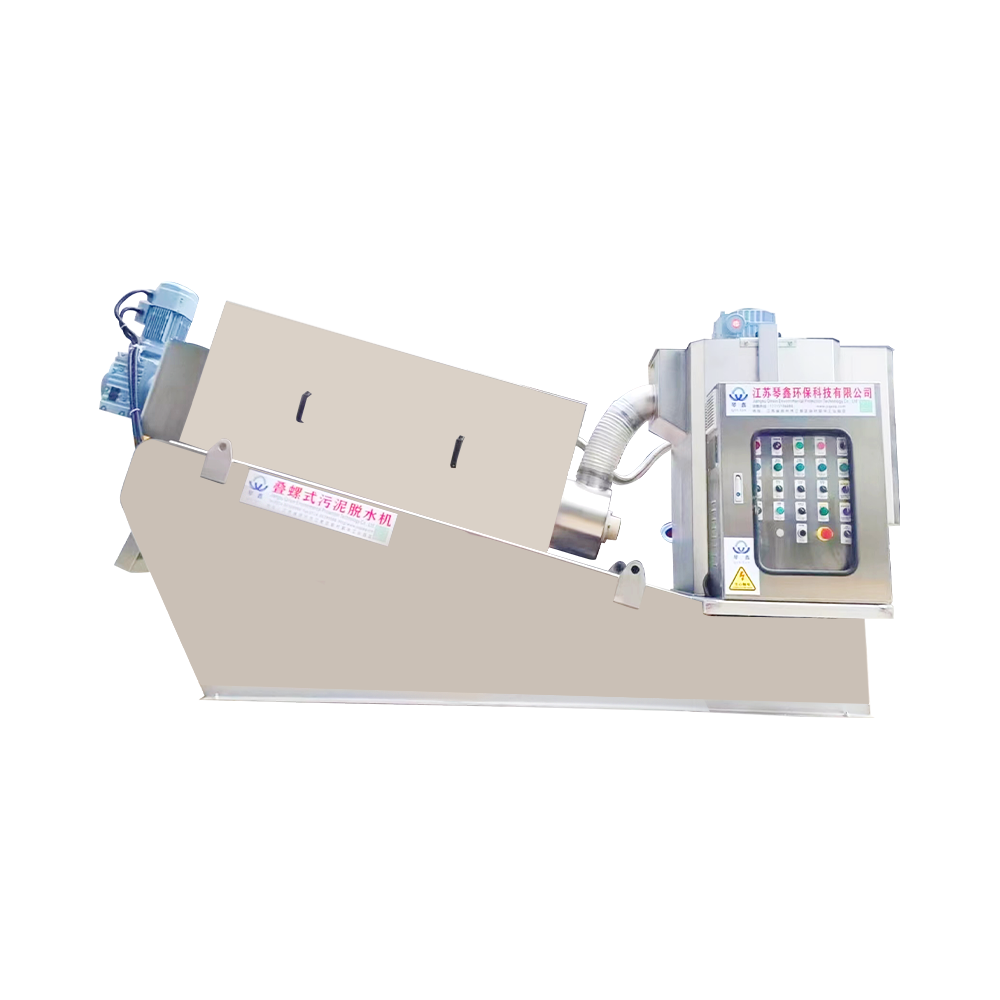
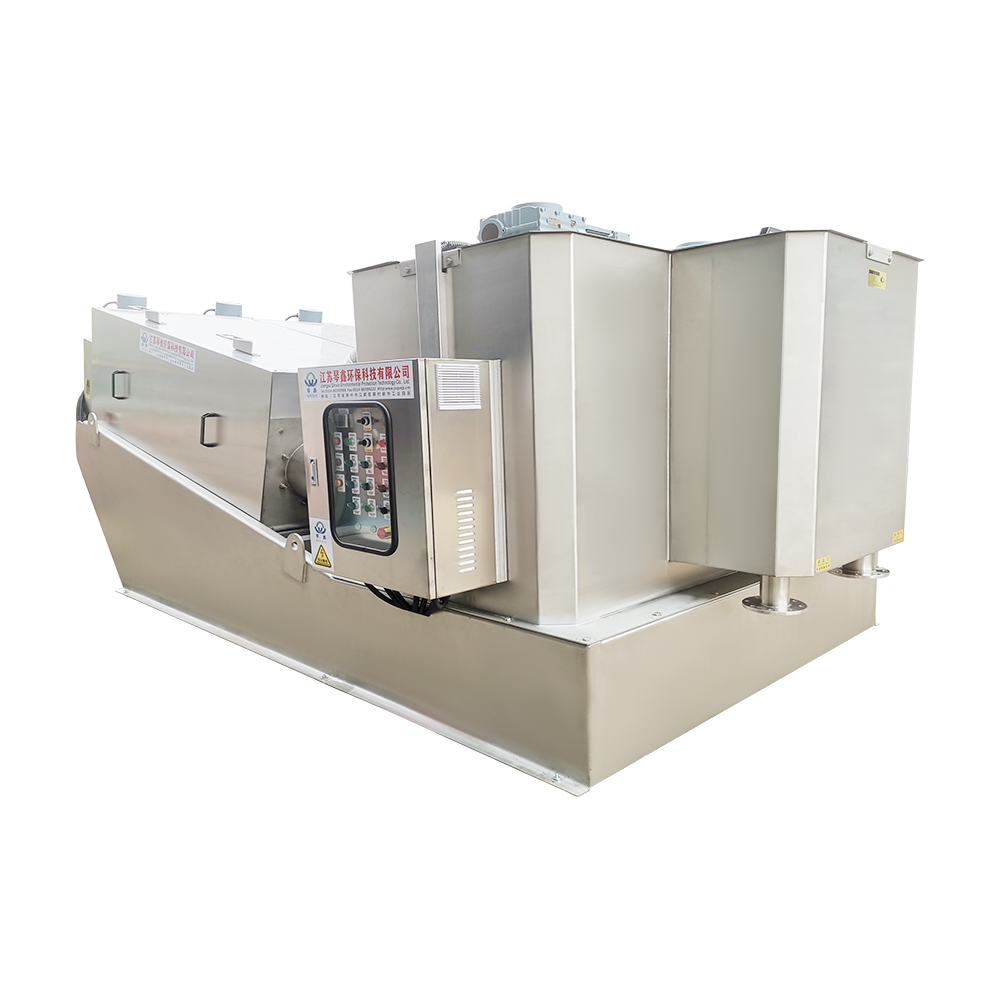
For plants with tight floor space, a package that combines the mixing stage and the dewatering press in one horizontal frame shortens installation and keeps the process footprint small. The integrated horizontal food-grade screw press QXDL252 is one such configuration, designed for exactly this duty.
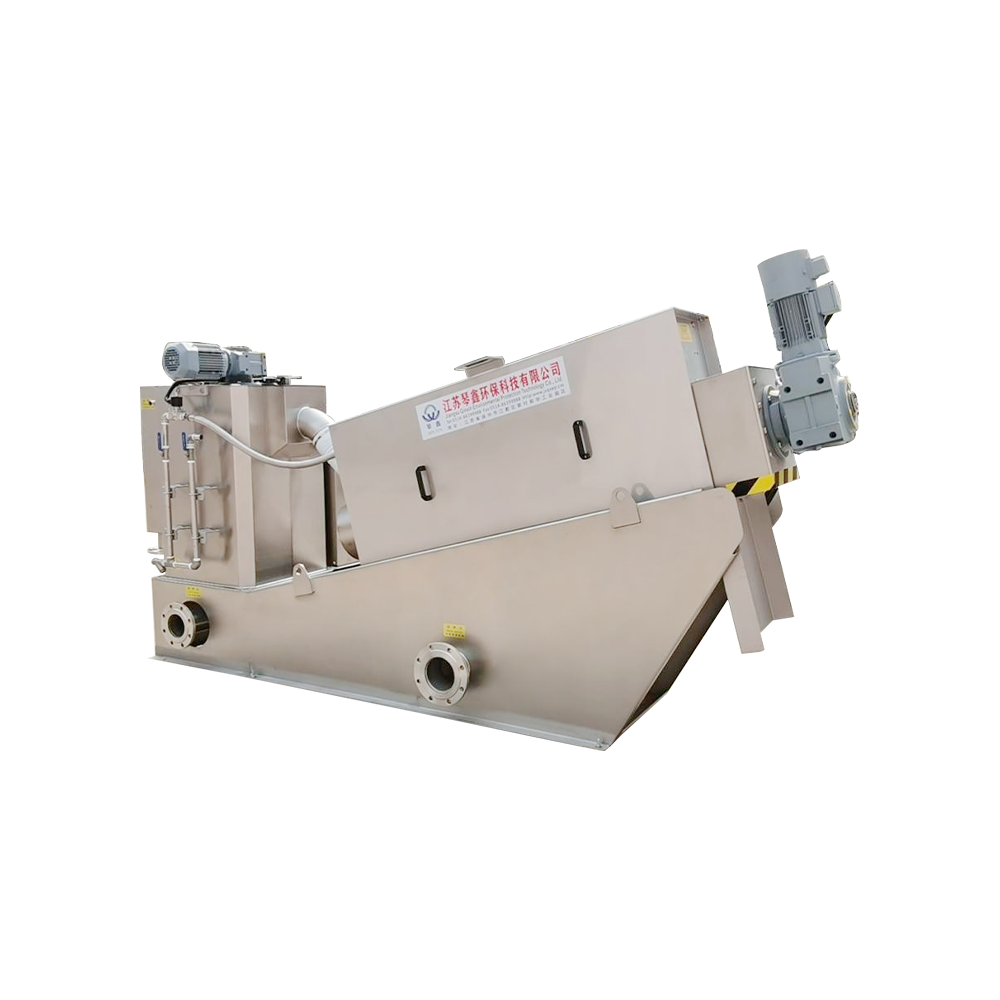 Custom Eco-friendly Solid-Liquid Separation Spiral Screw Sludge Dewatering MachiYangzhou Qinxin Environmental Protection Technology Co., Ltd. Is China Custom Eco-friendly Solid-Liquid Separation Spiral Screw Sludge De...View Product →
Maintenance and reliability in a food environment
Food processing lines run six or seven days a week, and dewatering cannot become the bottleneck. The maintenance plan for a screw press in food service is short but must be followed:
- Screen cleaning. Fats and carbohydrates coat the screen gradually. A weekly hot-water rinse and a monthly alkaline wash is a practical baseline; heavy fat loads may need more.
- Bearing lubrication. Grease at the documented interval, typically every 2,000 operating hours.
- Wear-part inspection. Screw flights and screen wear slowly, but acid and chloride exposure accelerates it. Inspect flight clearance and screen condition every six months.
- Seal replacement. The discharge shaft seal wears gradually; replacing it as planned work is cheaper than discovering a leak during a production week.
The screw press is easier to maintain than a belt press because there is no filter media to replace and only one critical rotating element. Low rotation speed extends bearing and seal life, which is one reason food plants report high availability after the first year of operation.
Choosing a supplier that understands food plants
The machine specification is only half the project. The supplier must understand that food sludge is not municipal sludge—that seasonal changes affect flocculation, that fat coats screens, and that the site will be washed down hard every day. Ask for reference installations in food processing, the expected polymer type and dose, and a filtrate quality guarantee. The food-grade horizontal screw press technical overview shows how these requirements translate into actual machine layouts.
Documentation matters as much as hardware. Material certificates for food-contact parts, a written cleaning procedure, and a clear spare-parts list should be part of the proposal. Qinxin's food-grade range, including the QXDL251 and QXDL252, is designed for the hygiene documentation and cleanability that food industry audits expect.
Final takeaway
For most food processing plants, a sludge dewatering screw press offers the best balance of cake dryness, operating cost, and operator involvement. The selection should be driven by the sludge's actual characteristics, the seasonal peaks, and the integration with polymer dosing and cake conveying. Plants that specify food-grade materials from the start and size for peak conditions avoid the two most common failures: an industrial machine that corrodes in food service, and capacity that is fine on paper but too small for the production week.

 TOP