
 ENG
 English
 русский
 Español
 Tiếng Việt
 ไทย

Article Directory
- 1 Sludge Characteristics and Throughput Matching
- 2 Cake Dryness and Dewatering Performance
- 3 Polymer Consumption and Energy Cost over the Machine’s Lifetime
- 4 Materials of Construction and Corrosion Resistance
- 5 Self-Cleaning, Accessibility, and Maintenance
- 6 Industry-Specific Compliance and Configuration
A wastewater treatment line in a chemical park once selected a screw press sludge dewatering machine based mainly on its nominal capacity. The unit ran, but polymer consumption climbed well above budget, and the filter area needed cleaning far more often than planned. The machine was not defective; it was simply chosen on the wrong criteria. When comparing screw press sludge dewatering machines, the factors that separate a smooth, low-cost installation from a recurring maintenance burden are consistent across industries: sludge and feed compatibility, throughput, cake dryness, polymer use, materials of construction, cleaning and maintenance access, and industry-specific compliance. These seven factors should be evaluated before the purchase decision, not after commissioning. If you need a broader explanation of how the internal spiral and filter rings work together, this screw press sludge dewatering guide provides a useful starting point.
Sludge Characteristics and Throughput Matching
The correct frame size is decided by your feed conditions, not by the equipment nameplate alone. A screw press receives sludge from a holding tank or pump, and the machine must handle both the average flow and the daily peaks. If the feed concentration varies through the day, the machine’s ability to self-regulate shaft speed matters more than its maximum rated capacity.
When collecting data for selection, record the parameters below.
| Parameter | Why it matters | What to look for |
|---|---|---|
| Feed flow rate (m³/h) | Sets the required frame size and motor rating | Peak flow, not only daily average |
| Feed solids concentration (%) | Affects polymer dose and achievable cake solids | Consistency across shifts and seasonal changes |
| Sludge type | Biological, chemical, oily, fibrous, or sticky sludge behaves differently | A machine designed for your dominant sludge type |
| Inlet pressure and piping layout | Determines whether sludge can enter directly from a tank or needs a feed pump | Simple upstream design with minimal moving parts |
Sludge that contains fibers, grease, or chemical precipitates behaves very differently from municipal biological sludge. A model with a wide inlet and a multi-disc filter set can accept a more varied feed without blocking, which is why the mechanical layout deserves as much attention as the capacity figure.
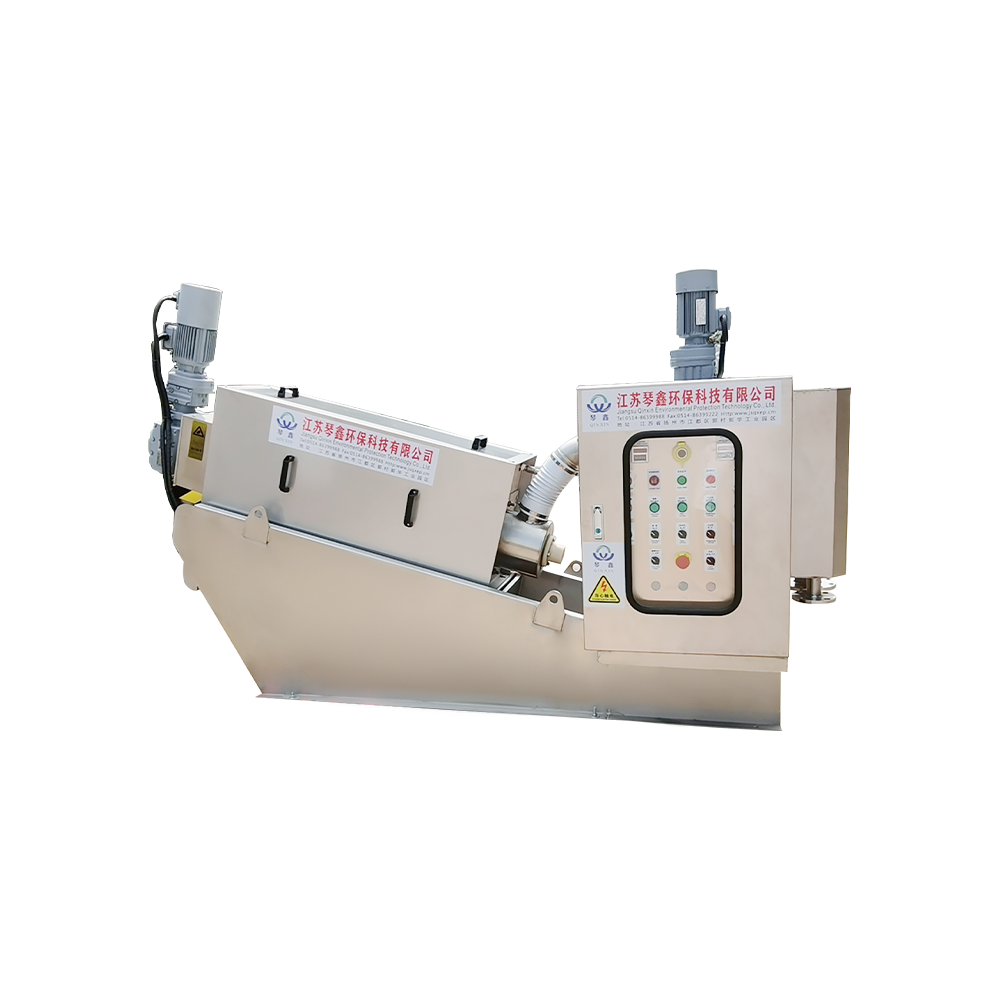
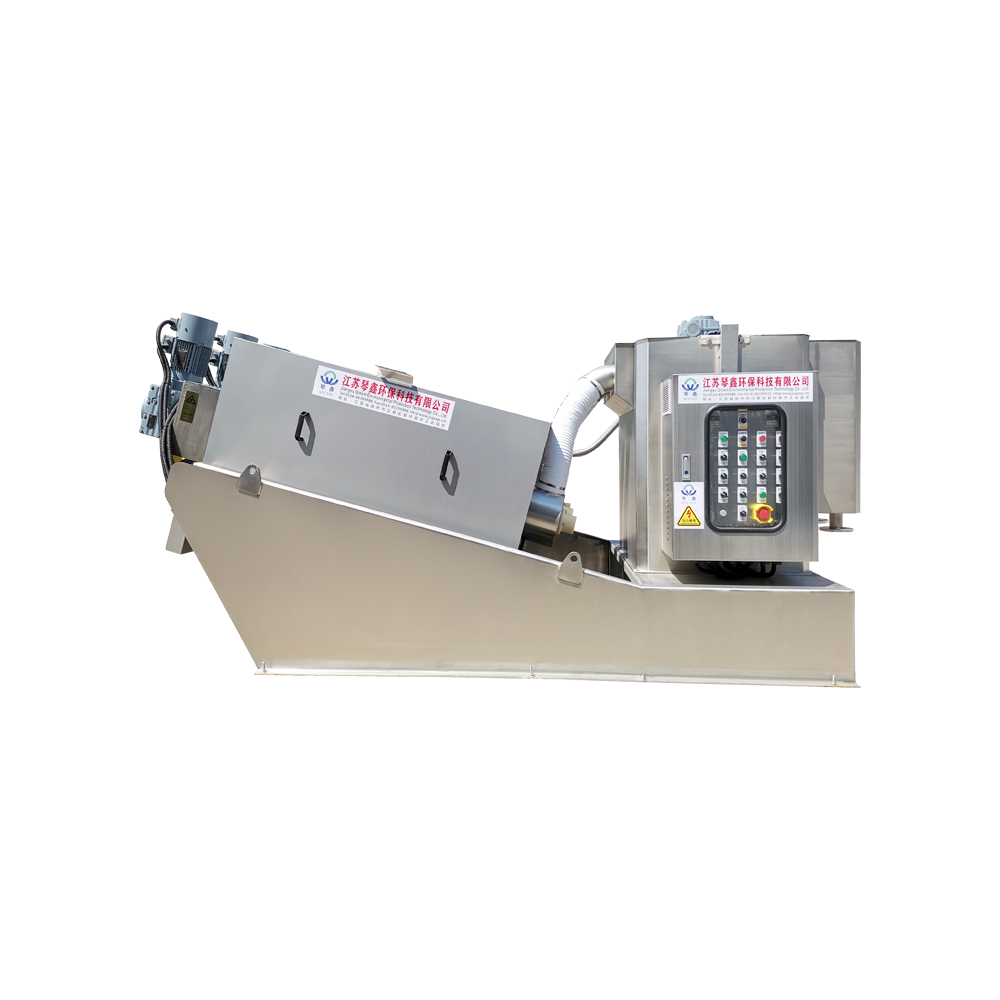
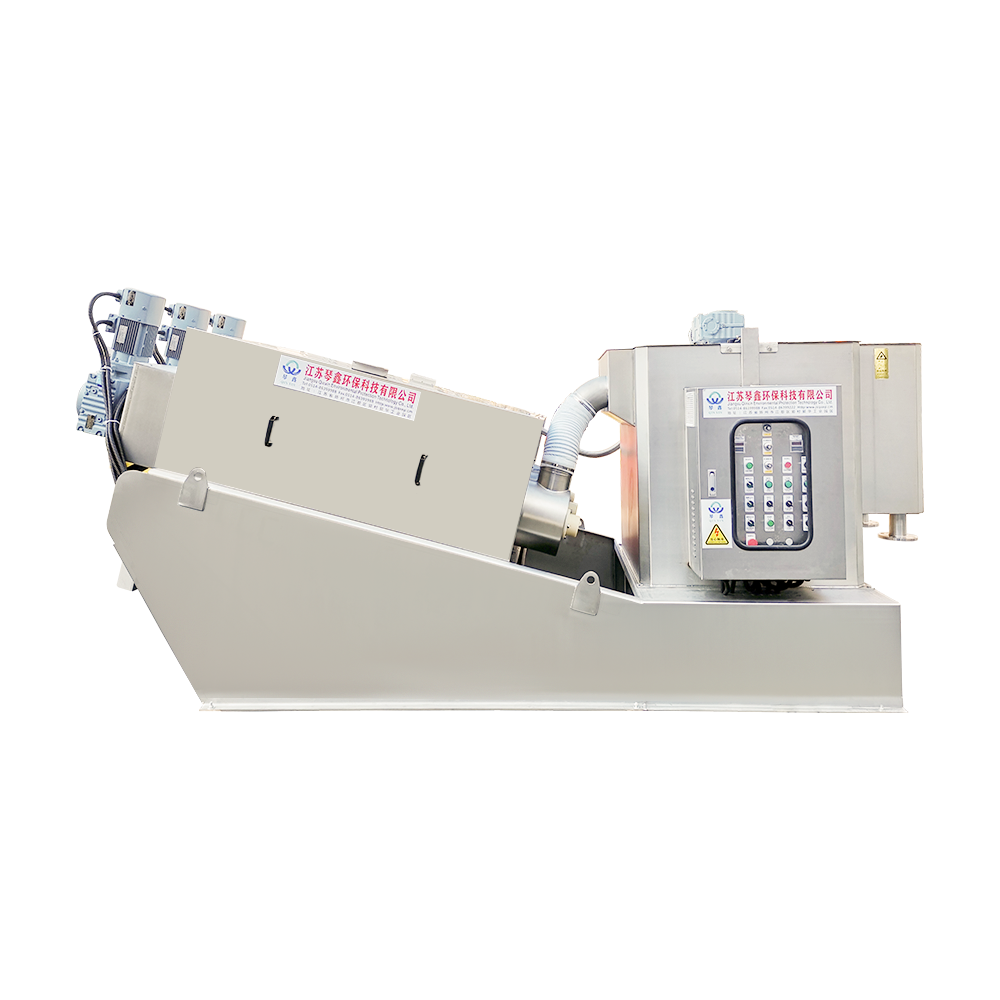
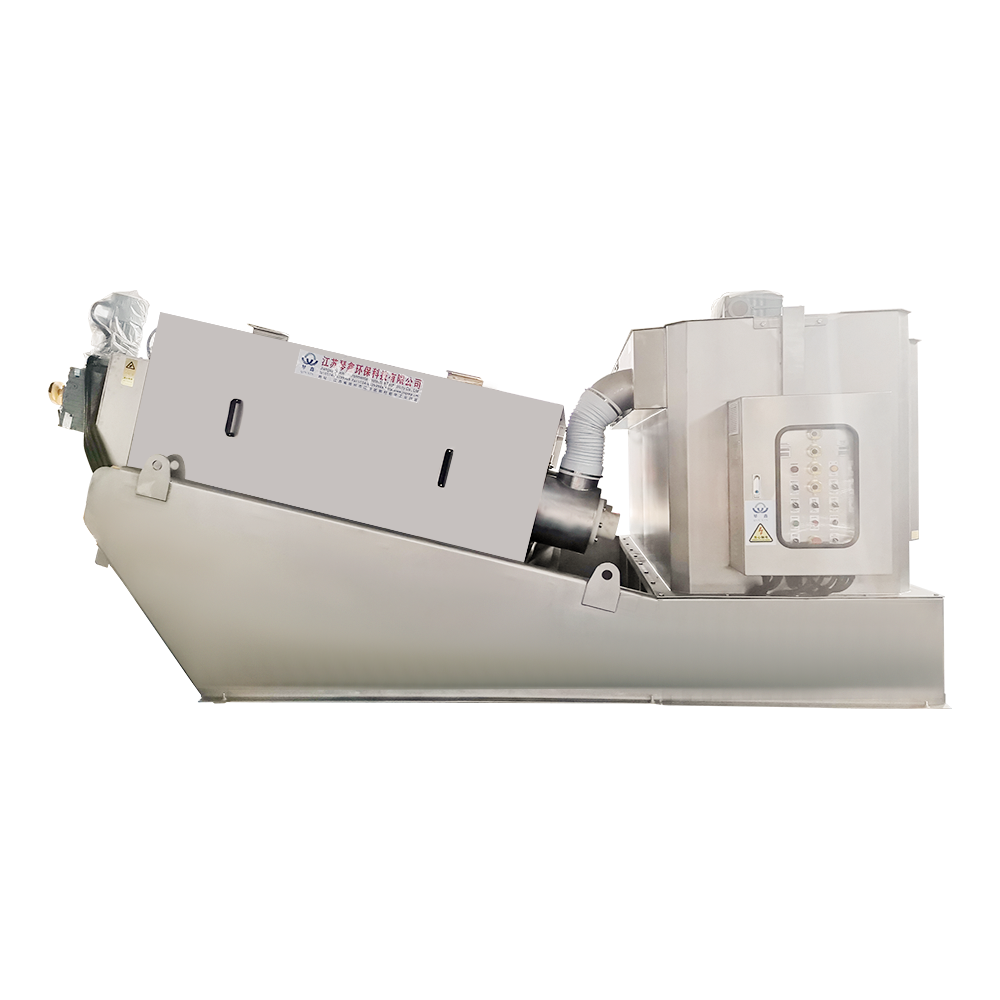
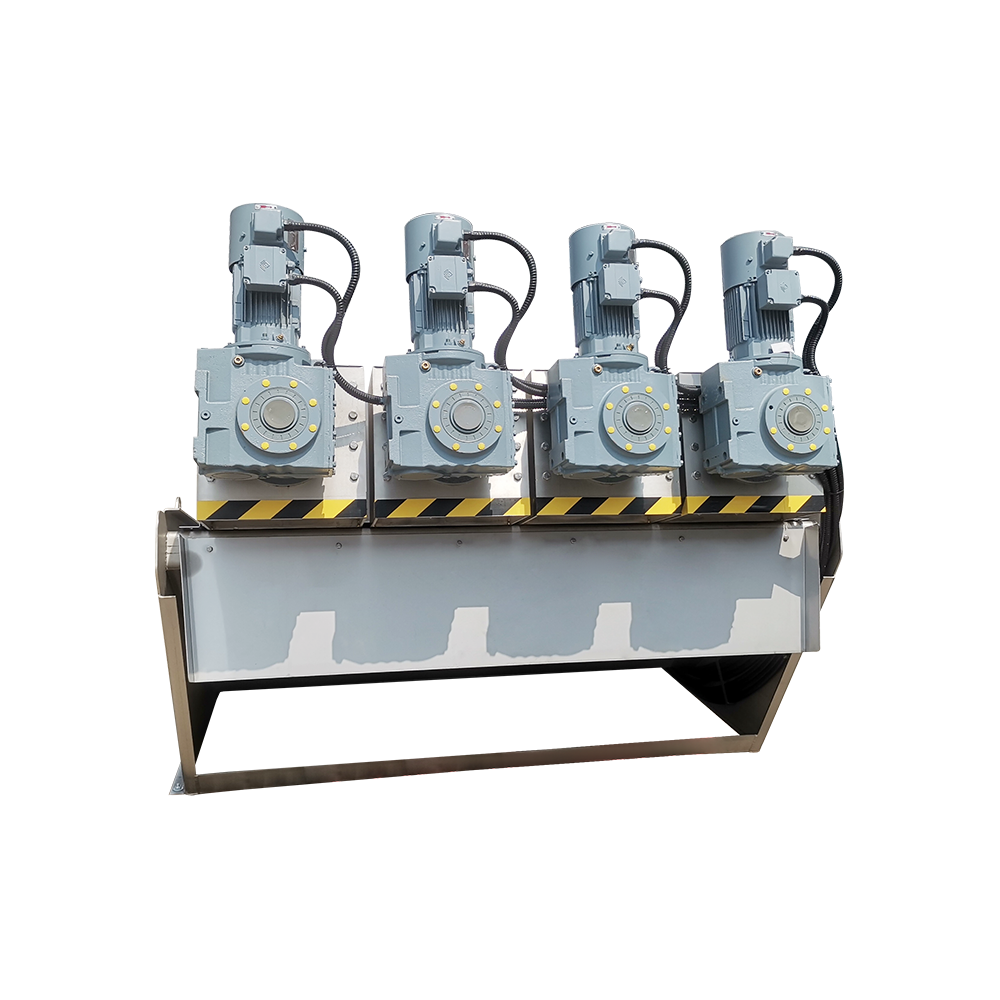 Spiral Screw Sludge Dewatering Machine QXDL-304 with 304 Stainless Steel ConstructionThis high-capacity automatic dewatering unit handles 5-20 m³/h of sludge without chemical agents, using an adjustable spiral shaft to exceed 95% dewatering efficiency. Its wide inlet and multi-disc filter set accommodate varied feed quality in municipal and industrial applications.View Product →
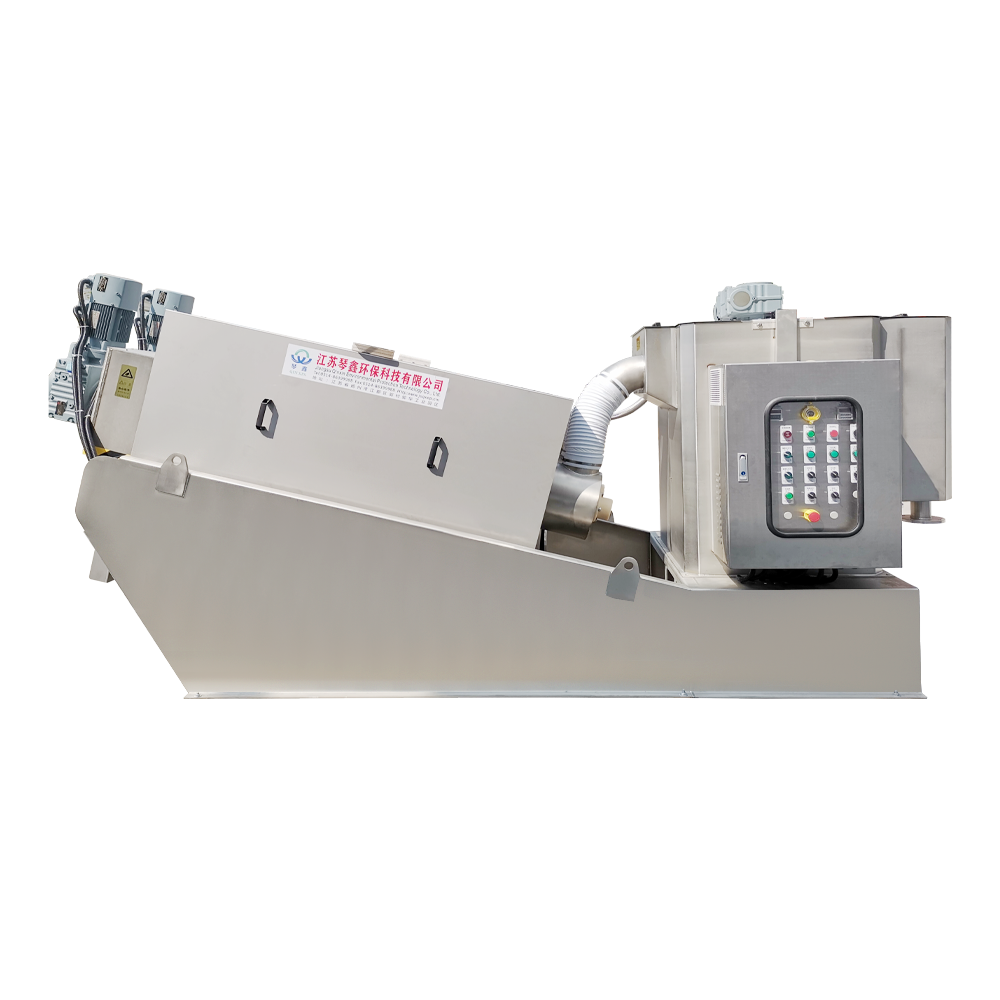
For many municipal and general industrial wastewater applications, a machine with automatic spiral dewatering and a compact footprint keeps the selection straightforward while still leaving room for feed quality fluctuation.
Cake Dryness and Dewatering Performance
Lower cake moisture directly reduces hauling and disposal costs, so it is tempting to compare only the final dryness number. In practice, the achievable cake solids depend on feed concentration, screw speed, back-pressure, and polymer conditioning. A machine that reaches 20% dry solids on one sludge may return only 16% on another. The important question is whether the candidate has adjustable back-pressure and a compression zone long enough to respond to changes in sludge quality.
Before accepting a promised dryness value, ask for the test conditions: sludge type, solids concentration, polymer type, and polymer dose. A pilot trial with your own sludge is always more reliable than a brochure table. The best machine for your site is not necessarily the one with the highest dryness result in someone else’s test, but the one that maintains steady performance across your real operating range.
Polymer Consumption and Energy Cost over the Machine’s Lifetime
The purchase price is only one part of the total ownership cost. A useful planning assumption is that electricity, polymer, water, and labor together outweigh the initial investment over the equipment’s service life. Polymer consumption, in particular, is often the largest variable cost in a dewatering room, so the flocculation tank design and mixing intensity should be reviewed carefully. A machine that saves money on the price tag but demands a higher polymer dose every day will quickly become the more expensive option.
| Cost item | Typical influence | Selection response |
|---|---|---|
| Electricity | Runs continuously during operation; gear reducer efficiency matters | Ask for installed motor power and screw speed range |
| Polymer (PAM) | Often the largest variable operating expense | Evaluate flocculation tank design and mixing intensity |
| Spare parts and wear components | Filter rings and spiral shafts wear faster with abrasive sludge | Choose stainless steel construction and accessible wear parts |
| Downtime and labor | Cleaning, unclogging, and repairs raise the real operating cost | Prefer self-cleaning geometry and low-speed operation |
Materials of Construction and Corrosion Resistance
Industrial sludges often contain chlorides, hydrogen sulfide, organic acids, or abrasive particles. The grade of stainless steel used for the spiral shaft, filter rings, and frame determines how quickly corrosion appears and how long the machine keeps its dimensional accuracy. For general industrial wastewater where corrosion resistance has to be balanced with capital cost, a machine built with the correct stainless steel grade and a clean surface finish will outperform a cheaper carbon-steel option within the first few years of service.
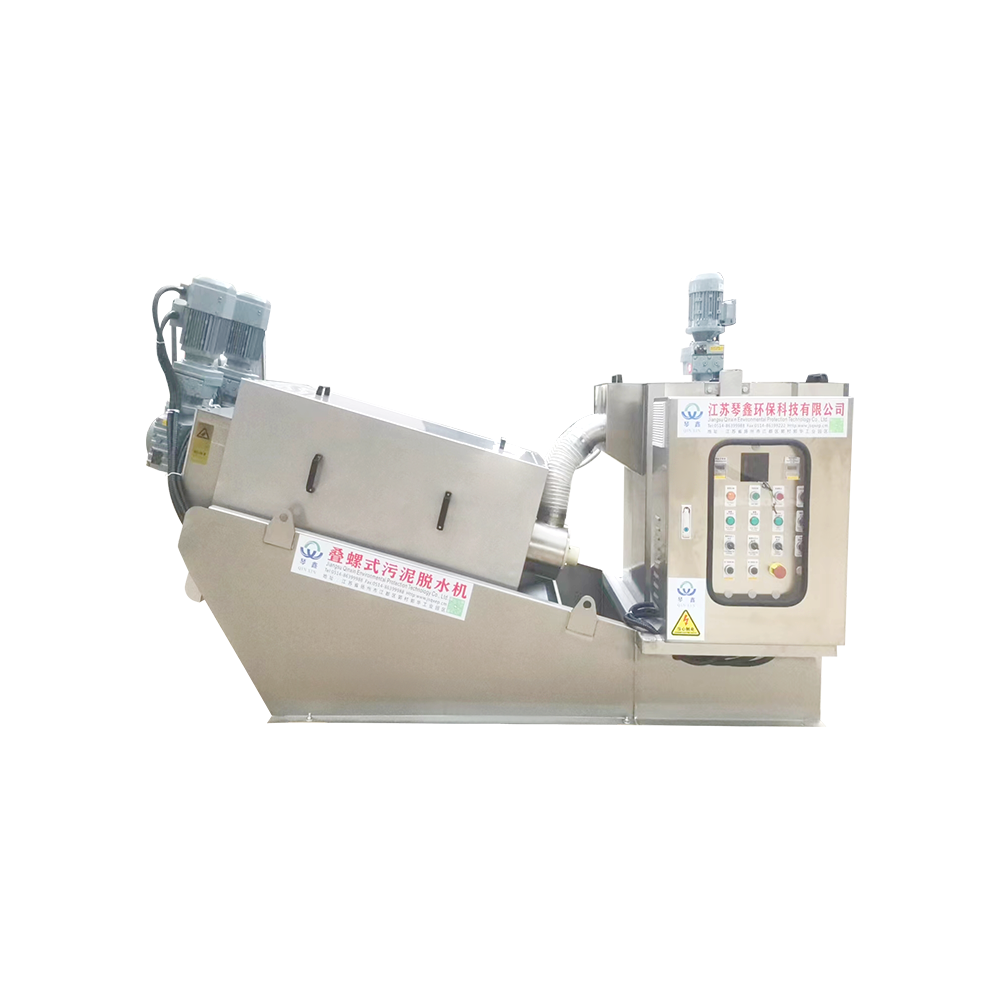
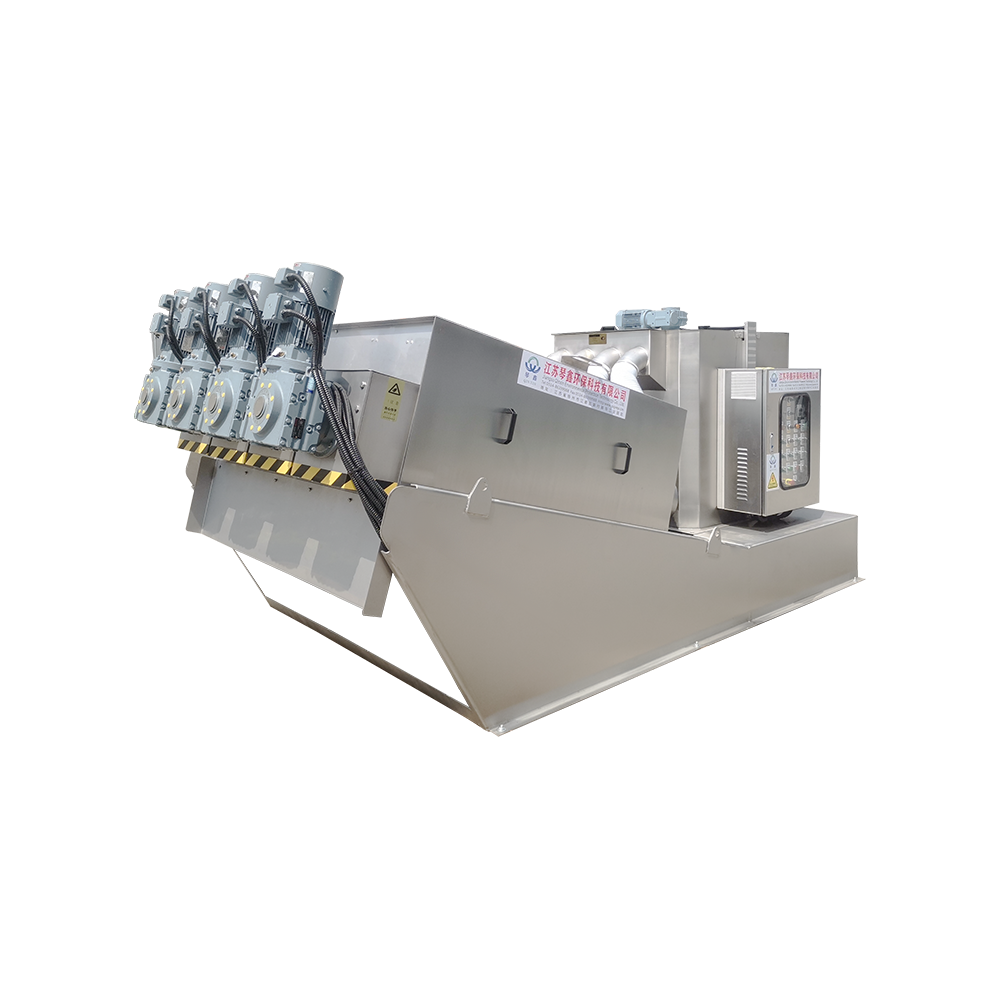
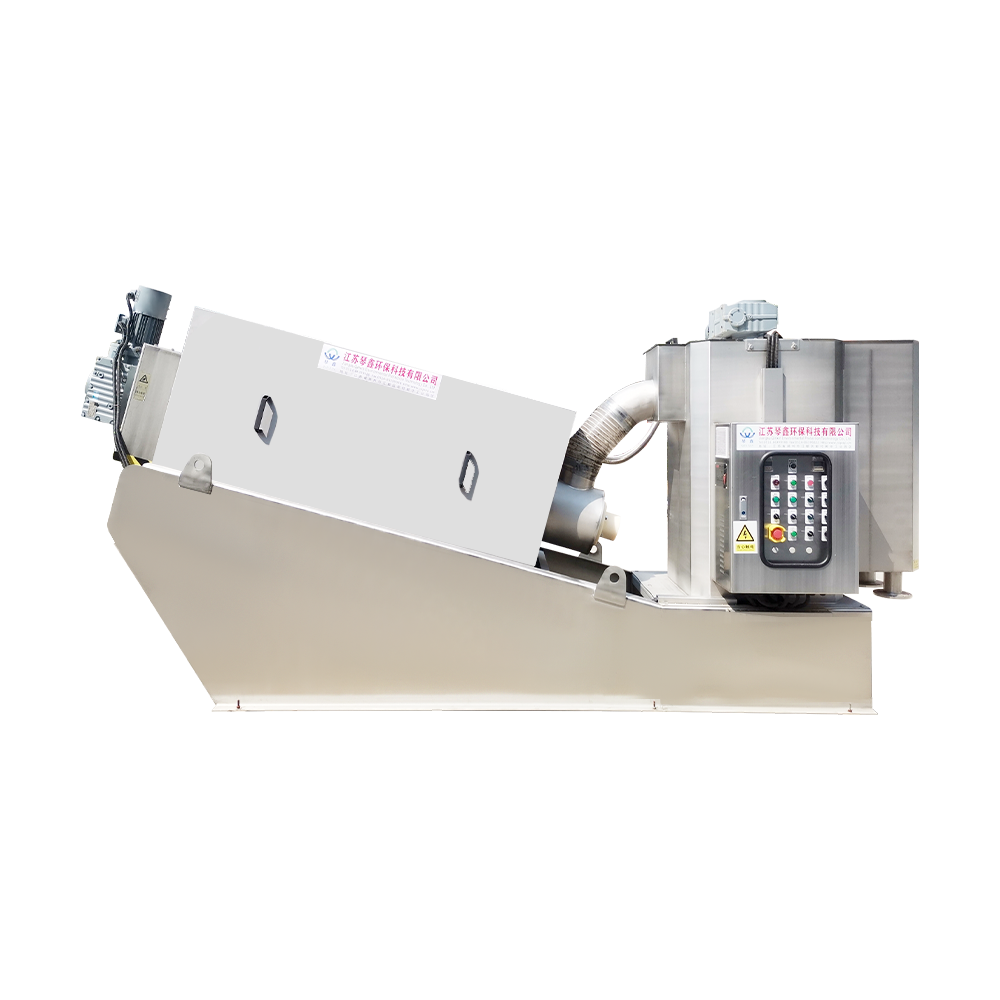
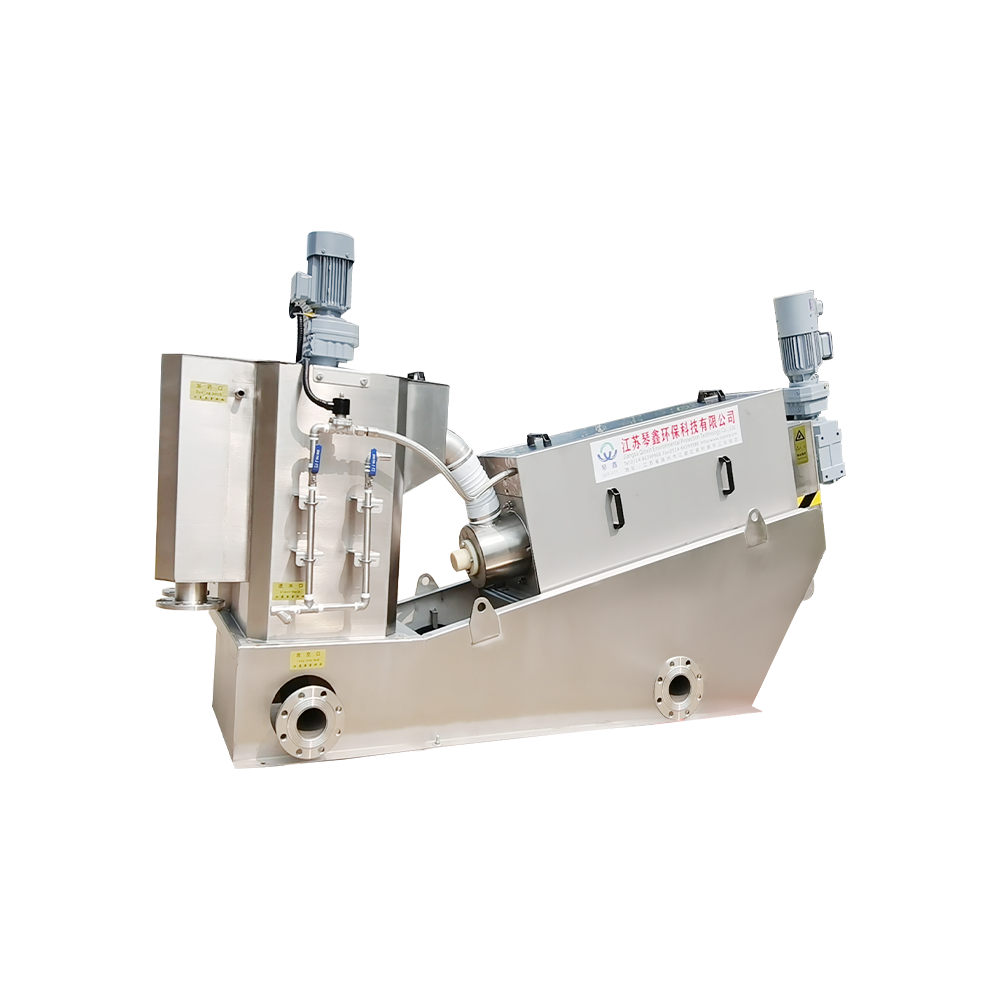 Food-Grade Energy-Saving Spiral Screw Sludge Dewatering Machine QXDL-251Built with food-grade materials and a slow 3-6 RPM screw speed, this compact press preserves process integrity while dewatering sludge from food, beverage, and pharmaceutical facilities. Self-cleaning differential motion prevents clogging without chemical cleaning agents.View Product →
Ask the manufacturer which components contact the sludge directly and whether those components are replaceable. A design that allows the filter rings to be removed individually shortens repair time and avoids replacing the entire dewatering unit when only one section is worn.
Self-Cleaning, Accessibility, and Maintenance
The multi-disc screw press design eliminates filter cloth and the continuous cleaning that belt presses require. The fixed and moving rings create a self-cleaning effect as the shaft rotates, which reduces the need for washdown water and operator attention. That said, maintenance convenience still depends on how easily the machine can be opened for inspection. Check whether the cover, filter set, and discharge cone can be accessed without special tools and without disassembling the entire drive train.
Low-speed operation is another factor that supports long service life. Slow rotation reduces wear on the spiral and filter rings, lowers energy consumption, and gives the sludge more residence time inside the compression zone. When comparing quotations, ask for the actual shaft speed range, not just the motor power.
Industry-Specific Compliance and Configuration
The same screw press principle is applied in municipal plants, food factories, printing and dyeing mills, chemical facilities, and livestock farms, but each industry introduces specific requirements. In food processing, the equipment must be easy to clean and must avoid areas where product residue can accumulate. A food-grade horizontal configuration with an integrated design reduces floor space and simplifies washdown. For livestock and poultry wastewater, the focus shifts to handling higher solids content and stringy material without clogging. In chemical applications, corrosion resistance and compatibility with the upstream process chemistry become the priority.
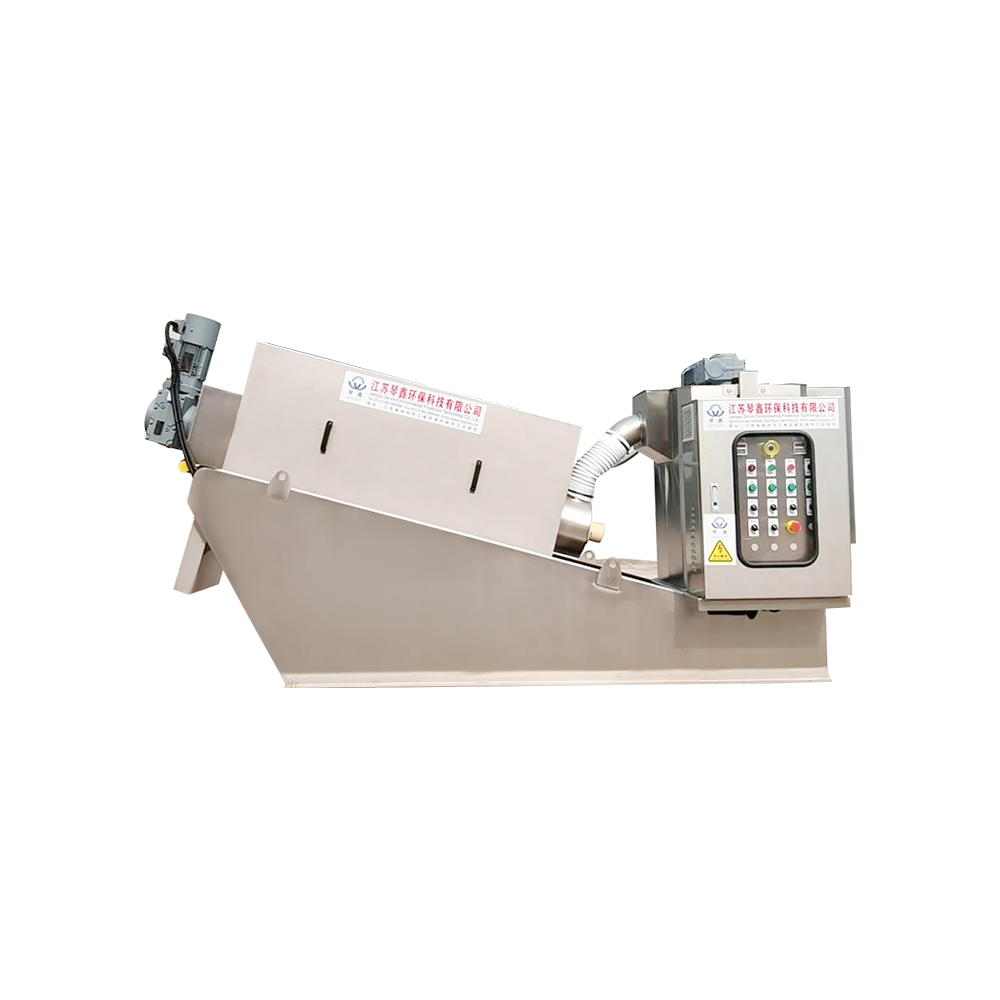
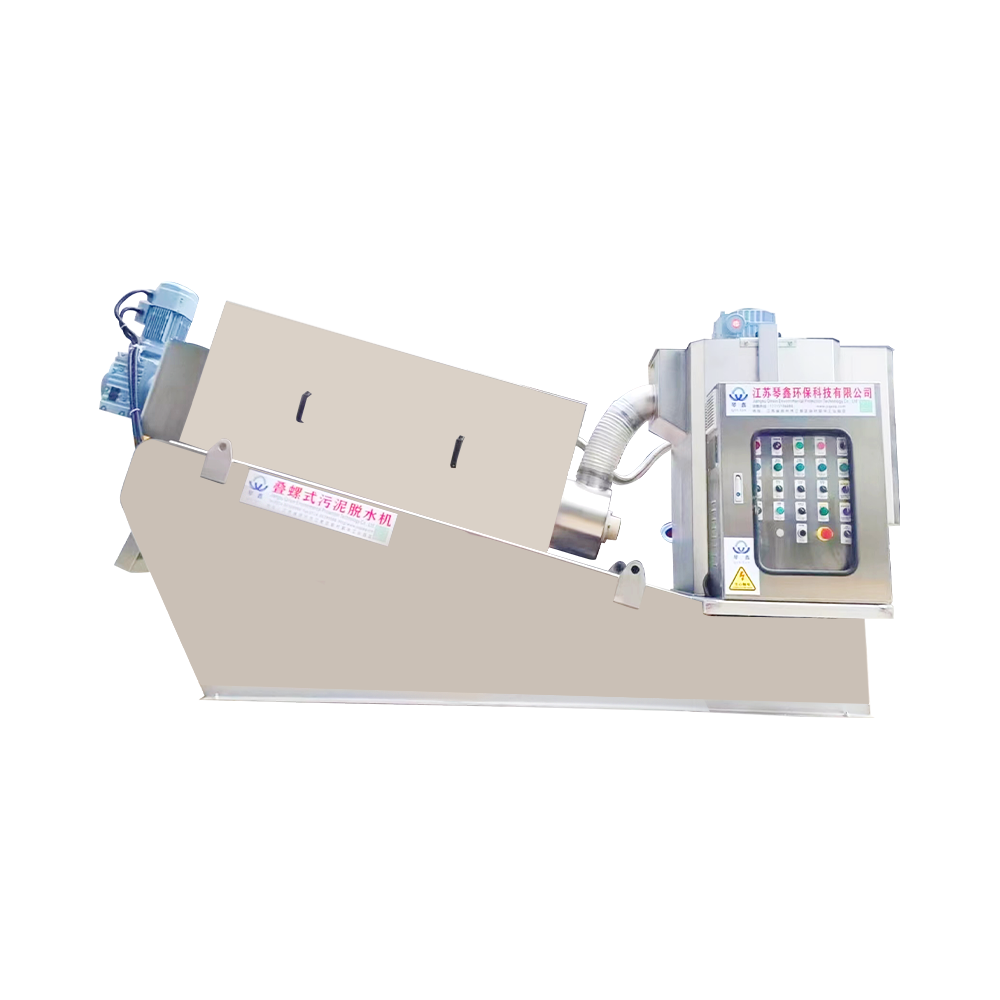
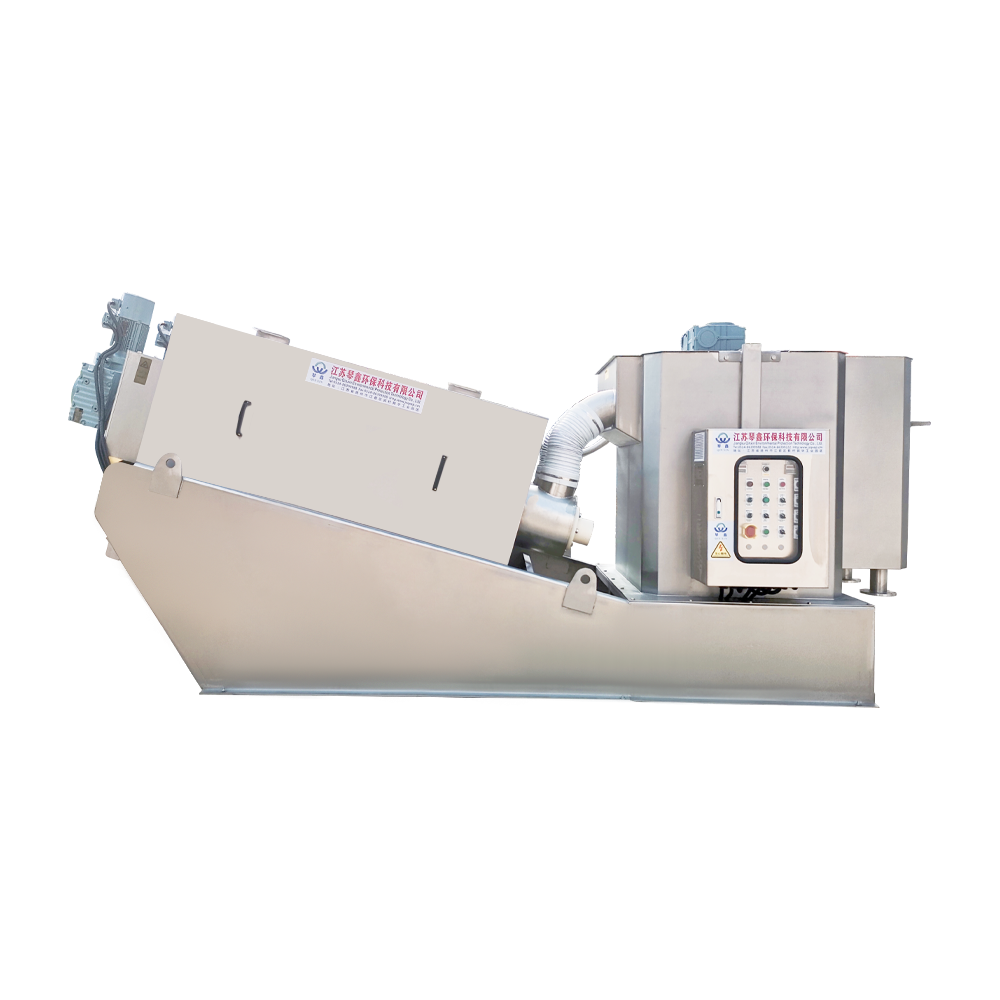
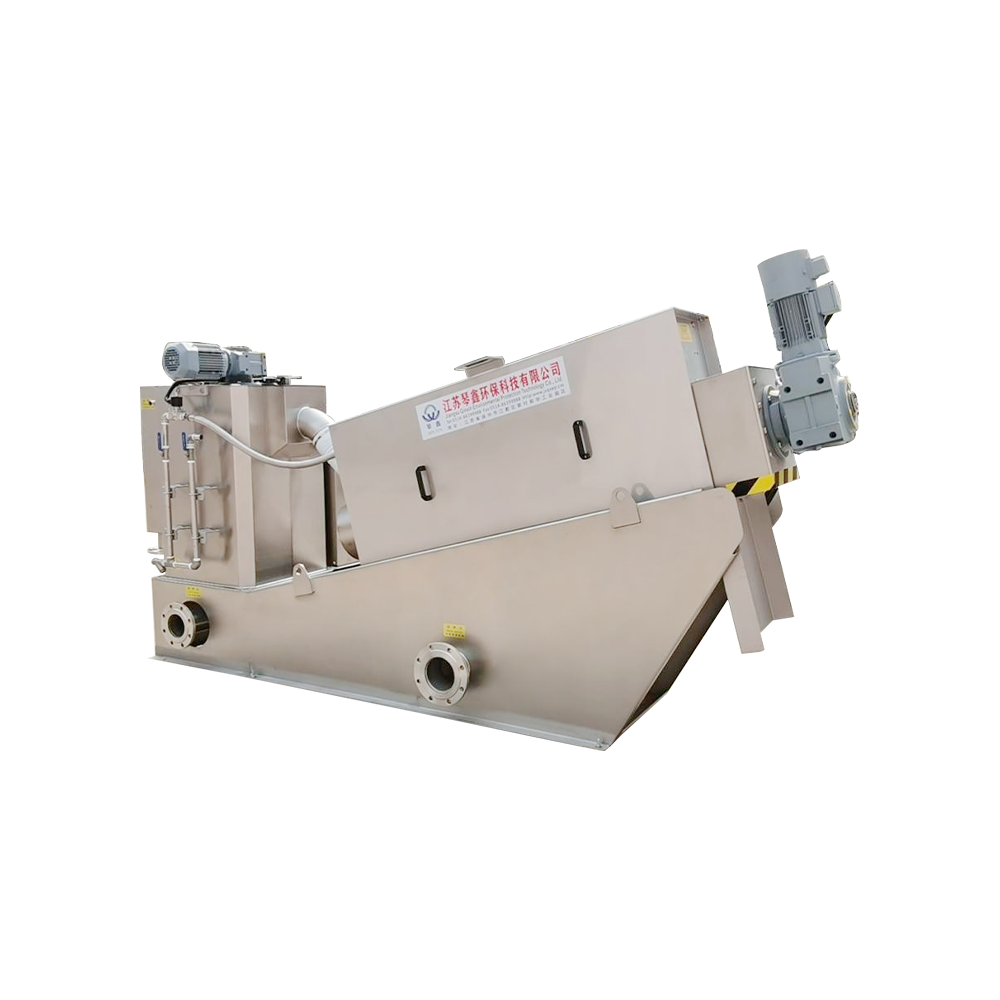 Eco-Friendly Solid-Liquid Separation Spiral Screw Dewatering Machine QXDL-301This fully automatic unit uses low-speed screw extrusion and self-cleaning rings for continuous dewatering, reducing sludge volume and treatment costs. It operates without large chemical doses, making it suitable for municipal, industrial, food processing, and papermaking sectors.View Product →
When you define your own compliance requirements, list them before the commercial comparison: material grades, surface finish, washdown access, and any local certification expectations. That way, every supplier is quoting against the same standard.
The final recommendation is practical: send the complete wastewater and sludge profile to the manufacturer, including flow range, solids concentration, sludge source, and target cake moisture, and ask for a test or a reference installation with similar feed conditions. Compare quotations on total ownership cost rather than price alone, and verify that the proposed model can handle your peak conditions without oversized auxiliary equipment. The screw press that fits your sludge, your operators, and your site constraints will always cost less in the long run than the one with the highest nameplate capacity. When you are ready to prepare an inquiry, you can contact the factory with your feed parameters and get a sizing recommendation based on real operating data.

 TOP