
 ENG
 English
 русский
 Español
 Tiếng Việt
 ไทย

Article Directory
- 1 What Traditional Sludge Dewatering Methods Really Cost
- 2 Why the Screw Press Principle Changes the Equation
- 3 Cake Dryness, Capture Rate, and Polymer Consumption
- 4 Energy, Water, and Maintenance: Where the Figures Separate
- 5 Where a Screw Press Wins, and Where Traditional Methods Still Belong
- 6 What to Verify Before Replacing Traditional Equipment
A wastewater treatment supervisor replacing an aging belt filter press rarely sees the full cost of that equipment until the annual operating report arrives. Polymer consumption, continuous wash water, belt changes, and overtime for cake discharge quietly accumulate. The screw press sludge dewatering machine changes the picture by removing most of those cost drivers: it runs slowly and continuously, without the cloths, belts, or high-speed rotors that traditional sludge dewatering methods depend on. This article compares screw press dewatering with belt filter presses, plate-and-frame filter presses, and decanter centrifuges on the factors that appear in operating budgets — cake dryness, polymer demand, energy, water, maintenance, and labor.
What Traditional Sludge Dewatering Methods Really Cost
Traditional sludge dewatering methods generally fall into three equipment families: the belt filter press, the plate-and-frame (recessed chamber) filter press, and the decanter centrifuge. Each has served municipal and industrial plants for decades, but their operating patterns differ significantly.
A belt filter press conditions the sludge with polymer, drains water by gravity, and squeezes the material between two moving belts. It runs continuously, but depends on precise belt tracking, high-pressure wash water, and frequent operator adjustment.
A plate-and-frame press feeds sludge into a closed chamber under pressure and forms a cake in batches. Cake dryness can be excellent, but every cycle requires opening the plate pack, discharging the cake, inspecting the cloths, and closing the press again. Labor and downtime are part of the standard process.
A decanter centrifuge spins sludge at high speed to separate solids. It is compact and fully continuous, but the power draw is high and the rotating assembly demands skilled maintenance.
The practical differences that influence equipment selection are summarized below.
| Criteria | Belt filter press | Plate-and-frame press | Decanter centrifuge | Screw press |
|---|---|---|---|---|
| Cake solids, typical | 15–25% | 30–45% | 20–28% | 20–35% |
| Operation mode | Continuous | Batch | Continuous | Continuous |
| Polymer demand | Medium | Medium to high | High | Low to medium |
| Wash water use | High, continuous | Moderate per cycle | Minimal | Low, intermittent |
| Energy intensity | Moderate | Moderate to high | High | Low |
| Self-cleaning ability | Partial | No | Partial | Yes |
| Noise level | Low to moderate | Moderate | High | Low |
| Footprint | Large | Large | Small | Small |
| Automation level | Medium | Low to medium | High | High |
Why the Screw Press Principle Changes the Equation
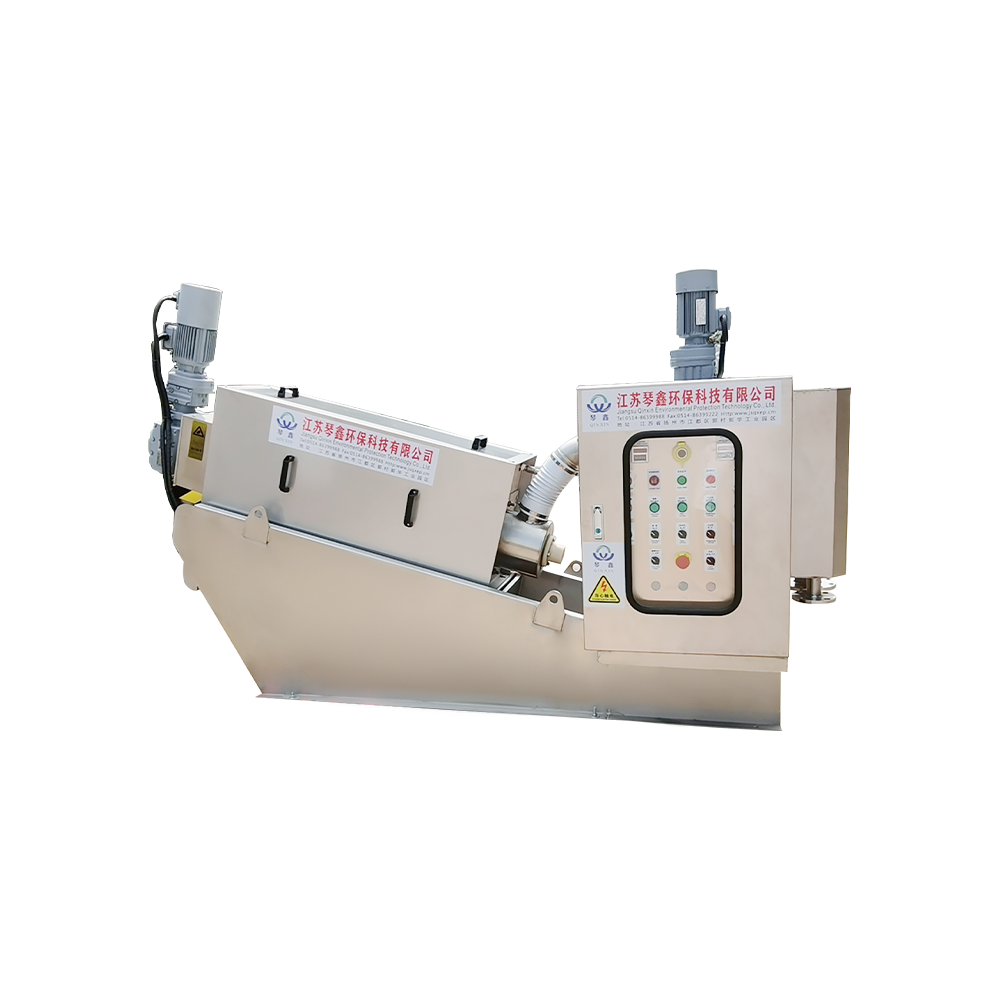
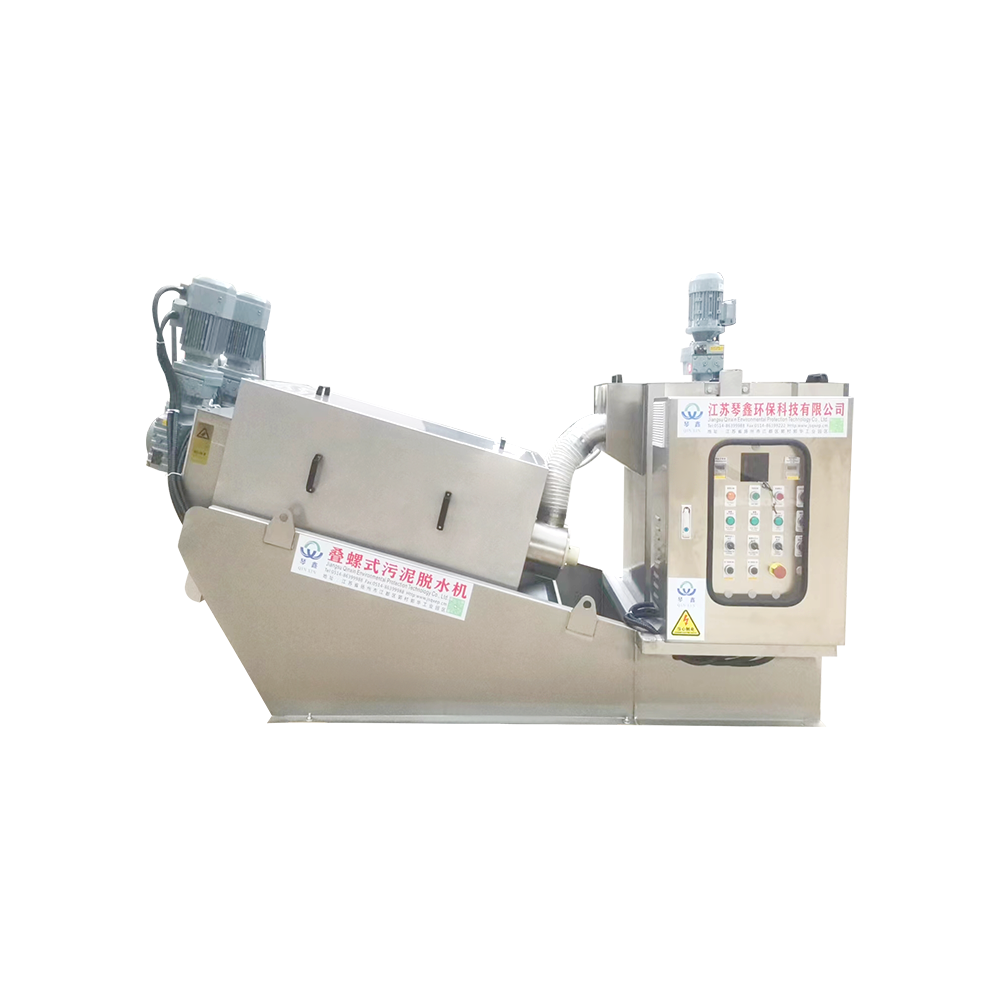
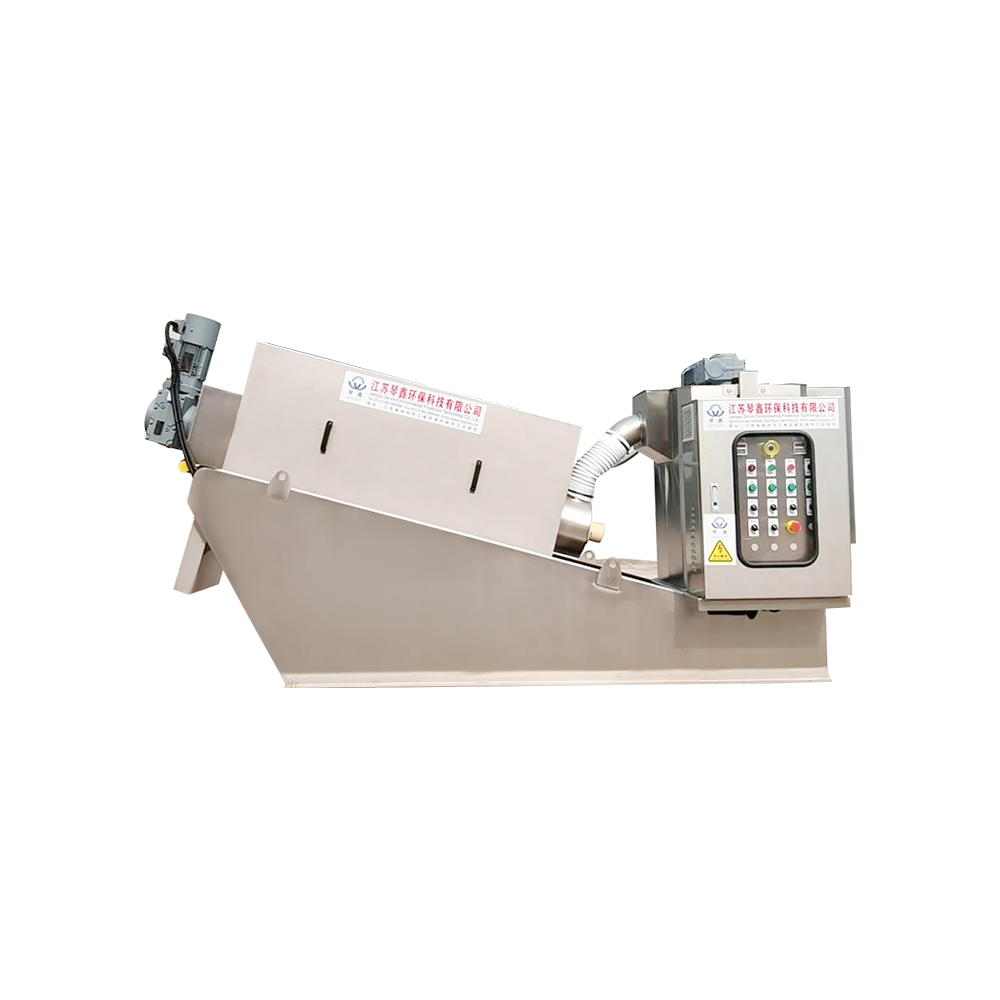
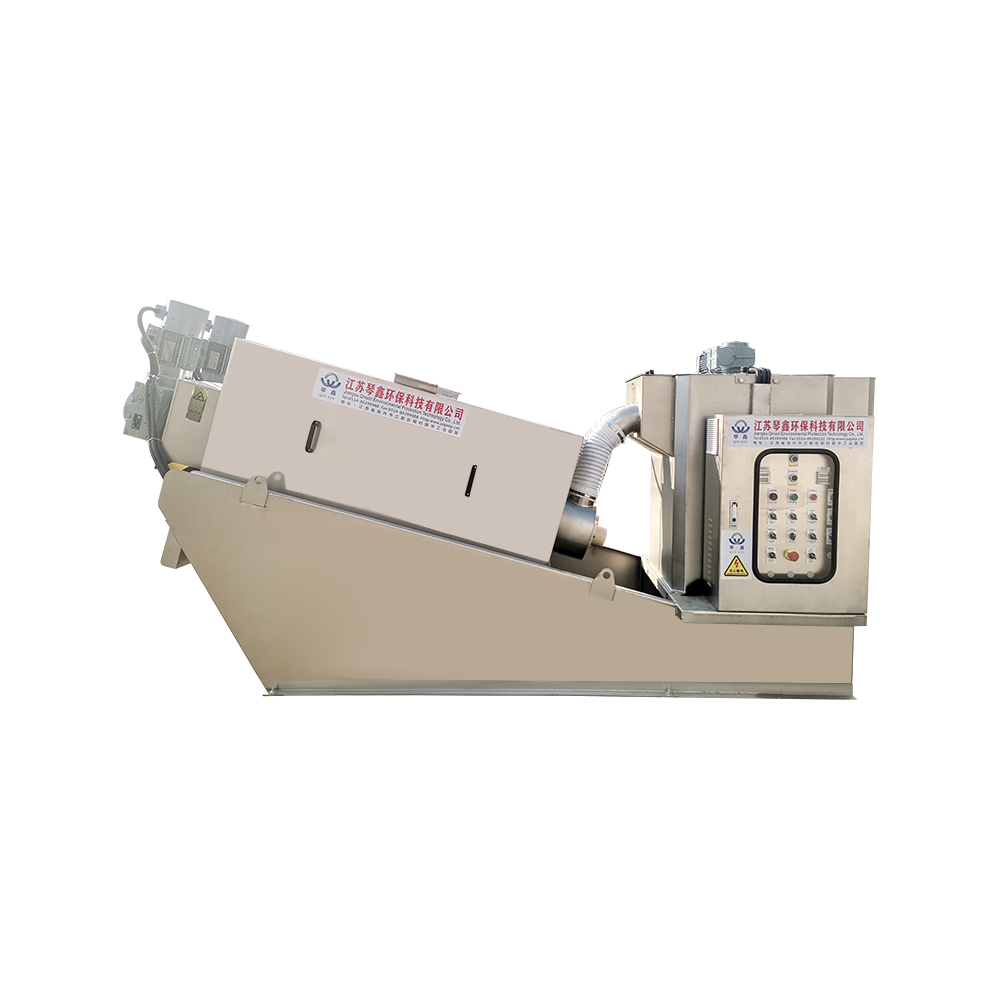
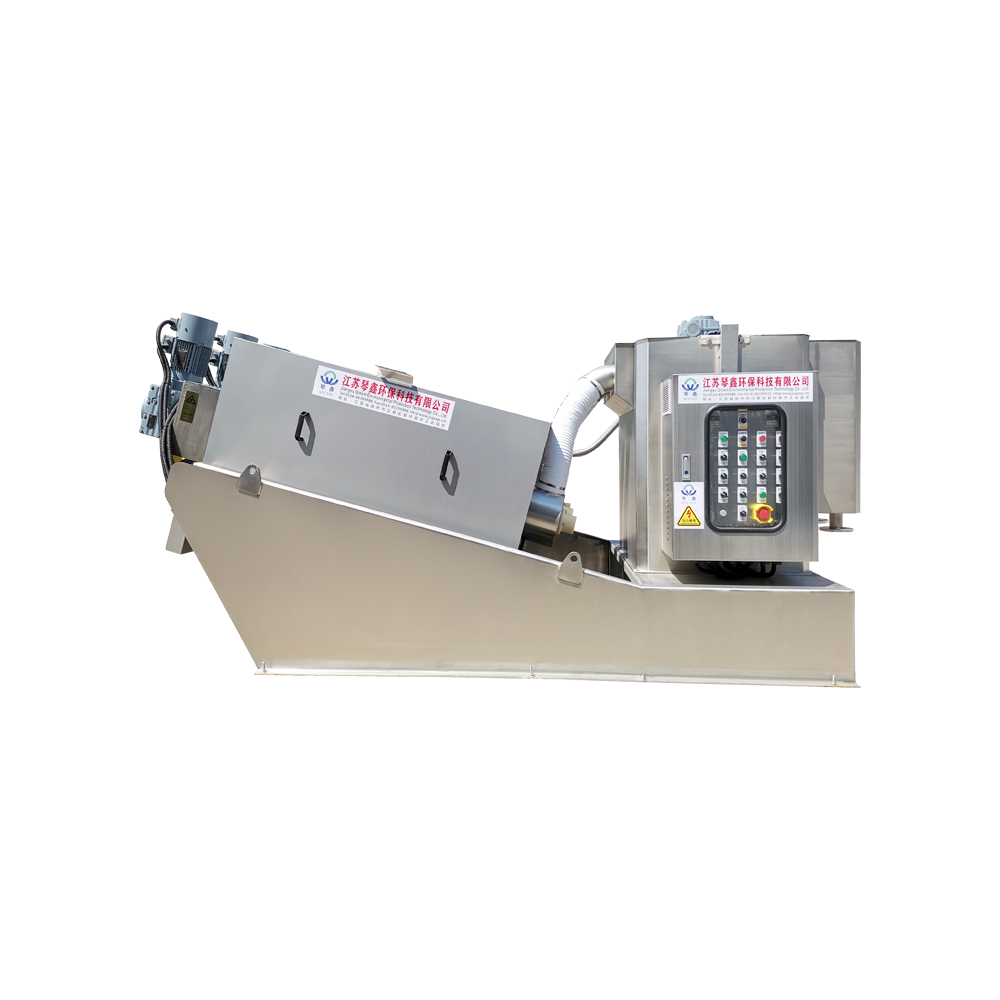
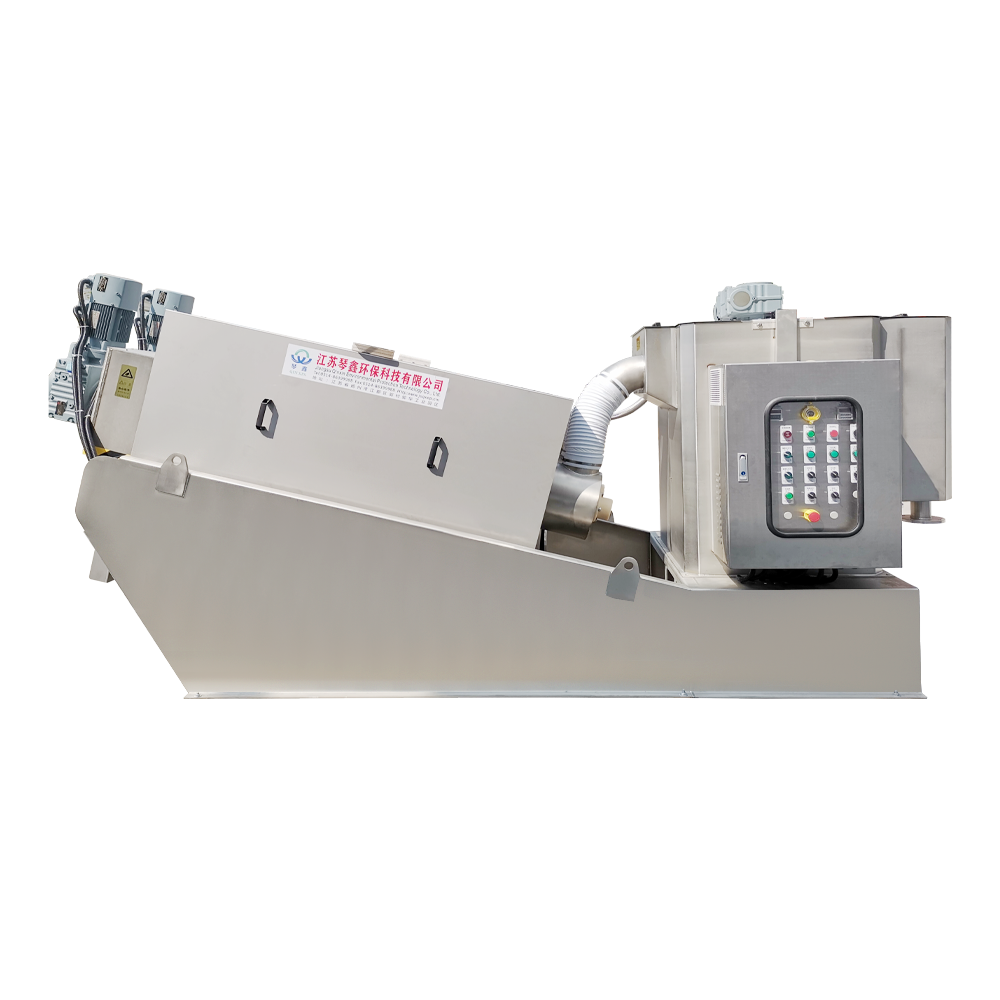
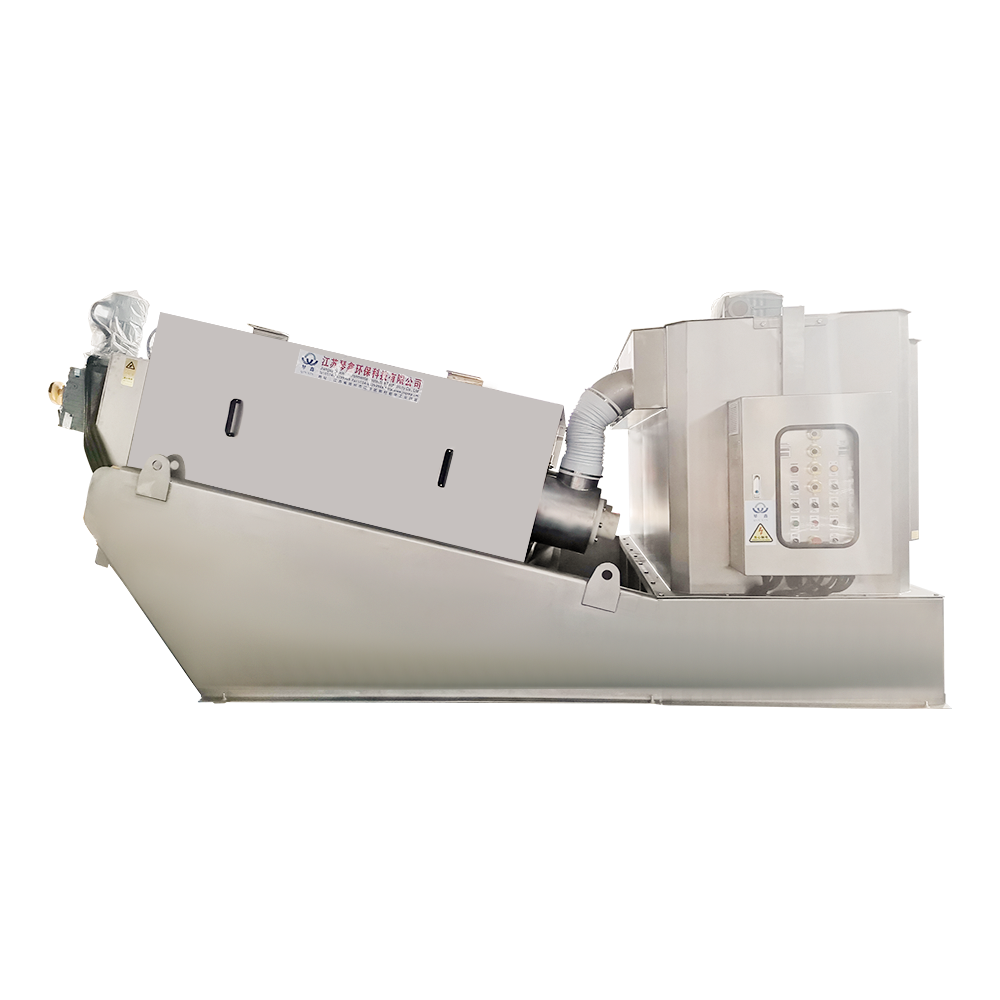
The screw press sludge dewatering machine uses a slowly rotating screw shaft inside a set of concentric rings. The fixed rings form the screen, and the moving rings rotate against them to keep the gaps clear, which is how the machine avoids clogging. Sludge is thickened in the first zone as free water drains, then compressed as the screw pitch decreases and a back-pressure plate at the discharge end controls cake thickness. Typical shaft speeds stay below 4 rpm, so the sludge is not exposed to the high shear stress found in centrifugal machines.
For a more detailed description of the mechanical stages, see our explanation of how the screw press sludge dewatering machine works. That article covers the thickening zone, the dewatering zone, and the role of the back-pressure plate.
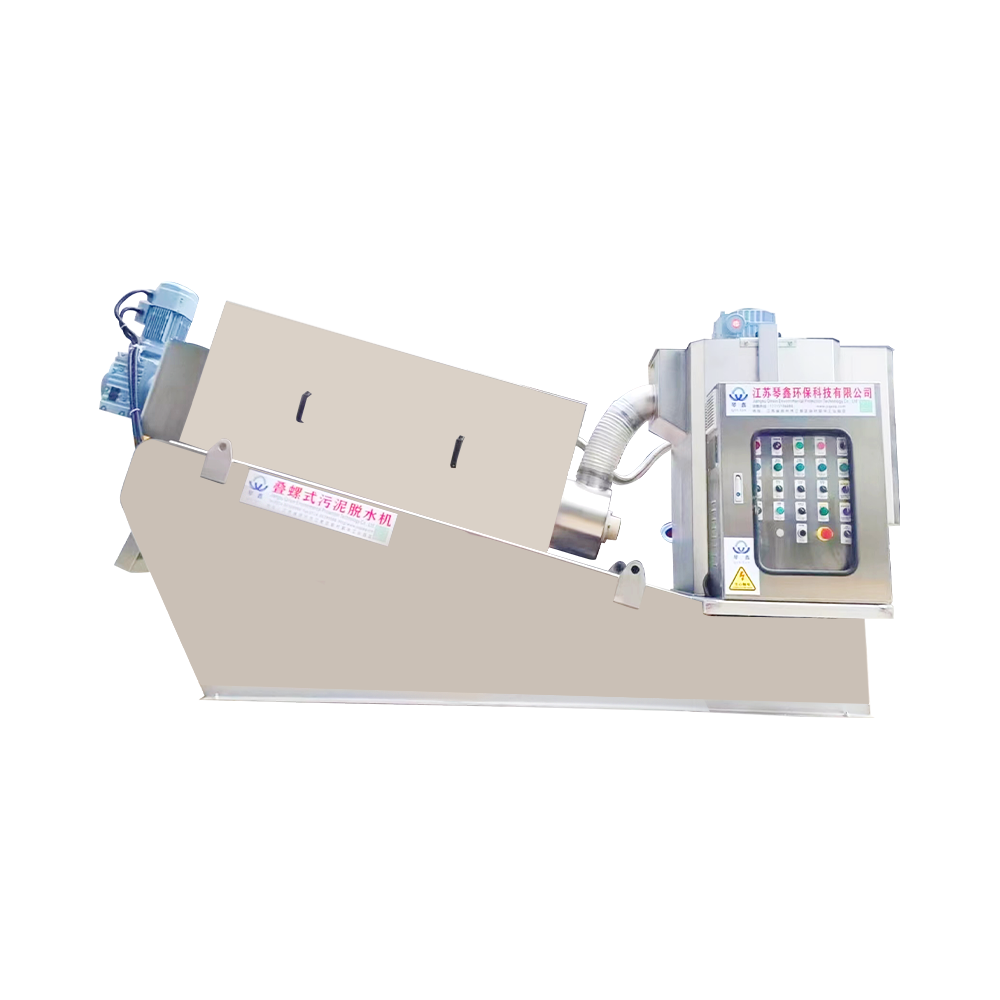
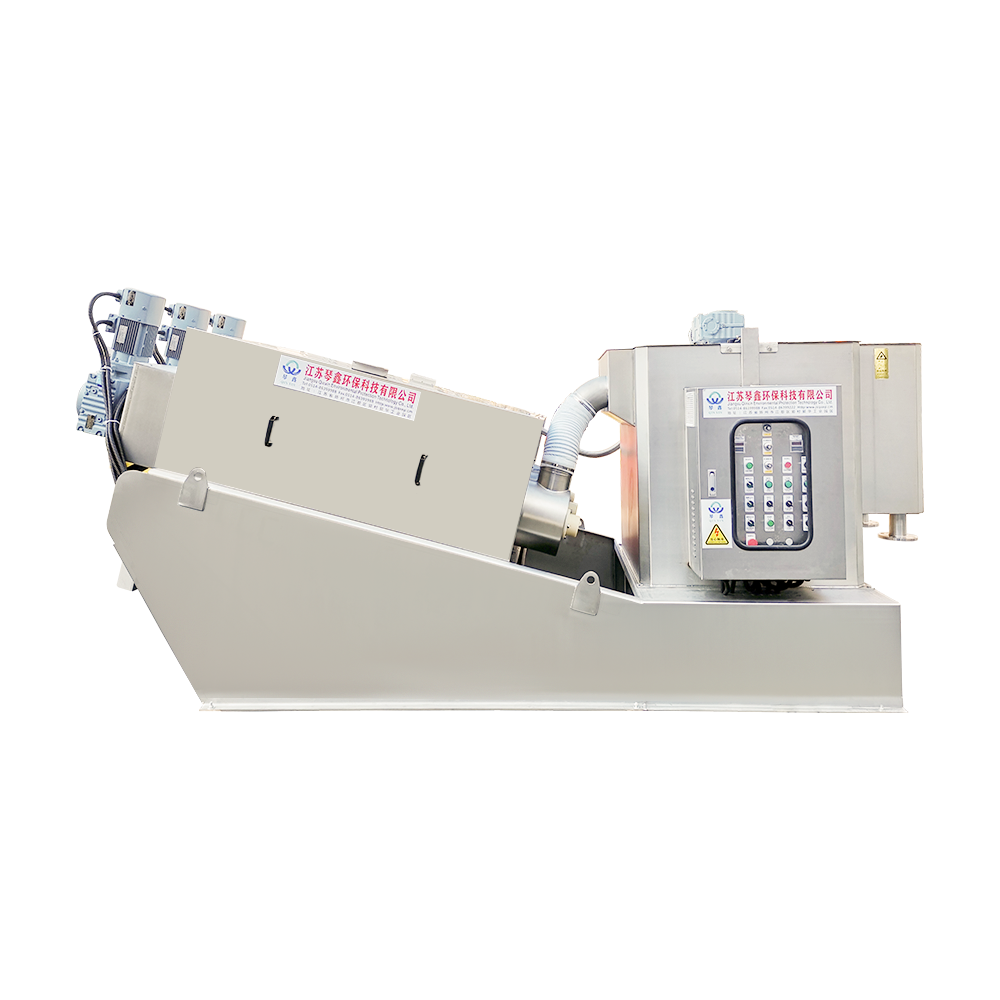
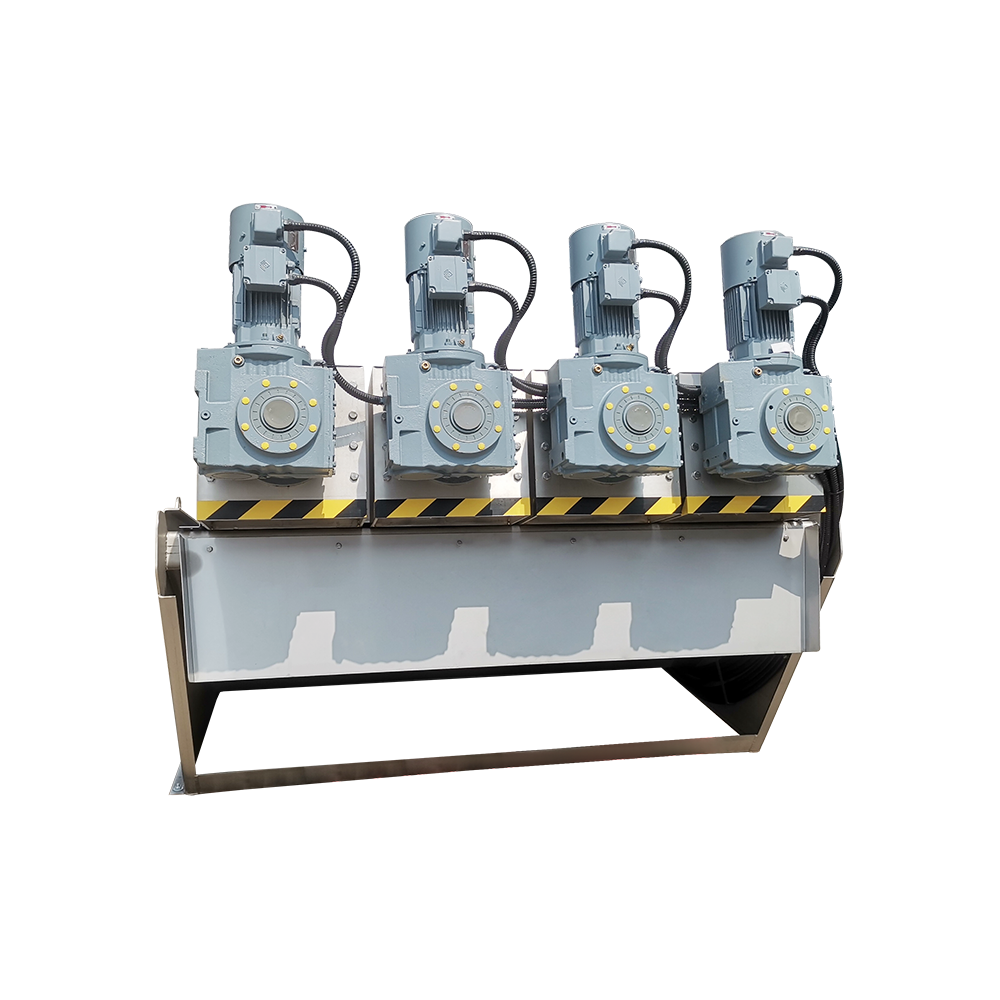 QXDL-304 Spiral Screw Sludge Dewatering Machine for Municipal and Industrial UseThis 304 stainless steel screw press offers beltless, clothless operation to eliminate common failure modes. With adjustable spiral compression and self-cleaning rings, it suits continuous municipal and industrial sludge dewatering.View Product →
Because the design eliminates belts, filter cloths, and a high-speed bowl, the common failure modes of traditional equipment disappear with it. There is no belt to track, no cloth to blind, and no high-frequency vibration to manage.
Cake Dryness, Capture Rate, and Polymer Consumption
Three questions appear in every equipment selection: Will the cake be dry enough? How much solid will escape with the filtrate? How much polymer will the machine consume?
Cake Dryness
A screw press typically produces 20–35% dry solids from municipal or industrial sludge, depending on feed characteristics and polymer selection. A plate-and-frame press can reach higher values, often 35–45%, and a membrane version can go further. If the downstream process strictly requires a very dry cake, as in autothermal incineration, the batch press still has an advantage. For most landfill, agricultural, and thermal-drying routes, screw press cake is acceptable.
Solid Capture
With correct polymer dosing, screw presses achieve capture rates comparable to belt presses and centrifuges. The ring gap retains flocculated solids while allowing filtrate to escape; actual capture depends more on flocculation quality and feed consistency than on the machine type.
Polymer Consumption
The low internal shear of a screw press preserves the flocs formed by the polymer, so lower doses achieve the same result. High-shear equipment such as a centrifuge can break flocs apart and require additional polymer to re-flocculate. Because polymer is usually the largest chemical cost in sludge dewatering, this difference often decides the economic comparison.
For trustworthy numbers, run a pilot test with the plant's own sludge. Brochure ranges are useful only as a starting point.
Energy, Water, and Maintenance: Where the Figures Separate
In daily operation, the screw press separates itself from traditional equipment in four measurable areas.
- Energy consumption. The main screw drive is a small motor that operates at low speed and torque. A complete dewatering line built around a screw press typically draws considerably less power than a centrifuge line, and often less than a belt filter press system once pumps and wash-water ancillaries are included.
- Wash water. Belt presses need continuous high-pressure wash water, sometimes 8–16 m³ per hour, to keep the belts clean. Screw presses use small, intermittent wash flows, which reduces water cost and pumping energy.
- Maintenance. There are no belts to replace, no filter cloths to change, and no high-speed bearings to overhaul. Daily operator checks are limited to polymer supply, feed flow, and cake discharge.
- Labor. Plate-and-frame presses consume operator time on batch discharge and cloth inspection. Belt presses need regular tracking adjustments. A screw press reduces this workload to routine observation.
These differences are not theoretical. Plants that switch from a plate-and-frame press to a screw press typically report a clear drop in maintenance workload and polymer use because batch cycling and cloth replacement disappear from the schedule.
Where a Screw Press Wins, and Where Traditional Methods Still Belong
Equipment choice depends on the sludge source, the target dryness, and the operating context rather than on the machine name alone.
Screw Press Strengths
- Oily or greasy sludge. The moving rings continuously clean the screen gaps, so oil does not blind the machine as it can blind a filter cloth. Centrifuges can handle oily sludge, but at higher energy and noise.
- Variable industrial loads. Printing, dyeing, chemical, and food plants rarely feed a constant flow. A screw press tolerates fluctuating solids loading without losing cake quality. Dedicated chemical wastewater models are designed for streams with aggressive constituents.
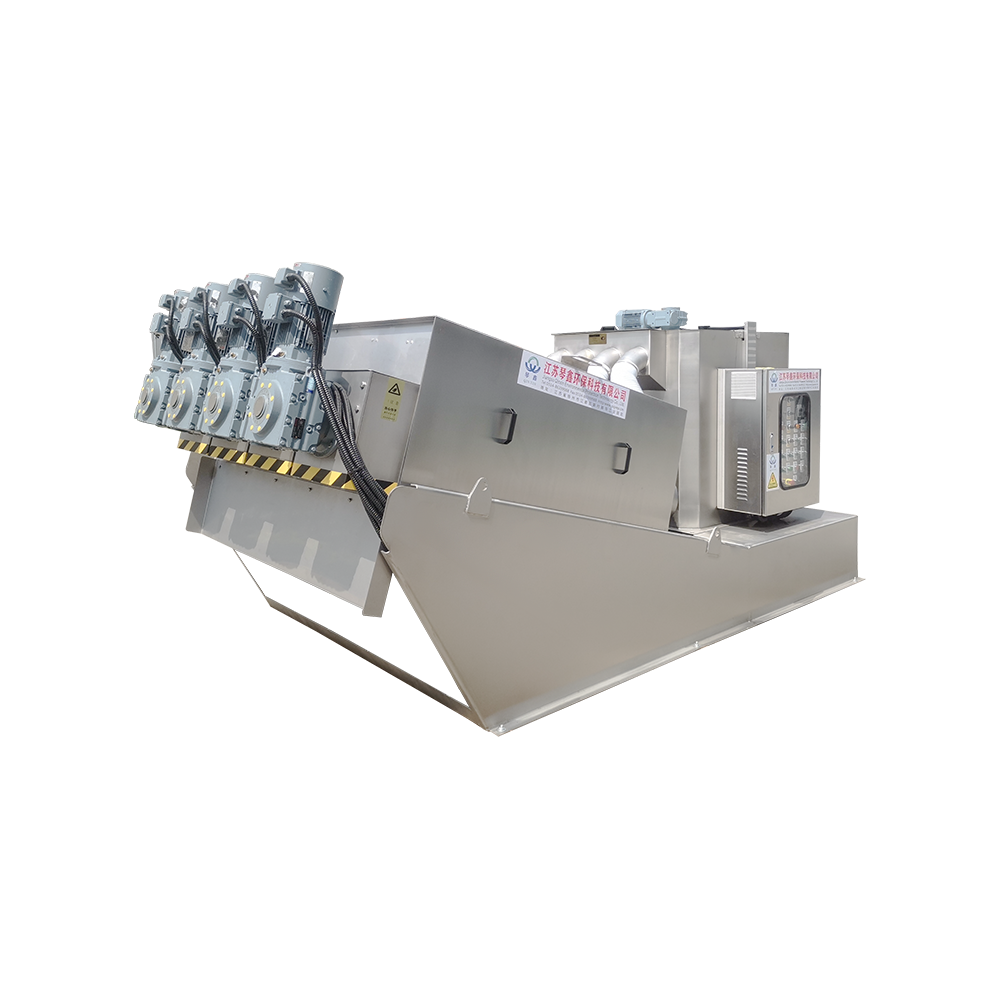
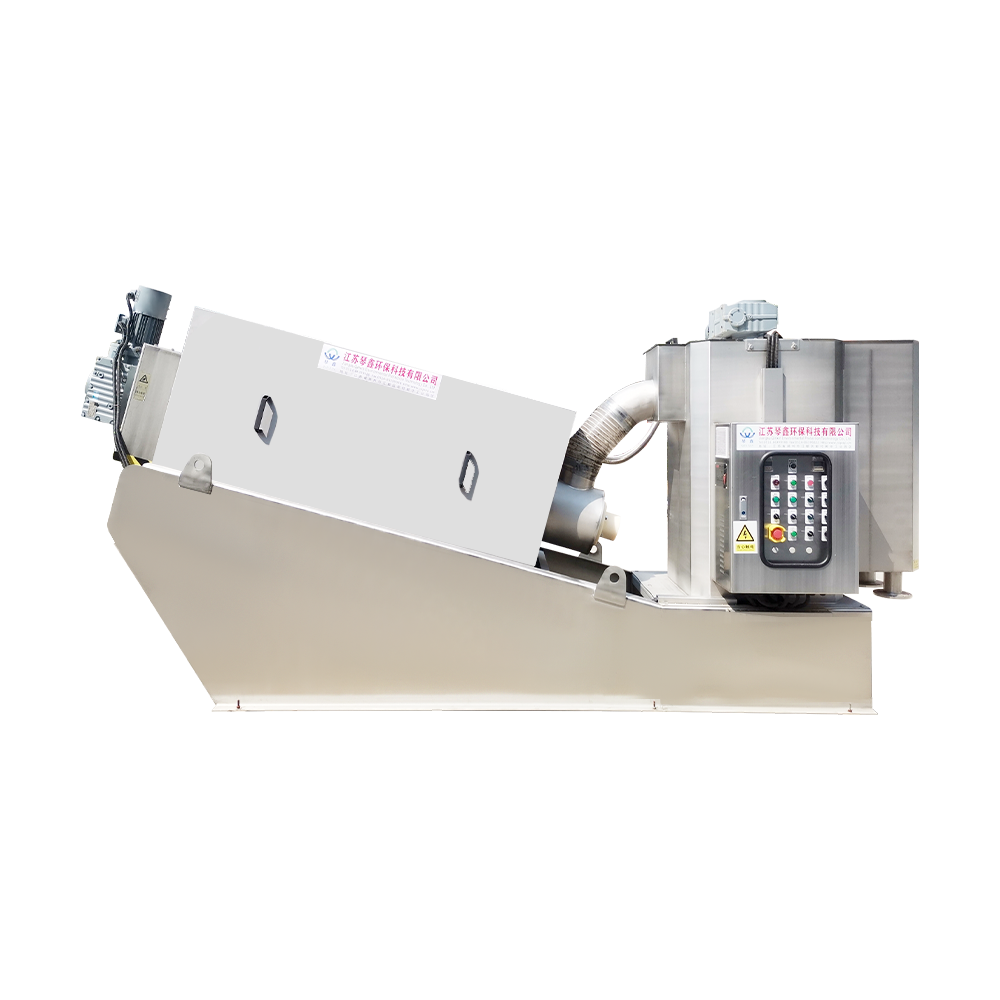
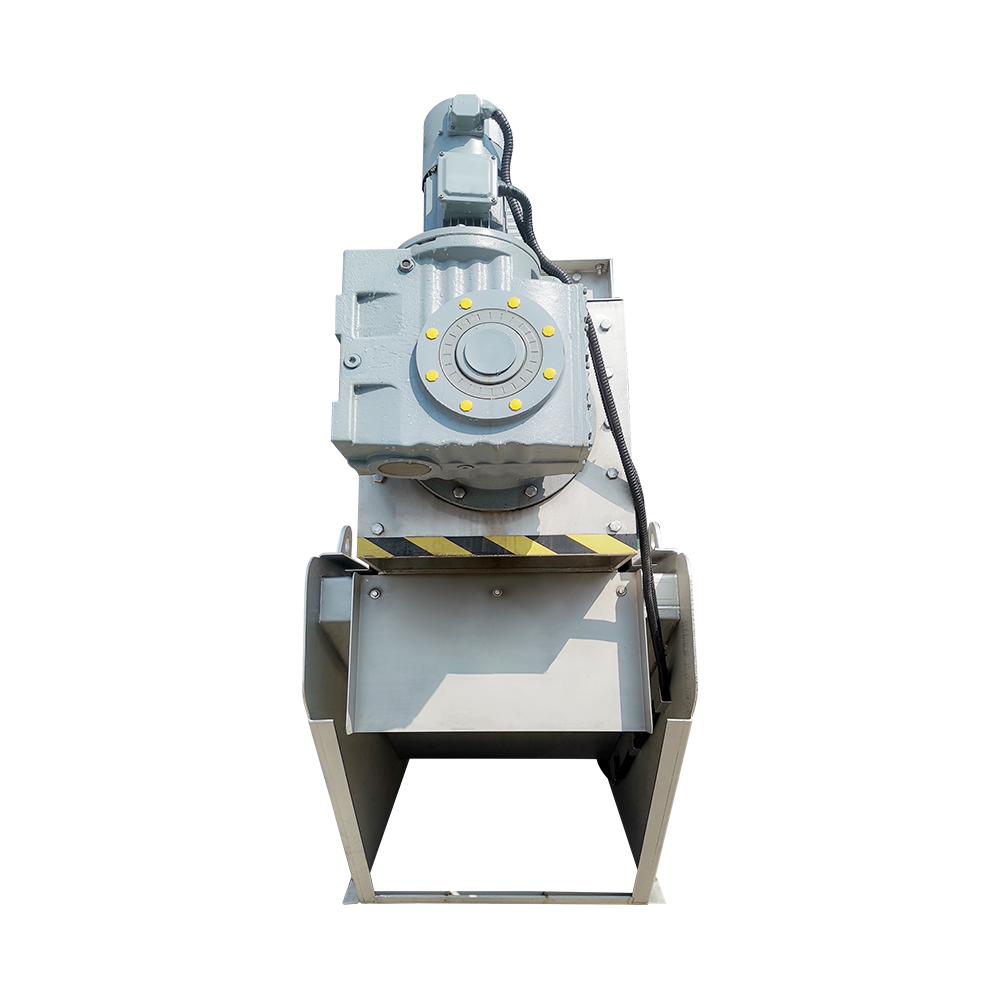 QXDL-401 Automatic Screw Press for Livestock Wastewater Sludge DewateringDesigned for pig, cattle, and poultry farm wastewater, this automatic screw press handles fibrous manure and high-solids feed. Its wider ring gaps and VFD control provide reliable cake dryness for agricultural operations.View Product →
- Livestock and agricultural waste. High-solids manure from pig and cattle farms dewaters well on a screw press, and specific livestock models are available for that duty.
- Municipal mixed sludge. Blends of primary and secondary sludge respond well to moderate-pressure dewatering when the polymer system is correctly calibrated.
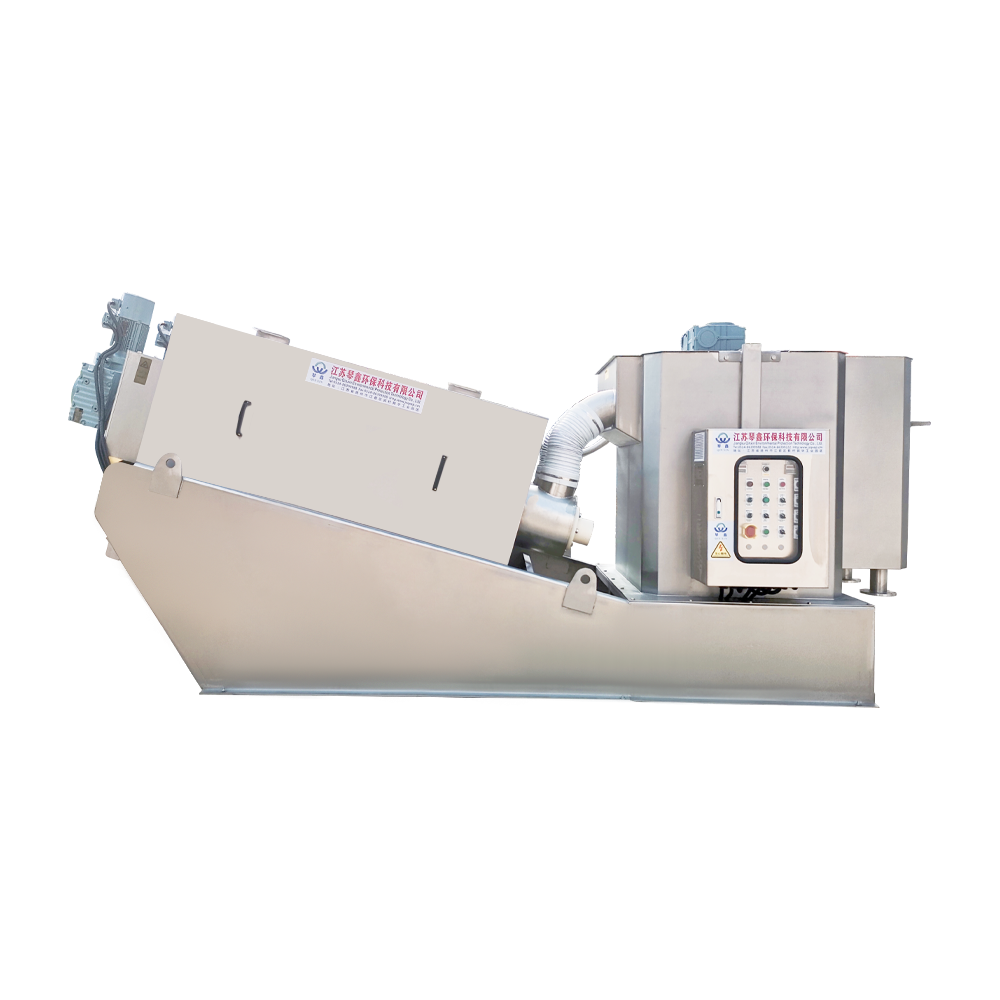
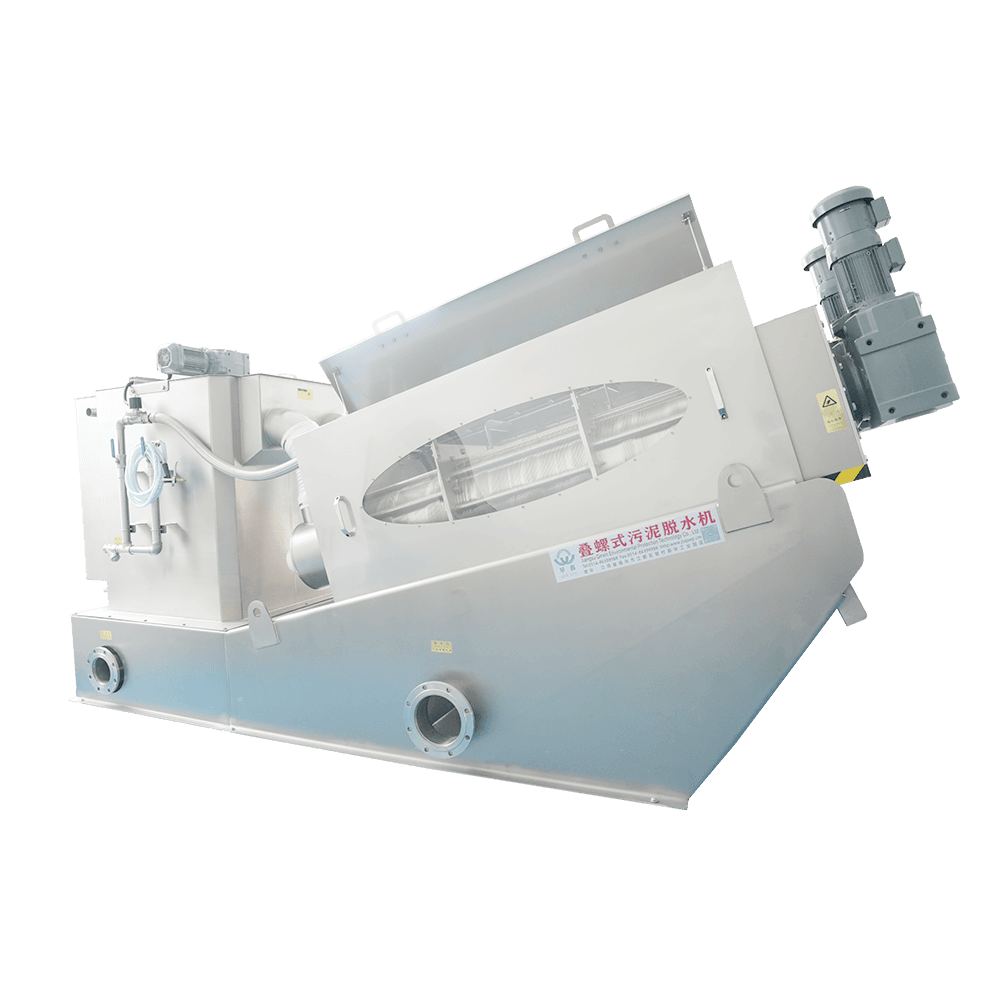 QXDL-402 Heavy-Duty Screw Press for High-Capacity Livestock Sludge DewateringBuilt for large-volume manure and digestate, this screw press features an extended shaft and quadruple-layer filtration. It processes up to 320 kg/h dry solids while maintaining self-cleaning operation for corrosive farm environments.View Product →
When Traditional Equipment Still Makes Sense
A membrane plate-and-frame press remains the reference when a plant must produce very high dryness cake for incineration with minimal auxiliary fuel. High-capacity centrifuges are still practical when a very large facility processes more sludge than a row of screw presses can handle within the available footprint. For nearly fibrous sludges, such as certain paper mill residues, belt presses can work well.
What to Verify Before Replacing Traditional Equipment
A purchase decision based only on machine price omits the costs that dominate a five-year period: polymer, water, power, and labor. Before switching from a traditional method to a screw press, verify these points.
- Target cake dryness. Define the dryness required by the disposal route and confirm that a screw press can reach it with your sludge and polymer.
- Sludge characterization. Measure total solids, primary-to-secondary ratio, oil and grease content, and particle size. These parameters influence ring gap selection and back-pressure settings.
- Polymer type and dose. Run a jar test and, if possible, a pilot trial with the plant's own sludge. Count polymer cost at the supply price, not just at the dose rate.
- Material grade. Confirm whether stainless steel 304 or 316 is specified for wetted parts. Industrial and food applications usually justify a higher grade because corrosion resistance determines usable lifespan.
- Performance guarantees. Ask the supplier to commit to cake dryness and solid capture under defined sludge conditions, with the test method written into the contract.
- After-sales support. Check spare parts availability, commissioning service, and operator training. A dewatering machine is a process unit, and support quality shows up in uptime.
The comparison above is a starting point. A pilot test on the actual sludge stream, with measured polymer dose and cake solids, converts that starting point into a defensible purchasing decision.
Traditional sludge dewatering equipment is not obsolete. Plate-and-frame presses still lead on maximum cake dryness, and centrifuges still handle very high feed volumes. For most municipal and industrial sludge lines, however, the screw press sludge dewatering machine delivers the same separation function at lower polymer, water, energy, and maintenance cost while providing the automation needed for unattended operation. Run the numbers, run a pilot, and compare the results with your current operating data. As an environmental protection equipment manufacturer with a complete dewatering product line, we keep pilot equipment available for exactly this stage of your evaluation.

 TOP