
 ENG
ENG
 English
 русский
 Español
 Tiếng Việt
 ไทย
ไทย
Article Directory
- 1 How an Industrial Screw Press Dewatering System Works
- 2 Screw Press vs Volute Press: A Direct Performance Comparison
- 3 Screw Press Dewatering in Wastewater Treatment: Application by Sludge Type
- 4 Dewatering Screw Press vs Belt Press vs Centrifuge: Which to Choose
- 5 How to Size and Select a Dewatering Screw Press for Your Plant
- 6 Operational Optimisation: Getting Maximum Performance From Your Screw Press
- 7 Real-World Performance Data: What Industrial Screw Presses Actually Achieve
- 8 Practical Questions About Industrial Dewatering Screw Presses
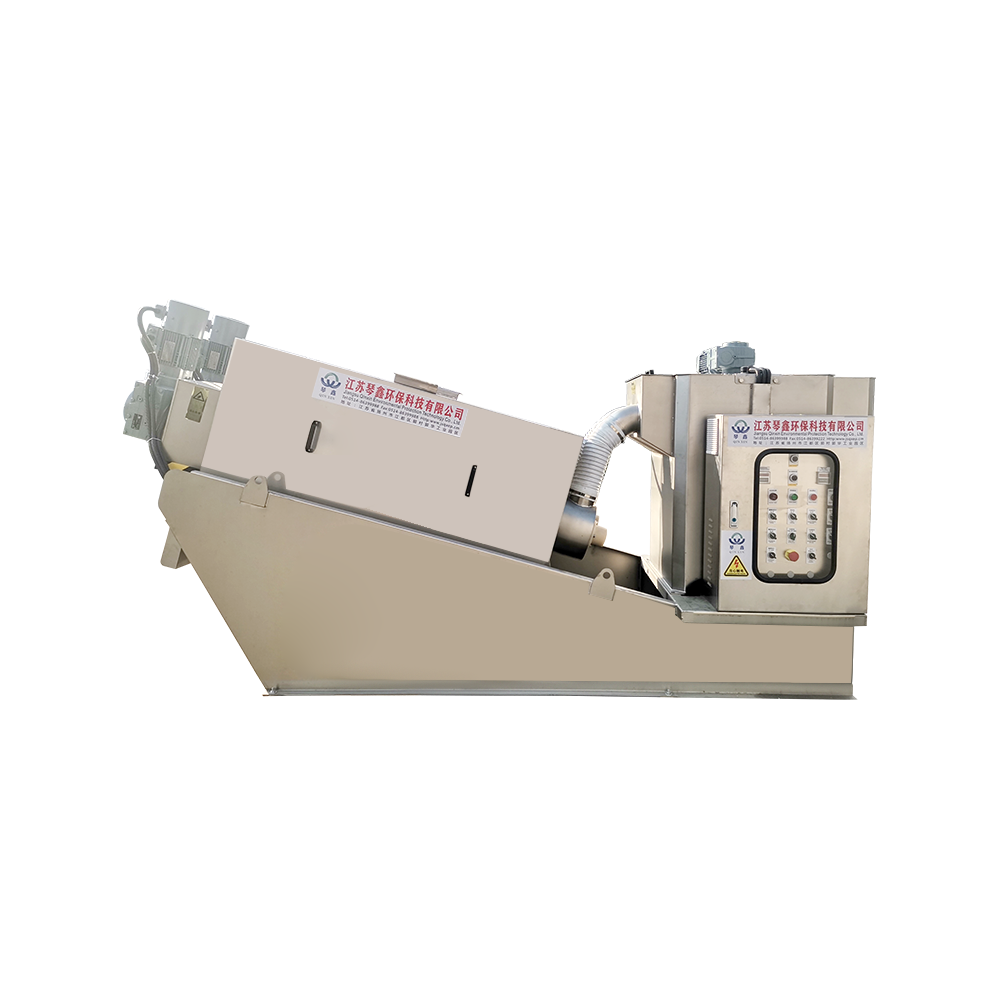
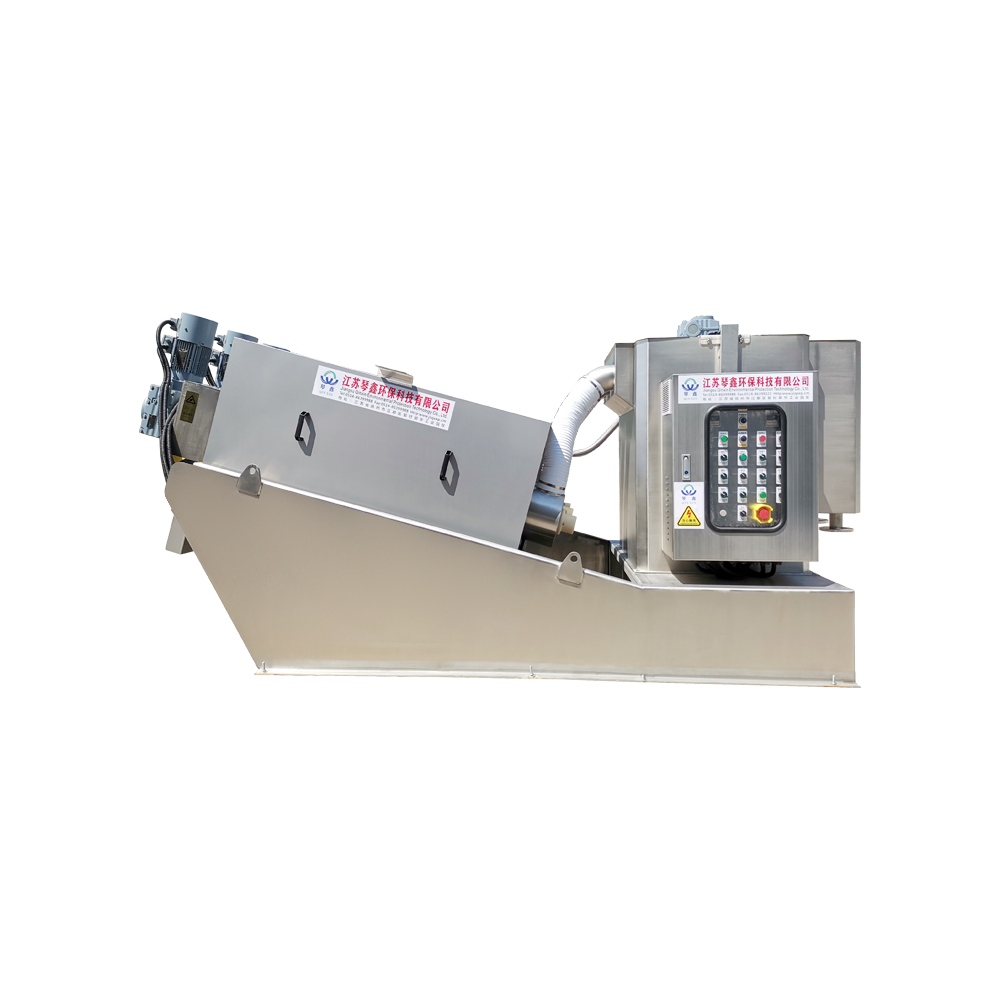
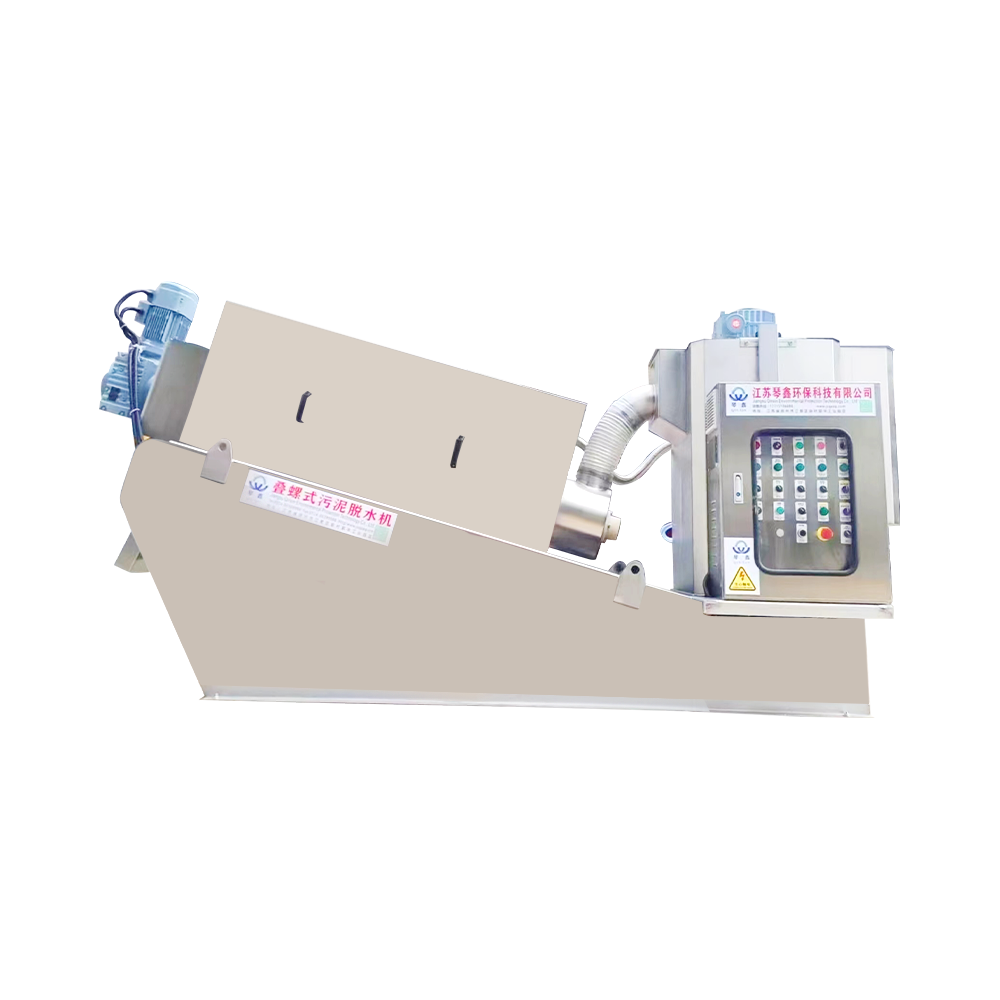
An industrial dewatering screw press is a continuously operating mechanical device that separates water from sludge by conveying it through a progressively narrowing helical screw channel, squeezing moisture out through a perforated drum or stacked disc screen. It consistently achieves cake solids content of 18–35% across municipal wastewater, food processing, paper, and industrial effluent sludges — with significantly lower energy consumption, wash water use, and operator attention than belt presses or centrifuges. For facilities processing 1–500 m³/day of sludge, it is frequently the optimal combination of performance, operating cost, and reliability.
How an Industrial Screw Press Dewatering System Works
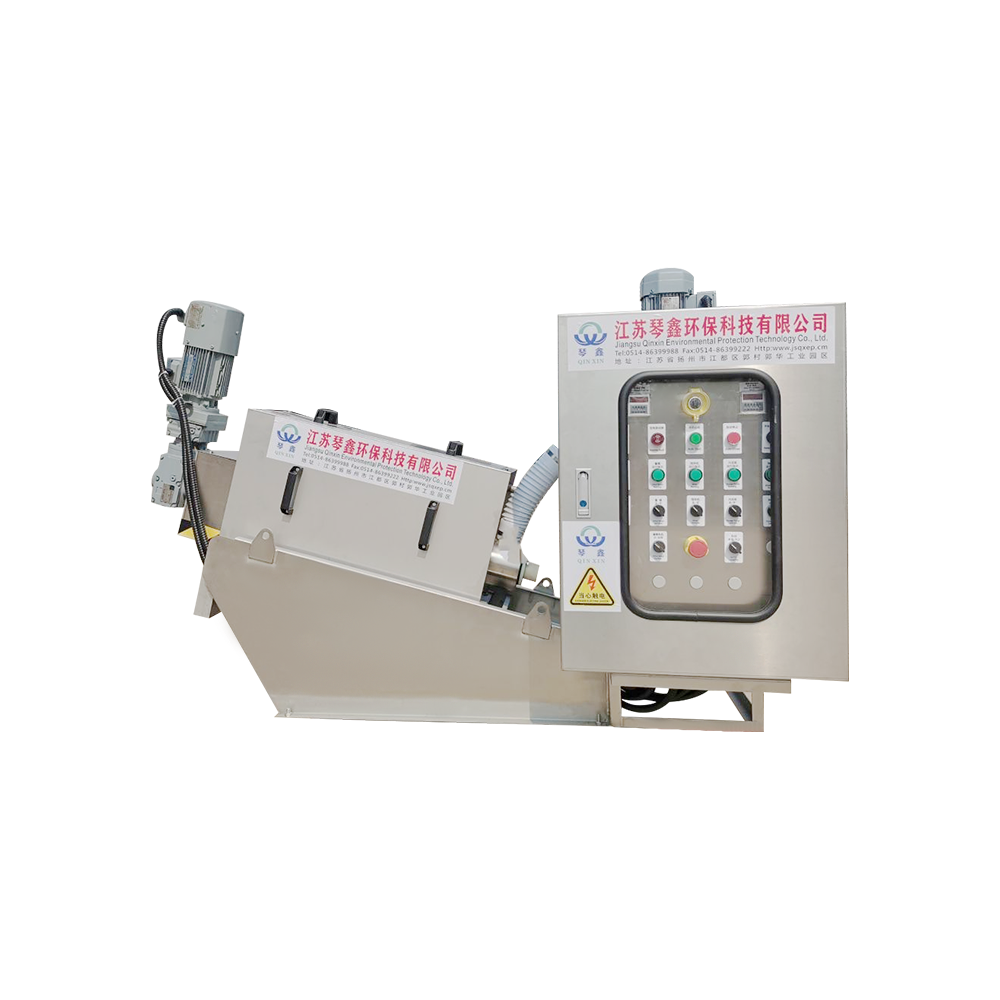
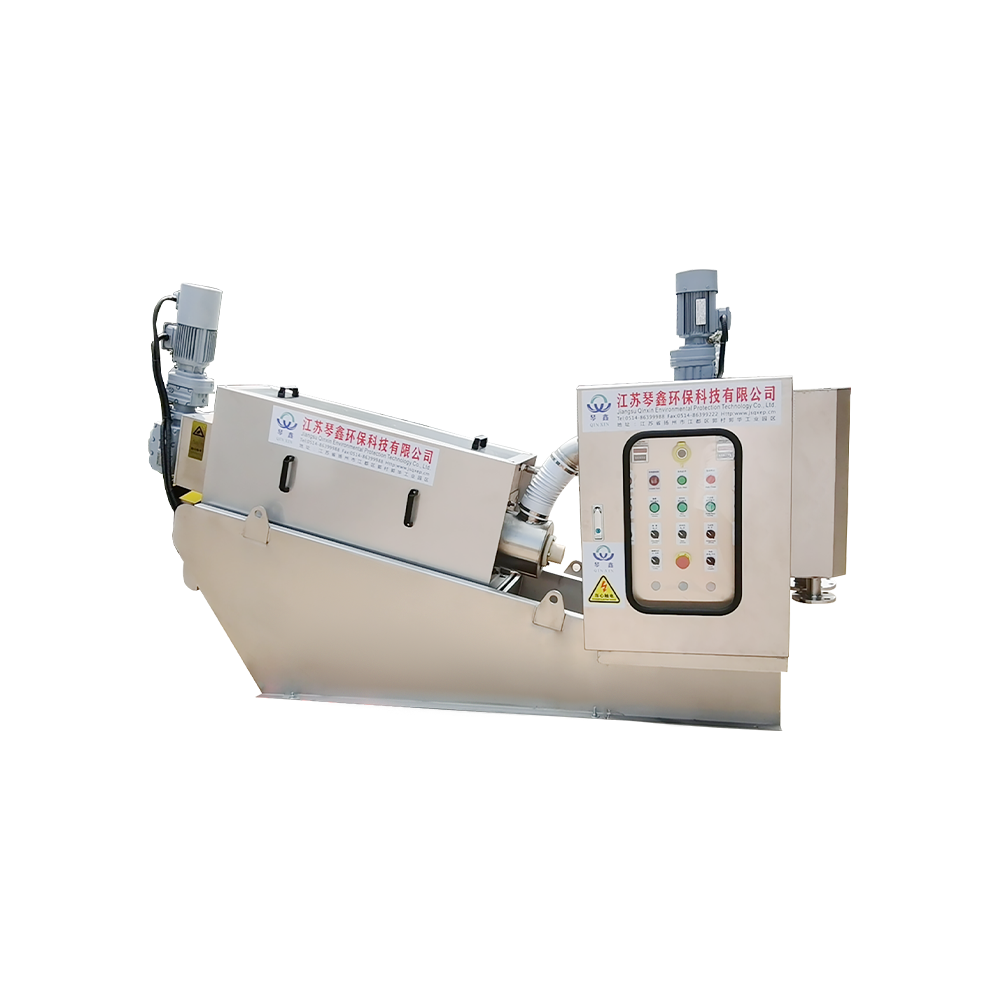
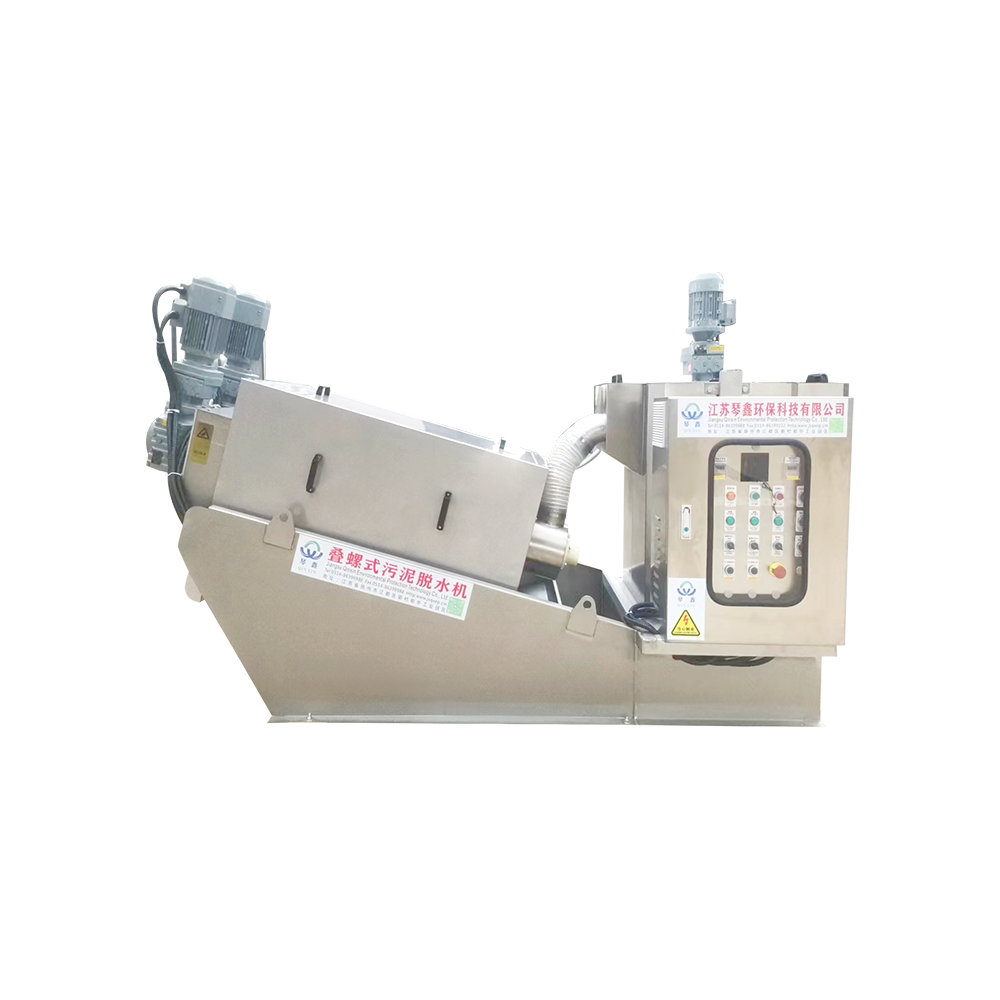
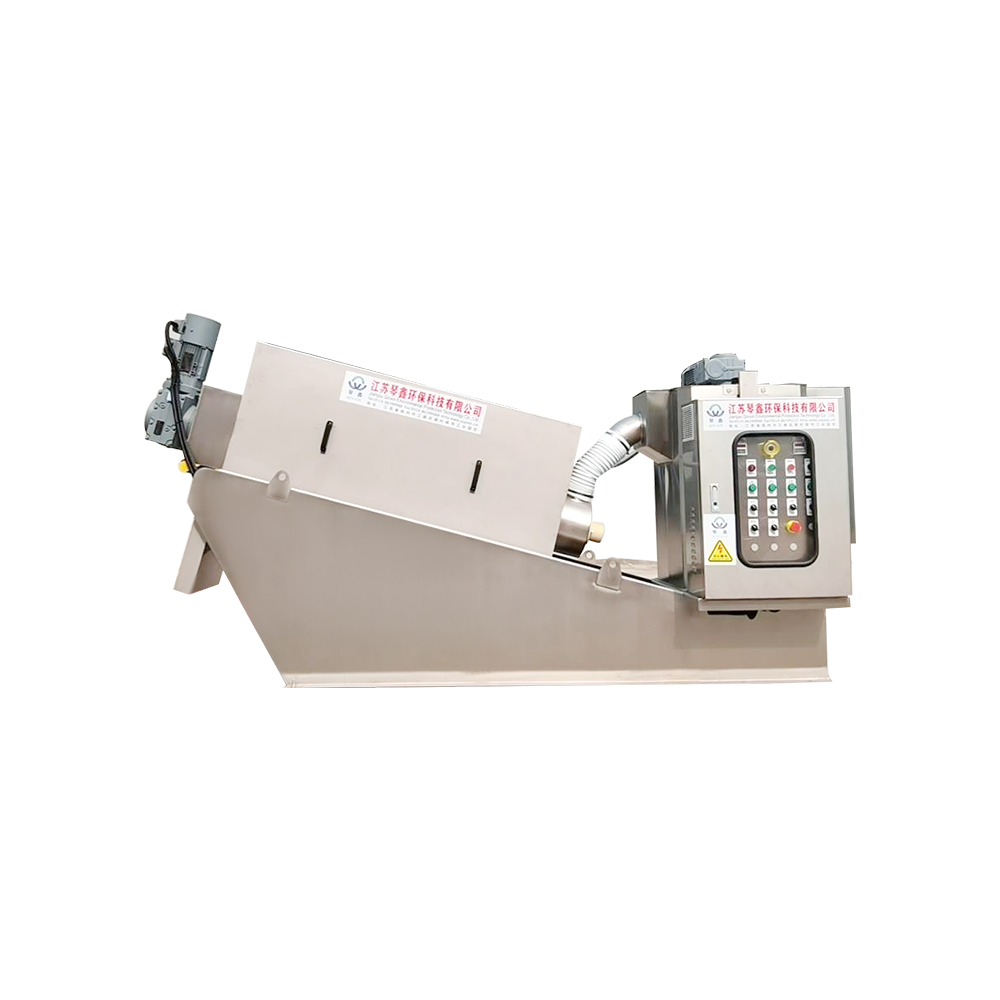
The operating principle of a screw press dewatering system is straightforward in concept but requires precise engineering to execute reliably at industrial scale. Conditioned sludge — pretreated with polymer flocculant to bind fine particles into larger, water-releasing flocs — is fed into the inlet of the press. A rotating helical screw (or stacked disc assembly) then performs three sequential functions:
At the feed end, sludge enters a zone where free water drains by gravity through the screen or disc gaps. This zone removes the bulk of the liquid with minimal mechanical work — typically 40–60% of total water removed occurs here. The screw pitch is wide at this stage, conveying sludge slowly to allow maximum drainage time.
As sludge travels toward the discharge end, the screw pitch tightens and the available volume decreases. This creates increasing mechanical pressure — ranging from 0.1 MPa in low-pressure units to over 1.5 MPa in high-pressure models — that squeezes bound water from the sludge cake. The screen gaps are smallest here to retain solids while allowing pressurised water to escape.
At the discharge end, a back-pressure device — either a spring-loaded plate, pneumatic cone, or adjustable dam — resists the sludge flow, maintaining the compression pressure throughout the press zone. The sludge cake exits as a semi-dry solid with a dry solids (DS) content determined by the interaction of polymer dose, screw speed, back-pressure setting, and feed sludge characteristics.
Stacked Disc (Volute) vs Conventional Screw Press: The Internal Difference
There are two dominant internal architectures used in modern industrial dewatering screw presses:
Uses a single continuously welded helical screw rotating inside a fixed cylindrical screen drum (perforated stainless steel or wedge wire). The screen is a static element; the screw rotates at 1–5 RPM. Robust and suited to high-viscosity sludges, but the fixed screen requires periodic cleaning with high-pressure wash jets (20–80 L/min continuous wash water use) and is more prone to blinding with fibrous or greasy sludges.
- Screen diameter: 200–600mm typical
- Wash water: 20–80 L/min continuous
- Best for: high-DS feed sludges, fibrous materials, mining tailings
- Maintenance: screen replacement every 2–5 years depending on abrasivity
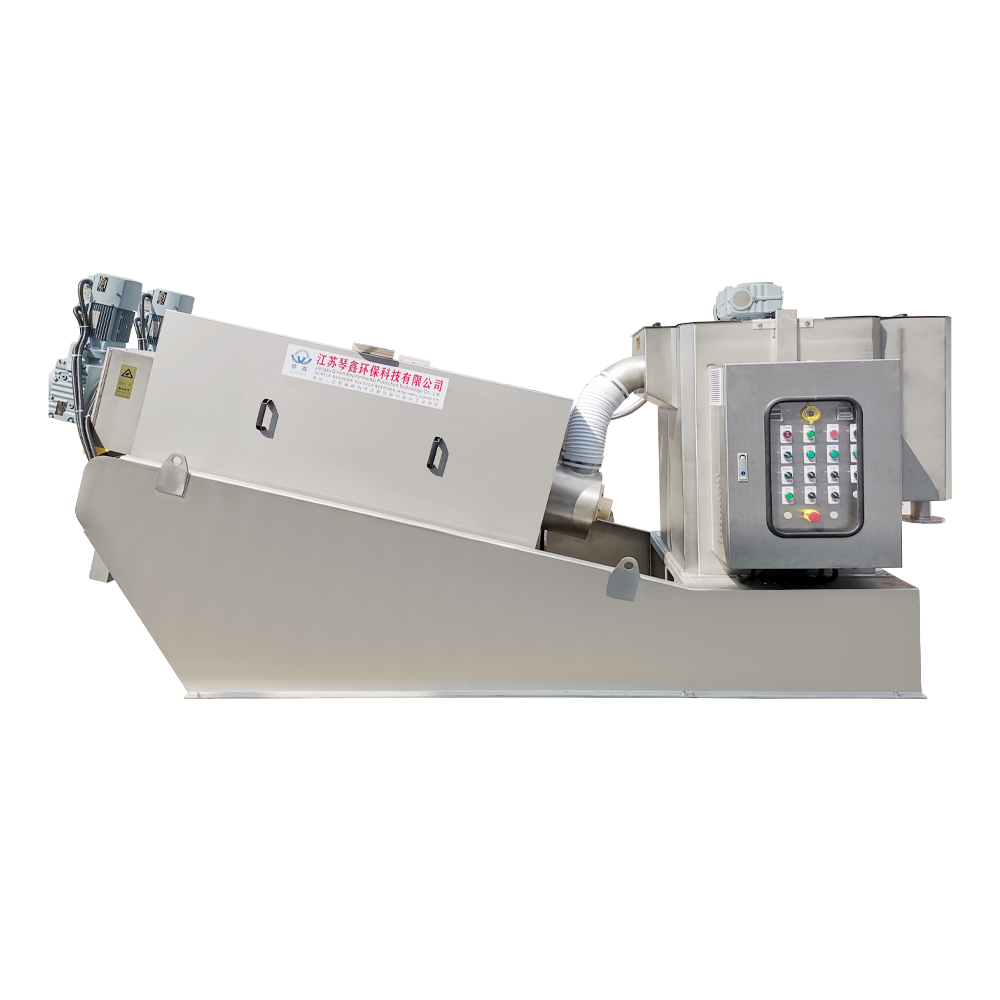
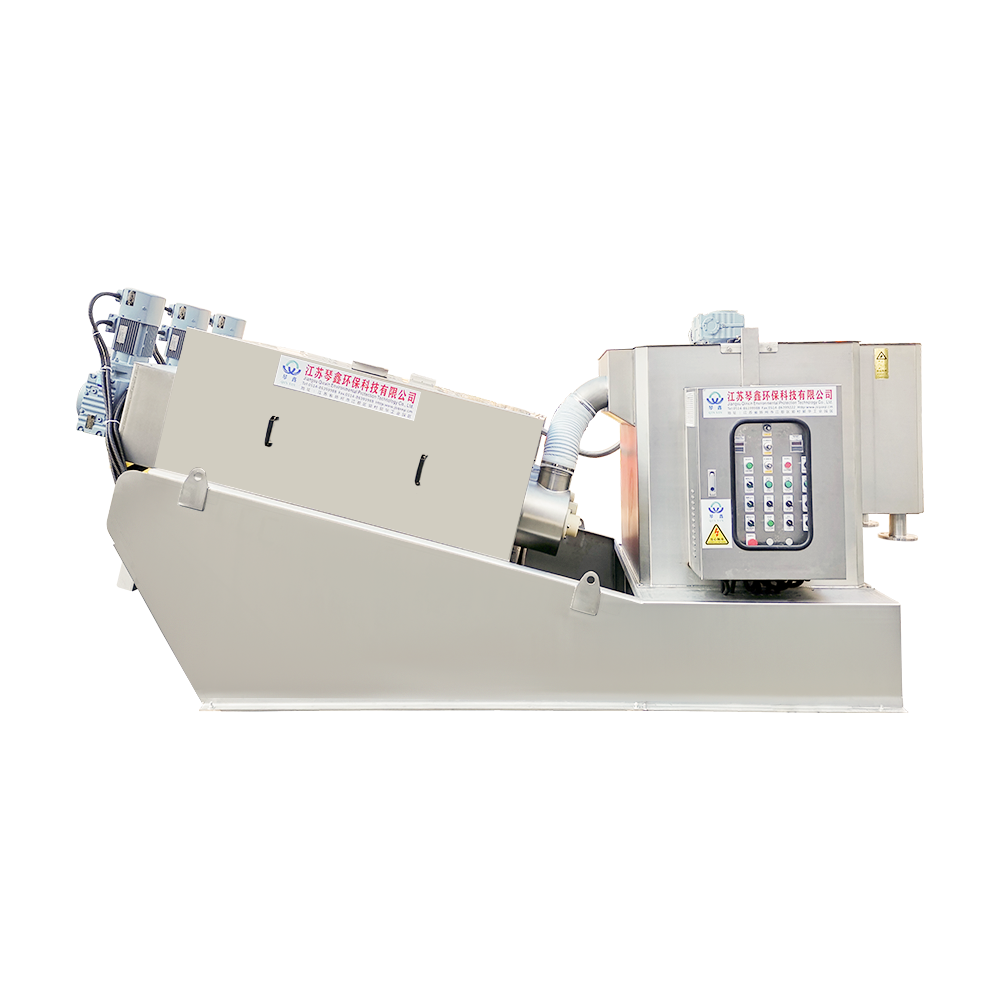
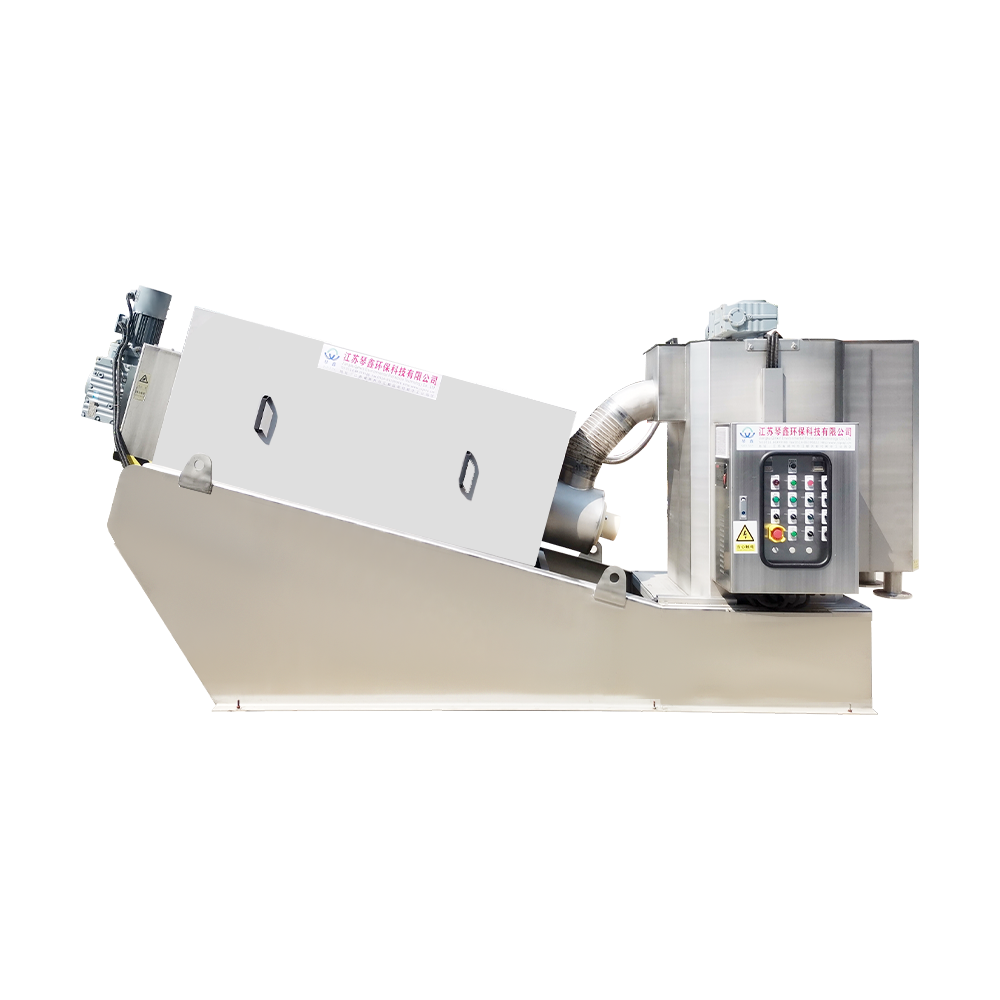
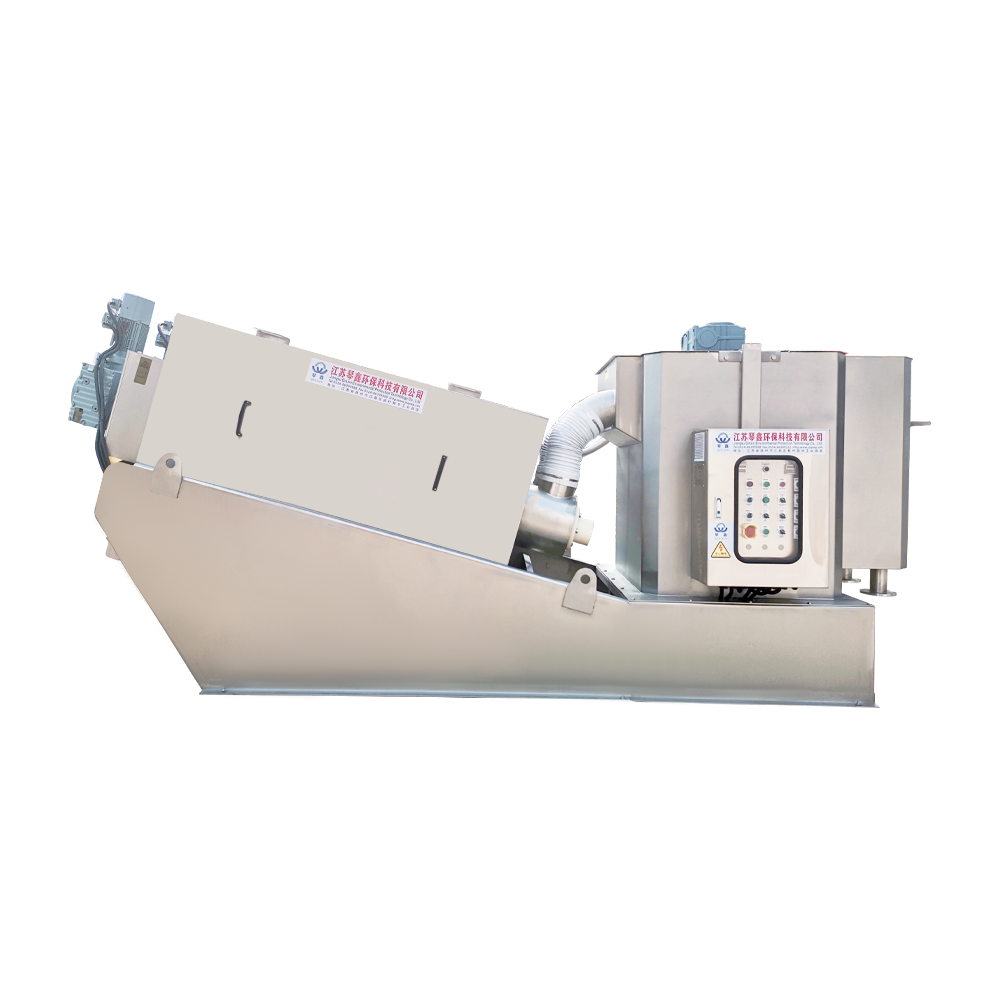
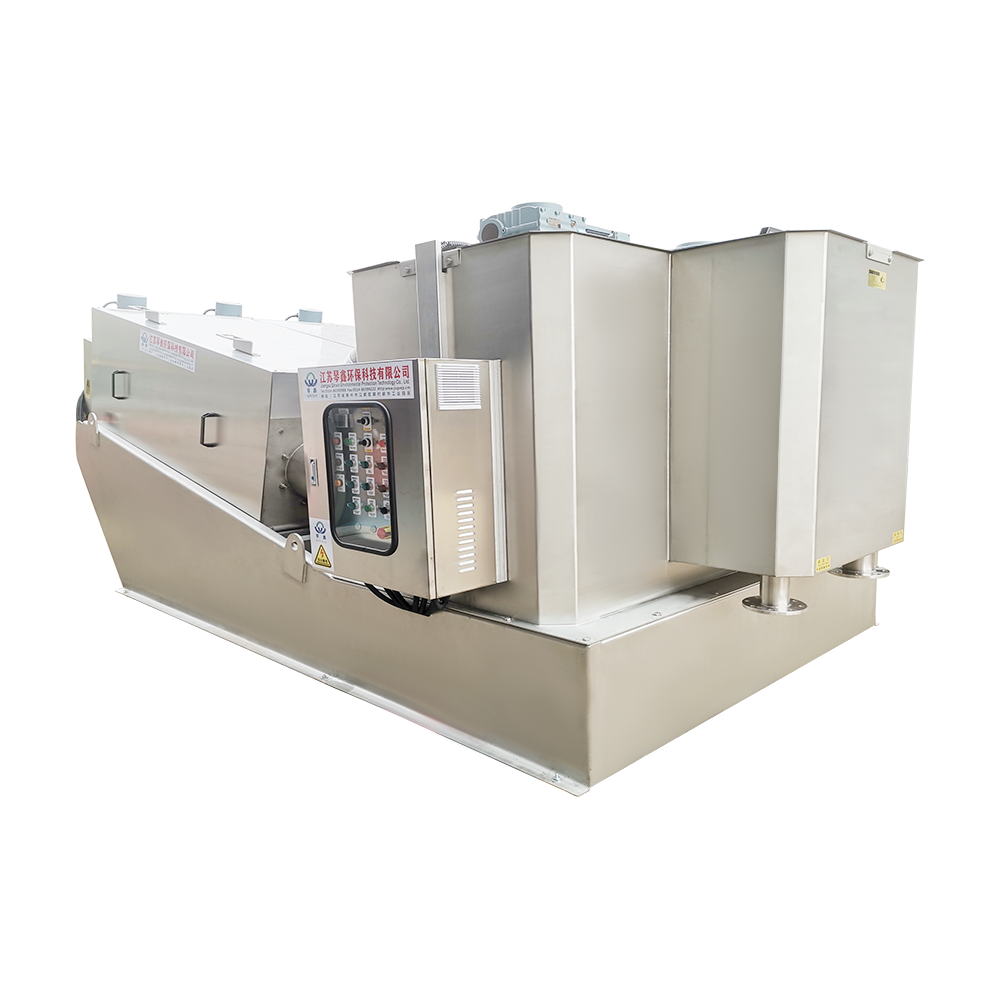
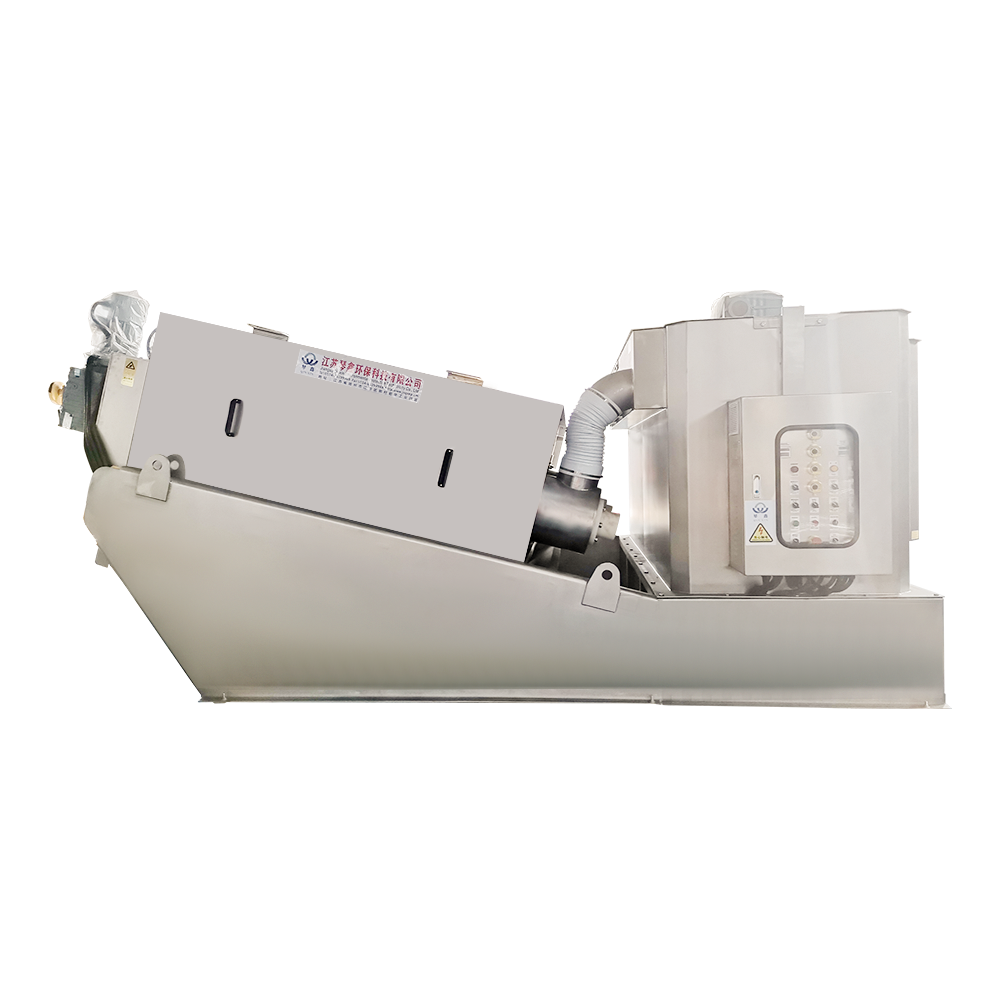
The screen is replaced by alternating fixed and moving rings (discs) stacked around the screw shaft. The moving discs continuously self-clean the gaps between fixed discs, virtually eliminating screen blinding and reducing wash water to near zero (typically 1–3 L/min for occasional rinsing only). The self-cleaning action makes this design exceptionally suited to oily, greasy, and low-concentration sludges.
- Gap clearance: 0.2–1.0mm (adjustable by material selection)
- Wash water: 0–3 L/min (near-zero continuous operation)
- Best for: municipal WWTP, food processing, oily sludges, low-concentration feeds
- Maintenance: minimal — no screen to replace; disc lifespan 5–15 years
Screw Press vs Volute Press: A Direct Performance Comparison
The choice between a conventional screw press and a volute (stacked disc) screw press is one of the most frequent decisions in industrial dewatering system specification. Both machines use the same fundamental dewatering mechanism, but their performance, operating costs, and maintenance profiles differ significantly across key parameters:
| Parameter | Conventional Screw Press | Volute / Stacked Disc Press | Winner |
|---|---|---|---|
| Cake Dry Solids (%) | 20–35% (high-pressure models) | 18–28% (typical municipal) | Conventional (high DS) |
| Energy Consumption | 0.05–0.15 kWh/kg DS | 0.01–0.05 kWh/kg DS | Volute (3–5x lower) |
| Wash Water Use | 20–80 L/min continuous | 0–3 L/min (periodic) | Volute (near-zero) |
| Feed Solids Concentration | Best: 2–8% DS | Best: 0.2–2% DS | Volute (dilute sludges) |
| Screen/Disc Blinding | Moderate–High; wash jets required | Self-cleaning; minimal blinding | Volute (self-cleaning) |
| Noise Level | 65–80 dB(A) | 45–65 dB(A) | Volute (quieter) |
| Throughput Capacity | Up to 60 kg DS/h per unit | Up to 150 kg DS/h (multi-shaft) | Volute (scalable) |
| High-Viscosity Sludge | Excellent | Limited (may bridge) | Conventional |
| Unattended Operation | Requires wash cycle monitoring | Fully automated; run unattended | Volute |
| Capital Cost | Medium–High | Medium | Volute (lower CAPEX) |
The practical conclusion: for municipal wastewater treatment plants, food and beverage effluent, and any application with dilute or oily sludge feed at less than 3% DS, the volute press offers a compelling combination of low operating cost and minimal maintenance. For high-pressure applications — mining tailings, paper mill sludge above 5% DS, or applications requiring cake DS above 30% — a conventional high-pressure screw press remains the more capable choice.
Screw Press Dewatering in Wastewater Treatment: Application by Sludge Type
Wastewater sludge dewatering screw press performance varies significantly by sludge type. The biological and chemical characteristics of the feed — particle size distribution, volatile solids content, grease content, and flocculation behaviour — all influence achievable cake dryness and polymer demand. The following breakdown covers the major sludge categories encountered in industrial and municipal wastewater treatment:
WAS is a fine, gelatinous sludge that responds well to polyelectrolyte conditioning. Volute press is the preferred technology due to low feed concentration and susceptibility to screen blinding.
Mixed sludge benefits from the fibre content of primary sludge which improves drainage. Both conventional and volute presses perform well; volute preferred for lower operator attention requirement.
Digested sludge is more difficult to dewater than raw sludge due to reduced particle size and increased colloidal material. Higher polymer doses are typically required; higher-pressure screw press models improve cake DS.
Fats, oils, and grease (FOG) cause rapid screen blinding in conventional presses. The self-cleaning action of the volute press makes it the dominant choice for food industry effluent dewatering.
Paper sludge contains long fibres that create a natural filter mat, enabling very high cake DS and excellent filtrate quality with low polymer demand. High-pressure conventional screw presses are standard in this sector.
Highly variable depending on chemistry. Abrasive sludges (metal hydroxide, mining) require hardened screw flight and screen materials (wear-resistant overlays, duplex stainless). Piloting on actual sludge samples is strongly recommended before specifying press model and size.
Dewatering Screw Press vs Belt Press vs Centrifuge: Which to Choose
The industrial screw press competes directly with belt filter presses and decanter centrifuges across most wastewater sludge dewatering applications. Each technology has a performance profile that makes it optimal for specific conditions. The following comparison supports a rational technology selection:
| Criterion | Screw Press (Volute) | Belt Filter Press | Decanter Centrifuge |
|---|---|---|---|
| Cake DS (municipal WAS) | 18–24% | 14–20% | 22–30% |
| Power Consumption | Very Low (0.01–0.05 kWh/kg DS) | Low (0.04–0.08 kWh/kg DS) | High (0.15–0.35 kWh/kg DS) |
| Wash Water | Near zero (volute type) | Very high (30–200 L/min) | None |
| Polymer Demand | Medium (4–9 g/kg DS) | Medium (3–8 g/kg DS) | High (6–14 g/kg DS) |
| Noise and Vibration | Low (45–65 dB) | Moderate (65–75 dB) | High (80–95 dB) |
| Odour Containment | Excellent (fully enclosed) | Poor (open process) | Good (enclosed bowl) |
| Operator Attendance | Minimal (fully automated) | Continuous (belt tracking, wash) | Periodic (bowl cleaning) |
| Maintenance Complexity | Low | High (belt replacement, rollers) | High (bearings, scroll wear) |
| Footprint | Compact | Large | Compact |
| CAPEX (relative) | Low–Medium | Low–Medium | High |
| Best Application | Municipal, food, small–medium industry | High-volume municipal, lime sludge | High DS output required, large plants |
How to Size and Select a Dewatering Screw Press for Your Plant
Correct sizing of an industrial screw press is essential — undersizing leads to inadequate dewatering capacity and process bottlenecks; oversizing wastes capital and results in a machine operating at inefficient partial load. The following framework guides the sizing process for a screw press sludge dewatering system:
Establish the daily sludge volume (m³/day) and mass flow (kg DS/day). For wastewater treatment plants, this is derived from design flow rate, BOD loading, and sludge production coefficients. A municipal plant treating 10,000 m³/day of domestic wastewater typically produces 500–2,000 kg DS/day of waste activated sludge — the wide range reflecting variations in process configuration and sludge age.
Measure or estimate: feed DS concentration (%), volatile solids fraction (%), particle size distribution, specific resistance to filtration (SRF), and capillary suction time (CST). These parameters predict dewaterability and polymer demand. A CST below 50 seconds with polymer conditioning typically indicates good screw press performance; above 200 seconds suggests chemical conditioning challenges that need investigation before sizing.
Screw presses can operate 24/7 unattended, but practical plants typically run dewatering equipment 8–16 hours per day to allow maintenance windows and manage downstream solids handling. Operating hours directly affect the required throughput rate: a plant producing 1,000 kg DS/day operating the press 8 hours/day requires 125 kg DS/hour capacity; operating 16 hours/day requires only 62.5 kg DS/hour.
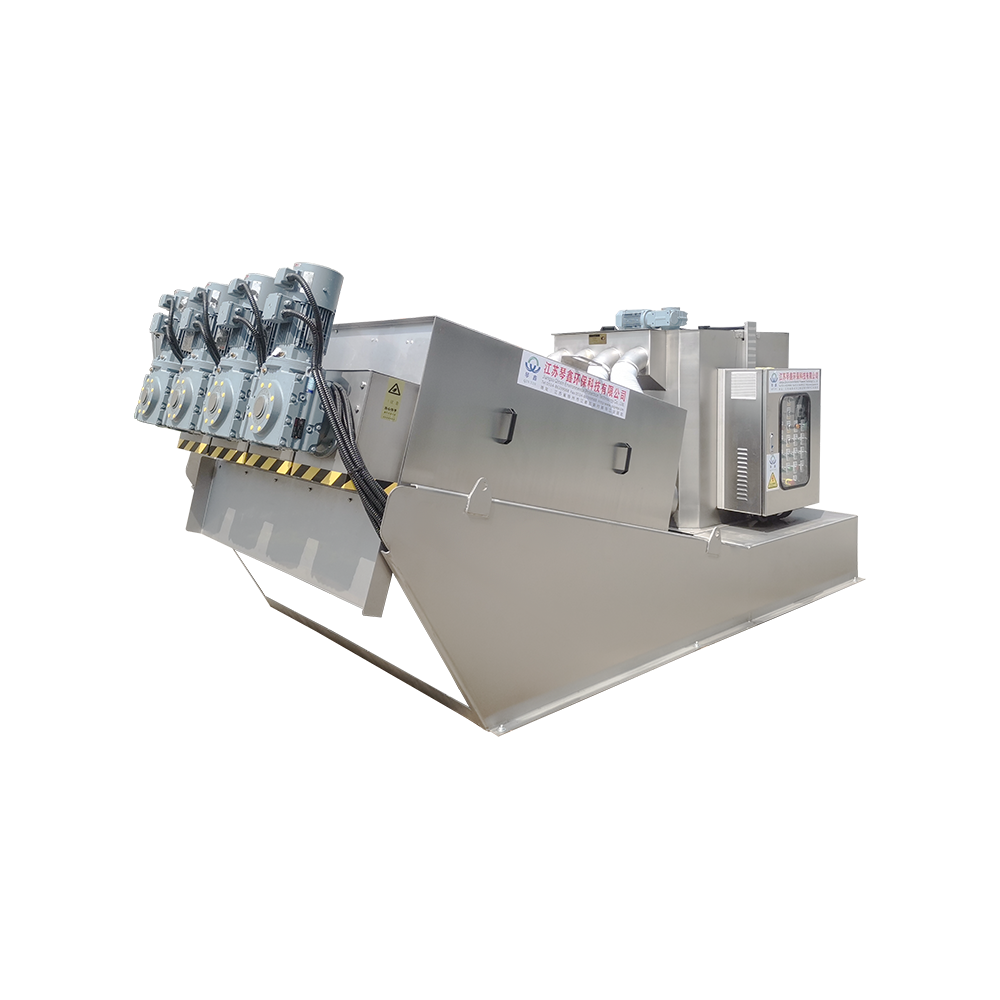
Match required throughput to manufacturer's rated capacity at the relevant feed DS concentration. Allow a 20–30% capacity safety margin for peak loads and future growth. For redundancy in critical applications, specify two units at 75% capacity each rather than one unit at 100% — this maintains 75% capacity during maintenance without full system shutdown. Multi-shaft volute presses (e.g., 4-shaft or 6-shaft units) provide high capacity within a single compact frame.
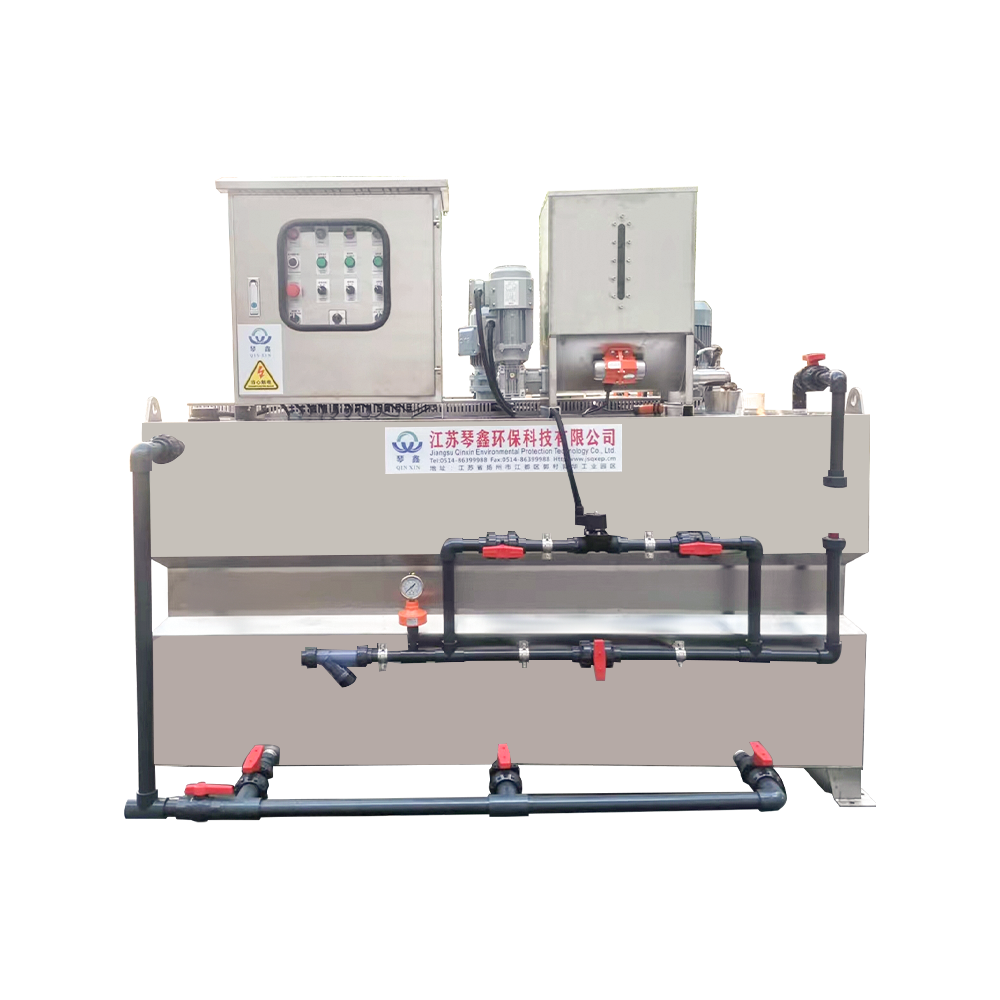
Standard construction is 304 stainless steel for the housing and 316L for wetted parts. For abrasive or corrosive sludges (high-chloride industrial, mining, chemical), specify duplex stainless (2205) or Hastelloy for screw flights and screen contact surfaces. Essential accessories: polymer make-up and dosing system, feed pump (progressive cavity type recommended for sludge), filtrate collection sump, dewatered cake conveyor, and PLC control panel with remote monitoring capability.
Operational Optimisation: Getting Maximum Performance From Your Screw Press
A correctly specified screw press can still underperform if operated without attention to the key variables that control dewatering efficiency. The following parameters require active management and periodic adjustment:
Polymer selection is the single most important variable in screw press performance. Cationic polyacrylamide (PAM) is standard for biological sludges; charge density and molecular weight must be matched to the sludge's surface charge through jar testing. Optimum dose is typically 4–9 g/kg DS — overdosing wastes polymer and can paradoxically reduce dewatering performance by creating a slippery surface on flocs. Dose should be re-evaluated whenever sludge characteristics change seasonally or with plant loading shifts.
Screw speed (typically 1–5 RPM) and back-pressure setting interact to determine the residence time of sludge in the press zone. Slower speed increases residence time and improves cake dryness but reduces throughput. Higher back-pressure improves cake DS but increases torque and power consumption. The optimal operating point balances desired cake DS against throughput requirements — this balance point shifts with feed sludge dewaterability and should be re-set after any significant change in sludge characteristics.
Variable feed flow is a major cause of erratic screw press performance. Progressive cavity pumps with variable frequency drives (VFD) maintain consistent volumetric flow regardless of feed sludge viscosity changes. Feed rate should be matched to the press's rated capacity — operating at less than 50% of rated throughput typically results in poor cake formation and reduced capture efficiency. Maintain feed DS concentration at a consistent level through upstream sludge thickening if feed is highly variable.
For volute presses: inspect disc gap clearances quarterly; check screw shaft bearings every 6 months; inspect the discharge cone/back-pressure mechanism annually. For conventional screw presses: inspect screen for blinding and wear every 2 weeks; measure screen panel thickness annually and replace at 50% original thickness; check screw flight-to-screen clearance every 6 months (typical specification: 1–3mm clearance; excessive clearance allows solids bypass). Log all performance data — filtrate turbidity, cake DS by regular sampling, polymer consumption — to identify trends before failures occur.
Real-World Performance Data: What Industrial Screw Presses Actually Achieve
Performance claims in supplier literature often represent optimal conditions. The following data points from documented installations provide a realistic baseline for project planning:
| Installation Type | Press Type | Feed DS (%) | Cake DS (%) | Capture Rate | Power (kWh/kg DS) | Polymer (g/kg DS) |
|---|---|---|---|---|---|---|
| Municipal WWTP, 50,000 PE | Volute (4-shaft) | 0.8% | 20% | 94% | 0.02 | 7.2 |
| Food Processing Plant | Volute (2-shaft) | 1.5% | 22% | 91% | 0.03 | 5.8 |
| Paper Mill, Primary Sludge | Conventional HP | 4.5% | 38% | 98% | 0.08 | 2.1 |
| Brewery Effluent | Volute (2-shaft) | 1.2% | 19% | 90% | 0.02 | 6.5 |
| Chemical Plant (inorganic) | Conventional HP | 6.0% | 44% | 97% | 0.12 | 3.4 |
| Anaerobically Digested, Mixed | Volute (4-shaft) | 2.8% | 23% | 93% | 0.03 | 8.5 |

 TOP
TOP